


Ahoi Ashtami 2026: Date, Puja Muhurat & Star Sighting
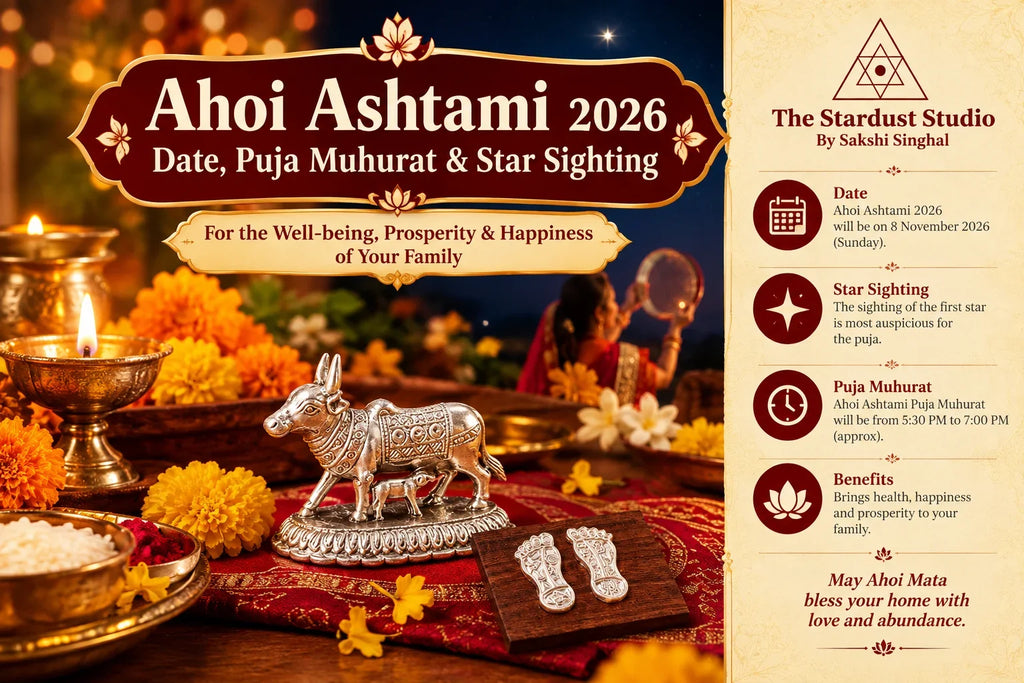
Ahoi Ashtami is a traditional Hindu fasting festival observed by many mothers who pray for the health, long life and well-being of their children. Celebrated primarily across North India, the festival reflects maternal devotion, family traditions and gratitude.
In 2026, Ahoi Ashtami falls on Sunday, November 1. The festival is observed on Krishna Paksha Ashtami in the Kartik month according to the North Indian Purnimanta calendar, approximately eight days before Diwali.
On this day, devotees traditionally worship Ahoi Mata, observe a vrat, listen to Ahoi Ashtami Katha and conclude their fast after sighting the stars or Moon, depending on household tradition.
The festival is particularly meaningful because its central theme is maternal care and prayers for children's well-being.
As you prepare your Ahoi Ashtami home mandir, devotional pieces such as a Silver Kamdhenu Cow with Calf can complement the festival's nurturing symbolism. A Silver Maha Lakshmi Charan or Silver Ganesh Lakshmi Potli may remain as part of an auspicious home-mandir collection.
Small silver puja essentials such as Silver Supari, Silver Elaichi and Silver Paan Patta can also be included in a permanent silver puja collection where their symbolic use aligns with family traditions. However, they should not automatically replace natural ingredients when a particular Puja Vidhi requires them.
This guide explains the Ahoi Ashtami 2026 date and time, puja muhurat, star sighting, Ahoi Ashtami Vrat 2026, puja vidhi, bhog, traditional significance and common questions.
Important: Ahoi Ashtami rituals and fasting customs vary between families and regions. Star visibility depends on location, weather and atmospheric conditions. Fasting should be adapted when necessary for health and safety.
When Is Ahoi Ashtami in 2026?
Ahoi Ashtami 2026 Date: Sunday, November 1, 2026
If you're wondering when is Ahoi Ashtami in 2026, the festival will be observed on November 1.
It falls on Kartik Krishna Paksha Ashtami according to the North Indian Hindu calendar.
The traditional observance generally includes:
- Morning preparations and Sankalpa
- Day-long fasting
- Evening Ahoi Mata Puja
- Ahoi Ashtami Katha
- Star sighting or Moon sighting
- Offering Arghya according to tradition
- Breaking the fast
The exact method can differ across households.
What Is Ahoi Ashtami?
Ahoi Ashtami is a devotional observance dedicated to Ahoi Mata.
The festival is particularly associated with mothers praying for their children's longevity, happiness and well-being.
Its traditions include fasting, storytelling, puja and celestial sighting rituals.
In many North Indian families, Ahoi Mata is represented through a traditional wall image, printed picture or special festival drawing.
The festival is observed with simplicity, devotion and a strong focus on family.
Why Is Ahoi Ashtami Celebrated?
Ahoi Ashtami is traditionally celebrated as a festival of maternal prayer and care.
Its significance can be understood through several themes.
- Maternal Devotion : The vrat represents the deep concern and love that parents feel for their children.
- Prayer for Children's Well-Being : Devotees traditionally pray for their children's long life, health and happiness.
- Family Traditions : The festival brings together customs passed down through generations.
- Gratitude : Ahoi Ashtami provides an opportunity to reflect on family relationships and the responsibilities of nurturing children.
- Spiritual Discipline : The vrat, puja and Katha create a dedicated period for prayer and reflection.
Puja Essentials for Ahoi Ashtami 2026
A simple Ahoi Ashtami Puja setup may include:
- Ahoi Mata image or traditional drawing
- Puja thali
- Diya
- Cotton wick
- Water vessel
- Kumkum or Roli
- Akshat
- Flowers
- Fruits
- Traditional sweets
- Ahoi Ashtami Katha
- Other materials followed in the family
Your permanent silver spiritual products can remain respectfully arranged in the home mandir.
Silver Kamdhenu Cow with Calf
A Silver Kamdhenu Cow with Calf can be particularly meaningful in the broader context of maternal care and nourishment.
Kamdhenu is traditionally associated with abundance and nourishment, while the mother-and-calf imagery naturally reflects nurturing and protection.
It is not a mandatory Ahoi Ashtami offering but can complement a permanent devotional collection.
Silver Maha Lakshmi Charan
Silver Maha Lakshmi Charan represent the sacred footprints of Goddess Lakshmi and are associated with welcoming auspiciousness into the home.
They can remain respectfully in the mandir during Ahoi Ashtami.
Silver Ganesh Lakshmi Potli
A Silver Ganesh Lakshmi Potli brings together Lakshmi-Ganesha symbolism in a lasting spiritual object.
It can remain part of your home-mandir collection and may also be suitable for festive gifting.
Silver Supari
Silver Supari is a permanent symbolic representation of natural betel nut.
If your household Puja Vidhi requires actual Supari, use the natural ingredient rather than automatically replacing it with silver.
Silver Elaichi
Silver Elaichi is a silver representation of cardamom.
It may be kept as part of a reusable silver puja collection, but it is not a required Ahoi Ashtami offering.
Silver Paan Patta
Silver Paan Patta represents the traditional betel leaf in a lasting silver form.
Where fresh Paan is specifically required in a ritual, continue using the natural leaf.
Ahoi Ashtami Puja Vidhi: Step-by-Step Guide
The exact Ahoi Ashtami Puja Vidhi varies by household.
A simple traditional home observance can include the following.
Step 1: Wake Up and Prepare for the Vrat
Begin the day according to your household custom.
Bathe or wash and wear clean clothes.
Step 2: Take Sankalpa
Begin the vrat with prayer and the intention traditionally associated with children's well-being.
Step 3: Observe the Fast
Follow the fasting method used in your family.
Some devotees observe a strict fast, while others follow modified practices.
Step 4: Prepare the Ahoi Mata Image
Place or draw Ahoi Mata's image in the traditional puja area.
Some households use a wall drawing, while others use a printed or framed image.
Step 5: Arrange the Puja Thali
Keep diya, Roli, Akshat, water, fruits and other required offerings ready.
Step 6: Light a Diya
Light a diya safely and maintain appropriate distance from decorations and loose fabric.
Step 7: Offer Puja Materials
Offer flowers, Roli, Akshat and other customary materials according to your family tradition.
Step 8: Listen to Ahoi Ashtami Katha
The traditional Katha is an important part of the evening worship in many households.
Step 9: Perform Aarti
Complete the main puja with Aarti and prayer.
Step 10: Observe Star or Moon Sighting
After the prescribed celestial sighting, offer Arghya according to your tradition.
Step 11: Break the Fast
Conclude the vrat according to the method followed in your family.
Ahoi Ashtami Vrat 2026
The Ahoi Ashtami Vrat 2026 is traditionally observed by mothers praying for their children's well-being.
In some households, the fast begins around sunrise and concludes after the stars become visible.
Other traditions wait for Moon sighting.
The fasting method may differ:
- Nirjala fasting
- Fasting without food but with water
- Fruit-based fasting
- Other modified forms according to family custom
There is no need to follow a strict fast when it is medically unsafe.
People who are pregnant, breastfeeding, managing medical conditions or taking medication should seek appropriate healthcare advice before attempting prolonged fasting.
Ahoi Ashtami Star Sighting Tradition
Star sighting is one of the most recognizable customs of Ahoi Ashtami.
Many devotees conclude the vrat after stars become visible in the evening sky.
The practice is linked to the festival's traditional observance and its timing after sunset.
However, the first visible stars may appear at different times depending on:
- Location
- Sunset
- Weather
- Cloud cover
- Air pollution
- Local visibility
Therefore, a predicted star-sighting time should be treated as approximate rather than a guarantee that stars will be visible at that exact minute.
Why Are Stars Worshipped on Ahoi Ashtami?
The star-sighting ritual is part of the traditional conclusion of the vrat.
In many households, devotees offer water or Arghya after sighting the stars.
The practice connects the evening sky with the ceremonial completion of the day's fasting and prayer.
Different regional traditions may use different methods or wait for Moon sighting instead.
Ahoi Ashtami Katha and Its Significance
Ahoi Ashtami Katha forms an important part of the festival.
A widely known traditional narrative describes a mother, an accidental injury involving a young animal and the consequences that follow.
The story emphasizes themes of repentance, devotion, maternal concern and the importance of acting with care.
Different versions of the Katha exist across regions.
Follow the version traditionally narrated in your household.
Ahoi Ashtami Bhog
The bhog offered during Ahoi Ashtami varies by family.
Common offerings may include:
- Fruits
- Traditional sweets
- Halwa
- Puri
- Other Satvik preparations
Some households prepare particular foods associated with their regional traditions.
There is no need to replace your established family offering simply because a different bhog appears on an online list.
What Should You Do on Ahoi Ashtami?
A meaningful observance may include:
- Morning prayer
- Preparing the puja area
- Observing the family vrat tradition
- Performing Ahoi Mata Puja
- Listening to the Katha
- Offering bhog
- Performing Aarti
- Observing star or Moon sighting
- Praying for children's well-being
- Spending time with family
The emphasis should remain on devotion and family traditions rather than performing every ritual mentioned online.
Common Ahoi Ashtami Mistakes
Assuming Star Sighting Is the Same Everywhere
Visibility depends on location and weather.
Using Another City's Moonrise Time
Moonrise is location-specific.
Ignoring Health During Fasting
A strict fast is not appropriate for everyone.
Overcrowding the Puja Area
Keep Ahoi Mata and the prescribed ritual materials as the main focus.
Treating Silver Products as Mandatory
Silver devotional pieces can complement the mandir but are not compulsory Ahoi Ashtami Samagri.
Why Explore The Stardust Studio for Ahoi Ashtami Puja Essentials?
At The Stardust Studio, our silver spiritual collection includes traditional and auspicious devotional pieces for home mandirs and festive gifting.
For Ahoi Ashtami and your permanent spiritual collection, you can explore:
Silver Kamdhenu Cow with Calf – a devotional piece associated with nourishment and abundance.
Silver Maha Lakshmi Charan – sacred Lakshmi-inspired footprints symbolizing auspiciousness.
Silver Ganesh Lakshmi Potli – a traditional silver piece combining Lakshmi-Ganesha symbolism.
Silver Supari – a reusable symbolic representation of natural betel nut.
Silver Elaichi – a lasting representation of cardamom.
Silver Paan Patta – a permanent silver representation of the traditional betel leaf.
These products can complement your devotional space while the central focus of Ahoi Ashtami remains Ahoi Mata, the vrat, prayer and family traditions.
Final Thoughts
Ahoi Ashtami 2026 will be celebrated on Sunday, November 1, with the evening Puja Muhurat in Delhi from 5:36 PM to 6:54 PM and star sighting expected around 6:00 PM.
The festival beautifully represents a mother's devotion, prayers for her children's well-being and the importance of nurturing family relationships.
From observing the Ahoi Ashtami Vrat 2026 to listening to the traditional Katha and offering prayers to Ahoi Mata, every ritual reflects faith, gratitude and care.
For your home mandir and festive spiritual collection, products such as Silver Kamdhenu Cow with Calf, Silver Maha Lakshmi Charan, Silver Ganesh Lakshmi Potli, Silver Supari, Silver Elaichi and Silver Paan Patta from The Stardust Studio can complement your devotional space.
The Stardust Studio wishes you and your family a blessed and Happy Ahoi Ashtami 2026!
FAQs
1. When is Ahoi Ashtami in 2026?
2. What is the Ahoi Ashtami 2026 date and time?
3. What is the Ahoi Ashtami Puja Muhurat in 2026?
4. What is the star sighting time on Ahoi Ashtami 2026?
5. What is the Ahoi Ashtami 2026 moonrise time?


