






How to Apply Chandan Kesar Tilak: Benefits & Guide
Applying tilak on the forehead is one of the most recognizable practices in Hindu spiritual traditions. Whether during daily puja, meditation, temple visits, religious ceremonies or festive celebrations, tilak symbolizes devotion, auspiciousness and spiritual awareness.
Among the different varieties of devotional tilak, Chandan Kesar Tilak holds a special place because it combines two traditionally valued ingredients: Chandan (Sandalwood) and Kesar (Saffron).
Chandan is associated with purity, calmness and sacred worship, while Kesar is traditionally connected with auspiciousness, devotion and ceremonial offerings.
Together, they create Kesar Chandan Tilak, a devotional paste commonly used for applying a sacred mark on the forehead.
But how should Chandan Kesar Tilak be applied correctly? Which finger should you use? Where should the tilak be placed, and what are the traditional Kesar Tilak benefits?
This complete guide explains the correct application method, spiritual significance, ingredients, traditional Kesar Chandan Tilak benefits, daily uses and what to check before purchasing Original Kesar Chandan Tilak.
Important: Tilak application customs differ across Hindu sampradayas, regions and families. The methods described here are general devotional practices rather than universal religious rules. Any skin-related benefits depend on the actual formulation and should not be assumed from traditional symbolism alone.
What Is Chandan Kesar Tilak?
Chandan Kesar Tilak is a devotional paste traditionally associated with sandalwood and saffron.
It is used to apply a sacred mark on the forehead during Hindu worship and other auspicious occasions.
Depending on the preparation, it may be made using:
- Sandalwood
- Saffron
- Water or another suitable liquid
- A compatible paste base
Ready-to-apply products may contain additional ingredients to maintain texture, stability and ease of application.
The actual formulation should always be checked on the product label.
Meaning of Chandan Kesar Tilak
The name combines two important ingredients.
Chandan: Sandalwood, traditionally associated with purity, devotion and calmness.
Kesar: Saffron, a fragrant and valuable botanical ingredient associated with auspiciousness and sacred ceremonies.
Tilak: A religious or ceremonial mark applied to the forehead or another prescribed part of the body.
Together, Chandan Kesar Tilak represents a devotional mark inspired by purity, auspiciousness and spiritual intention.
Why Is Chandan Kesar Tilak Applied on the Forehead?
The forehead is an important location for tilak application in many Hindu traditions.
The area between the eyebrows is sometimes associated with the Ajna Chakra in yogic and spiritual interpretations.
Applying tilak may symbolize:
- Devotion
- Spiritual awareness
- Auspiciousness
- Religious identity
- Respect for tradition
- Preparation for prayer
However, the precise location and shape of the tilak differ between traditions.
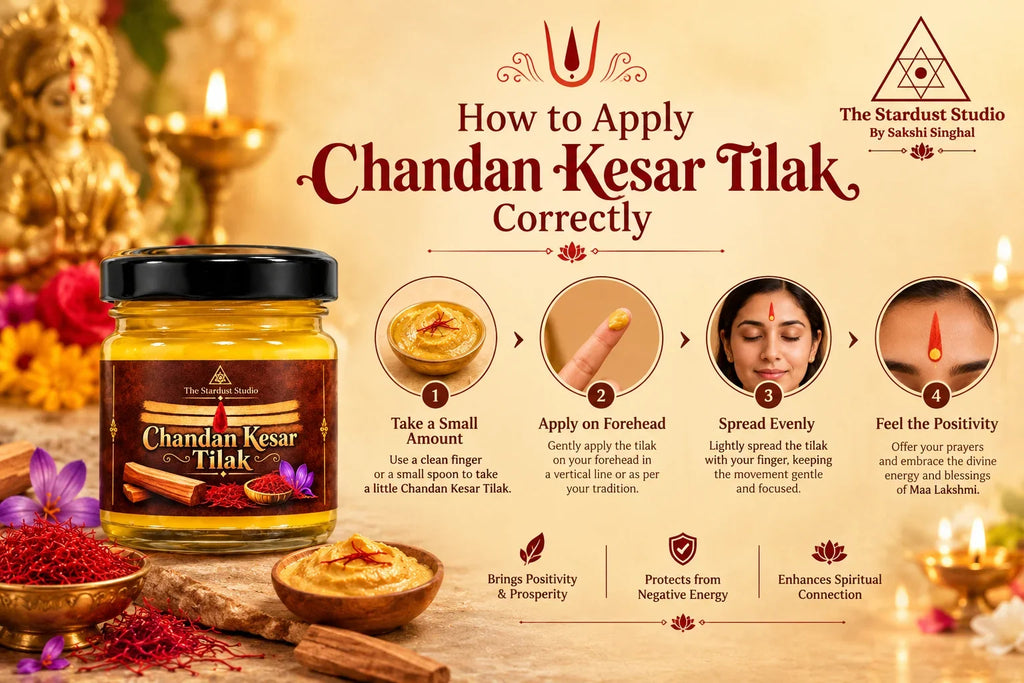
How to Apply Chandan Kesar Tilak Correctly: Step-by-Step Guide
Applying Kesar Chandan Tilak can be simple when using a ready-to-apply paste.
Step 1: Clean Your Forehead
Wash your face gently and ensure that your forehead is clean and dry.
Avoid applying tilak over irritated or broken skin.
Step 2: Take a Small Amount
Open the tilak container and take a small quantity using a clean fingertip or suitable applicator.
A small amount is usually sufficient for a single forehead mark.
Step 3: Use Your Ring Finger or Index Finger
In many household traditions, the ring finger is commonly used for devotional tilak application.
Other traditions may use the index finger, thumb or a specific applicator depending on the ritual.
Follow the method prescribed by your family or sampradaya.
Step 4: Apply the Tilak on the Forehead
For a simple round Chandan Kesar Tilak, gently place the paste at the centre of the forehead, typically between or slightly above the eyebrows according to your tradition.
Use one fingertip to create a small, neat yellow mark.
Step 5: Maintain the Traditional Shape
Different Hindu traditions use different tilak designs.
For a simple round tilak, gently press the paste into a circular shape.
Avoid repeatedly rubbing the area.
Step 6: Allow It to Set Naturally
Let the tilak settle on the skin.
Do not apply excessive pressure or repeatedly touch the mark.
Step 7: Begin Your Puja or Prayer
Continue with your daily puja, mantra chanting, meditation or temple visit.
Which Finger Should Be Used to Apply Chandan Kesar Tilak?
There is no single universal rule across every Hindu tradition.
Some common practices include:
Ring Finger: Often used for devotional tilak application in many households.
Index Finger: Used in certain personal or regional practices.
Thumb: Used in some specific ritual traditions.
The correct finger depends on the purpose of the tilak and the tradition followed.
For ordinary personal application, cleanliness and gentle handling are important.
Where Should Chandan Kesar Tilak Be Applied?
The forehead is the most common location.
Depending on the religious tradition, tilak may be applied:
- Between the eyebrows
- Slightly above the eyebrow centre
- As a vertical mark
- As a round mark
- In another prescribed devotional pattern
If your family follows a particular Vaishnava, Shaiva, Shakta or other tilak tradition, continue using the appropriate design.
What Is the Correct Shape of Chandan Kesar Tilak?
The shape depends on the devotional practice.
- Round Tilak : A small circular mark is common in many household puja traditions.
- Vertical Tilak : Some traditions use a vertical mark associated with their devotional identity.
- U-Shaped Tilak : Certain Vaishnava traditions use distinctive U-shaped or related tilak patterns.
- Other Traditional Marks : Different sampradayas have their own established designs.
For a ready-to-apply yellow Chandan Kesar Tilak intended for general puja use, a simple round mark may be convenient where it aligns with household tradition.
Kesar Tilak Benefits
The commonly discussed Kesar Tilak benefits are primarily devotional, cultural and sensory.
1. Symbol of Auspiciousness
Saffron is traditionally associated with sacred ceremonies and auspicious occasions.
2. Represents Devotion
Applying tilak can express reverence toward the deity being worshipped.
3. Complements Daily Puja
Tilak application can become part of a consistent devotional routine.
4. Traditional Fragrance
Saffron and sandalwood are valued for their distinctive aromatic characteristics.
5. Spiritual Awareness
In some spiritual traditions, applying tilak is associated with mindful preparation for prayer and meditation.
These benefits should not be interpreted as scientifically proven effects on luck, wealth, concentration or health.
Kesar Chandan Tilak Benefits
The traditional Kesar Chandan Tilak benefits come from the combined symbolism of sandalwood and saffron.
Purity and Devotion
Chandan is widely associated with sacred worship and purity.
Auspicious Beginnings
Kesar is traditionally used in important ceremonies and devotional preparations.
Calm and Peaceful Atmosphere
The fragrance and ritual of applying tilak may contribute to a personally calming devotional experience.
Spiritual Focus
A regular tilak routine can serve as a reminder to approach prayer with attention and sincerity.
Traditional Identity
Tilak can help preserve a meaningful connection with family and religious customs.
Why Is Chandan Used in Tilak?
Chandan, or sandalwood, has longstanding significance in Hindu devotional traditions.
It is commonly used in:
- Puja
- Temple worship
- Religious ceremonies
- Devotional pastes
- Traditional fragrances
- Sacred offerings
Sandalwood's characteristic fragrance contributes to its ceremonial appeal.
In traditional practice, Chandan is often associated with calmness and purity.
However, a sandalwood-containing cosmetic product should not automatically be considered a medical cooling treatment.
Why Is Kesar Used in Tilak?
Kesar, or saffron, is valued for its distinctive colour, aroma and cultural significance.
It is used in various Indian religious and ceremonial traditions.
In devotional symbolism, saffron is commonly associated with:
- Auspiciousness
- Purity
- Devotion
- Sacred offerings
- Festive ceremonies
Its inclusion gives Kesar Chandan Tilak a distinctive traditional identity.
Chandan Kesar Tilak for Daily Puja
A Chandan Kesar Tilak can be incorporated into regular home worship.
A simple routine may include:
- Clean your hands and forehead.
- Prepare your home mandir.
- Apply a small tilak.
- Light a diya safely.
- Offer prayers according to household tradition.
- Complete your devotional practice.
The tilak is a supplementary devotional element and should not be treated as mandatory for every form of Hindu worship.
Can You Apply Chandan Kesar Tilak Every Day?
Yes, provided the specific product is formulated for regular skin application and does not cause irritation.
Use a small amount and maintain hygiene.
If you have sensitive skin, test the product cautiously before regular use.
Discontinue application if you experience redness, itching or discomfort.
Chandan Kesar Tilak for Festivals
Chandan Kesar Tilak may be used during various Hindu celebrations, depending on family tradition.
Diwali
Tilak can complement Lakshmi-Ganesha Puja and other festive rituals.
Navratri
Devotees may apply tilak before worshipping Goddess Durga.
Janmashtami
Tilak application is common in different Krishna devotional traditions.
Ganesh Chaturthi
A tilak may be applied during Lord Ganesha worship.
Ram Navami
Devotees may incorporate tilak into their Ram Navami prayers.
Temple Visits
Tilak is often used as a sign of devotion during temple worship.
Ready-to-Apply Chandan Kesar Tilak vs Traditional Homemade Tilak
Both forms can be suitable depending on preference.
Traditional Homemade Tilak
A homemade preparation may involve sandalwood paste, saffron and a suitable liquid.
Its texture and colour depend on the ingredients and method used.
Ready-to-Apply Tilak
A prepared tilak paste is designed for convenience and consistent application.
It may contain a cream or paste base to support texture and stability.
The most appropriate option depends on ingredient quality, skin compatibility and personal preference.
How to Identify Original Kesar Chandan Tilak
If you're searching for Original Kesar Chandan Tilak, review the actual ingredients rather than relying only on colour or fragrance.
1. Check the Ingredients
Look for clear information about sandalwood, saffron and the paste base.
2. Review the Product Form
Confirm whether it is a paste, cream, powder or another preparation.
3. Examine the Colour
A yellow or saffron-toned colour does not automatically prove the presence of genuine saffron.
4. Check the Fragrance
Natural sandalwood and saffron have distinctive aromas, but fragrance alone cannot establish authenticity.
5. Review Product Claims
Terms such as "pure," "organic" and "original" should be supported by appropriate ingredient or manufacturing information.
6. Choose a Transparent Seller
Look for clear product specifications, quantity, intended use and safety instructions.
Kesar Tilak Online: What to Check Before Buying
When searching for Kesar Tilak Online, consider:
- Ingredients
- Product quantity
- Texture
- Colour
- Fragrance
- Skin-use instructions
- Packaging
- Shelf life
- Seller transparency
- Current price
If you prefer a ready-to-use product, check whether the paste requires mixing or can be applied directly.
Can Chandan Kesar Tilak Cause Skin Irritation?
Yes, some people may be sensitive to fragrance ingredients, botanical extracts, preservatives or other components.
If irritation occurs:
- Stop using the product.
- Gently remove it from the skin.
- Avoid applying it to broken skin.
- Seek medical advice if symptoms persist.
Natural ingredients are not automatically suitable for every skin type.
Common Mistakes When Applying Chandan Kesar Tilak
Applying Too Much Paste
A small amount is generally enough for a neat tilak.
Using Unclean Fingers
Always maintain hygiene during application.
Rubbing the Forehead Repeatedly
Gentle application is preferable.
Ignoring Skin Sensitivity
Stop use if irritation occurs.
Assuming Every Tilak Tradition Uses the Same Shape
Follow your family or sampradaya.
Assuming Yellow Colour Proves Authenticity
Check the actual ingredients.
Why Choose Chandan Kesar Tilak from The Stardust Studio?
At The Stardust Studio, our Chandan Kesar Tilak is inspired by traditional Hindu devotional practices and the sacred combination of sandalwood and saffron.
Designed as a ready-to-apply tilak paste, it offers a convenient option for daily puja, temple visits, meditation and festive ceremonies.
Whether you're looking for Chandan Kesar Tilak, Kesar Chandan Tilak or Original Kesar Chandan Tilak, choose according to the product's actual ingredients, texture, quantity and skin compatibility.
A thoughtfully prepared tilak can complement your devotional routine while preserving the symbolism of purity, auspiciousness and spiritual awareness.
Final Thoughts
Chandan Kesar Tilak is a meaningful devotional preparation that combines the traditional symbolism of sandalwood and saffron.
Whether applied during daily puja, meditation, temple visits or festive ceremonies, Kesar Chandan Tilak represents purity, auspiciousness, devotion and spiritual awareness.
The correct application method depends on your family tradition. For a simple round tilak, use a clean fingertip, apply a small amount to the centre of the forehead and allow it to settle naturally.
The traditional Kesar Tilak benefits and Kesar Chandan Tilak benefits are rooted in devotional symbolism rather than guaranteed physical or supernatural effects.
When searching for Original Kesar Chandan Tilak or planning to buy Kesar Tilak Online, review the actual ingredients, formulation, quantity and skin-use instructions.
Explore Chandan Kesar Tilak from The Stardust Studio as a meaningful addition to your daily worship and festive spiritual routine.
FAQs
1. How do you apply Chandan Kesar Tilak correctly?
2. Which finger should be used for Kesar Chandan Tilak?
3. What are Kesar Chandan Tilak benefits?
4. Can Chandan Kesar Tilak be applied daily?
5. Is Chandan Kesar Tilak suitable for Diwali and Navratri?


