


How to Wear Tulsi Mala: Rules, Benefits and Common Mistakes
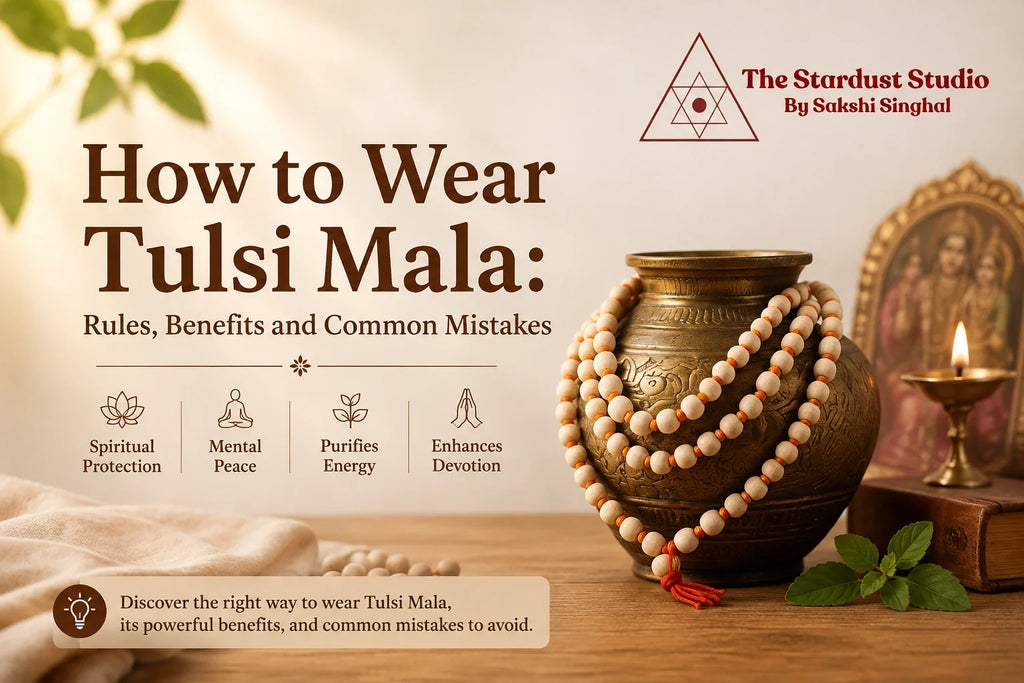
The Tulsi Mala holds a special place in Hindu spiritual traditions and is widely worn by devotees of Lord Vishnu, Lord Krishna, and followers of Bhakti practices. Made from the sacred Tulsi plant (Holy Basil), this mala is valued not only for its natural beauty but also for its deep devotional significance.
Many people wear Tulsi Mala during prayer, mantra chanting, meditation, or as a daily spiritual accessory. However, first-time buyers often have questions:
- How should you wear a Tulsi Mala?
- Are there specific rules to follow?
- What are the traditional Tulsi Mala benefits?
- How can you identify an original Tulsi Mala?
- What factors affect the Tulsi Mala price?
This complete guide explains the meaning, wearing method, traditional significance, common mistakes, and buying tips for choosing a pure Tulsi Mala.
Disclaimer: The spiritual significance and benefits discussed in this article are based on Hindu traditions, devotional practices, and cultural beliefs. They are not scientifically proven and should not be interpreted as guaranteed spiritual, health, or material outcomes.
What Is a Tulsi Mala?
A Tulsi Mala is a string of beads made from the wood of the sacred Tulsi plant, also known as Holy Basil.
In Hindu traditions, Tulsi is considered highly sacred and is closely associated with Lord Vishnu and Lord Krishna devotion. Tulsi leaves are commonly offered during worship, and Tulsi wood is traditionally used to create malas for chanting and devotional practices.
A Tulsi Mala may be worn as:
- A meditation accessory
- A devotional necklace
- A Japa mala for mantra chanting
- A reminder of spiritual discipline
Spiritual Meaning of Tulsi Mala
Tulsi holds a unique position in Vaishnav traditions.
Traditionally, Tulsi represents:
- Devotion
- Purity
- Surrender
- Bhakti
- Connection with the Divine
For many devotees, wearing a Tulsi Mala is a personal expression of faith and a reminder to maintain a spiritual mindset throughout daily life.
Tulsi Mala Benefits
The commonly discussed Tulsi Mala benefits are based on traditional beliefs and devotional practices.
1. Symbol of Devotion
Tulsi Mala is traditionally associated with devotion toward Lord Vishnu and Lord Krishna.
Many devotees wear it as an expression of their faith and connection with Bhakti practices.
2. Supports Mantra Chanting
Tulsi beads are traditionally used for Japa meditation.
Devotees may use the mala while chanting mantras such as:
Hare Krishna Hare Krishna
Krishna Krishna Hare Hare
Hare Rama Hare Rama
Rama Rama Hare Hare
or other personal mantras according to their tradition.
3. Encourages Mindfulness
Wearing a Tulsi Mala can serve as a daily reminder to stay connected with prayer, gratitude, and spiritual discipline.
4. Natural and Lightweight Spiritual Accessory
Because Tulsi wood is naturally lightweight, many people find it comfortable for regular wear.
5. Traditional Protective Symbol
In many devotional traditions, Tulsi is considered sacred and is worn as a symbol of spiritual connection and positive intentions.
How to Wear a Tulsi Mala Correctly
There is no single universal rule followed by every tradition, but many devotees follow these respectful practices.
Step 1: Clean the Mala Before First Use
Before wearing a new Tulsi Mala, many people gently clean it and keep it in their prayer space.
Avoid soaking wooden beads for long periods as moisture can affect their durability.
Step 2: Offer a Prayer
Many devotees place the mala before their deity and offer a simple prayer before wearing it.
You may chant your preferred mantra according to your spiritual practice.
Step 3: Wear It Around the Neck
A Tulsi Mala is traditionally worn around the neck as a devotional accessory.
Many devotees wear it regularly as part of their spiritual routine.
Step 4: Use It During Japa
If your Tulsi Mala is designed for mantra counting, hold the beads respectfully while chanting.
Traditionally, many practitioners use the thumb and middle finger while moving through the beads.
Also Read : How to Wear a Karungali Mala: Rules, Benefits and Common Mistakes
Which Day Is Best to Wear Tulsi Mala?
Many devotees choose auspicious days connected with Vishnu or Krishna worship, such as:
- Thursday
- Ekadashi
- Janmashtami
- Any day of personal spiritual significance
However, many traditions also allow devotees to begin wearing Tulsi Mala whenever they are ready to start their devotional practice.
Sincerity and devotion are considered more important than choosing a specific date.
Can Everyone Wear a Tulsi Mala?
A Tulsi Mala is commonly worn by both men and women.
It is especially popular among:
- Krishna devotees
- Vishnu devotees
- Meditation practitioners
- Bhakti followers
- People interested in spiritual accessories
Specific practices may vary between different traditions, so follow your personal spiritual guidance if you have one.
Common Mistakes to Avoid While Wearing Tulsi Mala
1. Treating It Only as Fashion Jewellery
For many devotees, Tulsi Mala is a sacred spiritual accessory rather than just a decorative necklace.
Wearing it with respect is considered important.
2. Exposing It to Excessive Water
Tulsi beads are made from wood and can be affected by prolonged moisture.
Avoid:
- Swimming while wearing it
- Long showers with the mala
- Soaking it unnecessarily
3. Using Harsh Chemicals
Avoid applying:
- Perfume directly on beads
- Chemical cleaners
- Strong oils
These can affect the natural wood.
4. Ignoring Storage
When not wearing your mala, keep it in a clean and dry place.
A dedicated pouch or prayer space is ideal.
5. Buying Without Checking Authenticity
Many imitation wooden malas are available online.
Always check whether the seller provides clear information about the material and craftsmanship.
How to Identify an Original Tulsi Mala
If you are looking for an original Tulsi Mala, consider these points:
Natural Wood Appearance
Authentic Tulsi beads usually show natural variations in:
- Colour
- Texture
- Grain patterns
Uniform plastic-like appearance may indicate imitation material.
Lightweight Feel
Tulsi wood is naturally lightweight, making genuine malas comfortable to wear.
Quality Craftsmanship
Look for:
- Smooth bead finishing
- Strong threading
- Properly drilled beads
- Comfortable construction
Trusted Seller
Choose a seller who provides:
- Product details
- Clear images
- Material information
- Customer support
Transparency helps you make an informed purchase.
Pure Tulsi Mala: What Should You Check?
When searching for a pure Tulsi Mala, avoid relying only on marketing words.
Check:
- Material details
- Bead quality
- Craftsmanship
- Product photographs
- Seller reputation
Natural Tulsi wood can vary slightly from piece to piece, which is normal.
Tulsi Mala Price: What Determines the Cost?
The Tulsi Mala price depends on several factors:
- Quality of Tulsi wood
- Bead size
- Number of beads
- Craftsmanship
- Thread quality
- Finishing
- Brand reputation
A handmade mala using carefully selected Tulsi beads may naturally cost more than a mass-produced alternative.
However, price alone does not determine authenticity.
How to Care for Your Tulsi Mala
To preserve your mala:
- Keep it away from excessive moisture.
- Store it in a clean pouch.
- Avoid direct perfume contact.
- Wipe gently with a soft cloth.
- Handle respectfully during prayer.
Proper care helps maintain the natural beauty of Tulsi wood.
Why Choose Tulsi Mala from The Stardust Studio?
At The Stardust Studio, we believe spiritual accessories should combine authenticity, craftsmanship, and meaningful design.
Our Tulsi Mala is thoughtfully crafted for devotees and individuals who appreciate traditional spiritual products.
When choosing The Stardust Studio, you can expect:
- Carefully selected Tulsi beads
- Premium craftsmanship
- Comfortable everyday design
- Secure packaging
- Trusted customer support
Whether you are searching for a pure Tulsi Mala, an original Tulsi Mala, or a meaningful spiritual accessory, our collection is designed to support your devotional journey.
Final Thoughts
A Tulsi Mala is much more than a traditional wooden necklace. For devotees, it represents faith, purity, devotion, and a connection with spiritual practices passed down through generations.
Whether you wear it during mantra chanting, meditation, prayer, or as a daily reminder of mindfulness, choosing an original Tulsi Mala ensures better craftsmanship and authenticity.
If you're looking for a pure Tulsi Mala crafted with care, explore the spiritual collection at The Stardust Studio. Thoughtfully designed with traditional significance and quality craftsmanship, our malas are created to become a meaningful part of your devotional journey.
Frequently Asked Questions
1. What are the Tulsi Mala benefits?
2. How should I wear a Tulsi Mala?
3. How can I identify an original Tulsi Mala?
4. What affects the Tulsi Mala price?
5. Can I wear Tulsi Mala every day?


