


Narak Chaturdashi 2026: Date, Choti Diwali & Rituals
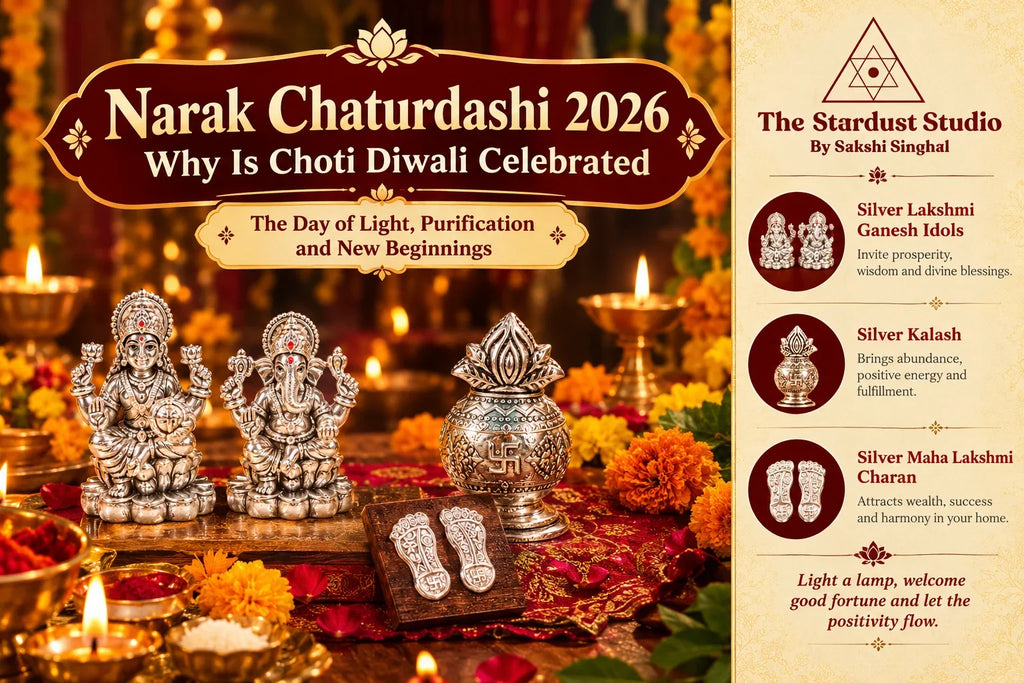
Narak Chaturdashi, popularly known as Choti Diwali, is an important Hindu festival celebrated during the Diwali period. Associated with Lord Krishna's victory over the demon Narakasura, the festival symbolizes the triumph of righteousness over evil and the removal of darkness.
Also known as Naraka Chaturdashi, Kali Chaudas, Roop Chaudas and Narak Nivaran Chaturdashi in different regional traditions, the day is observed through early-morning bathing rituals, oil application, prayers, lighting diyas and preparing for the main Diwali celebrations.
In 2026, Narak Chaturdashi falls on Sunday, November 8, the same civil date as Diwali Lakshmi Puja in many North Indian calendars.
One of the most distinctive rituals of the festival is Abhyang Snan, a traditional oil-bath practice performed before sunrise during the appropriate Chaturdashi period.
The festival also provides an opportunity to prepare the home mandir for Diwali. Permanent devotional pieces such as Silver Lakshmi Ganesh Idols, Pure Silver Kalash, Silver Maha Lakshmi Charan, Silver Lotus, Silver Swastik and Silver Kuber Yantra can complement the festive arrangement.
A Silver Swastik represents auspiciousness, while a Silver Lotus carries sacred symbolism associated with purity and divinity. Silver Lakshmi Ganesh Idols and Silver Maha Lakshmi Charan are particularly meaningful for the upcoming Lakshmi Puja, while a Silver Kuber Yantra can remain in a prosperity-focused devotional collection.
These pieces can enhance your home mandir, but they are not compulsory ingredients of Narak Chaturdashi rituals.
This guide explains the Narak Chaturdashi 2026 date, Choti Diwali significance, Abhyang Snan, traditional diya rituals, puja practices and the connection between Narak Chaturdashi and Diwali 2026.
Important: Narak Chaturdashi observances differ between regions. Abhyang Snan Muhurat is location-specific, and the civil date of Choti Diwali may vary depending on the local Panchang and the particular tradition followed.
When Is Narak Chaturdashi in 2026?
Narak Chaturdashi 2026 Date: Sunday, November 8, 2026
Narak Chaturdashi is associated with Krishna Paksha Chaturdashi of the Kartik month.
The festival is traditionally observed during the period when Chaturdashi Tithi prevails at the appropriate pre-sunrise time for Abhyang Snan.
In 2026, many Panchang calendars identify November 8 as the principal Narak Chaturdashi observance.
However, regional Diwali schedules and Choti Diwali customs can differ, so devotees should check the local Panchang for their specific tradition.
Narak Chaturdashi 2026 Date and Time
The important festival details are:
Festival Date: Sunday, November 8, 2026
Lunar Tithi: Kartik Krishna Paksha Chaturdashi
Abhyang Snan: Traditionally performed before sunrise during the prescribed Muhurat.
Diya Rituals: Follow the evening or other traditional lamp-lighting customs observed in your household.
Diwali Lakshmi Puja: Also observed on November 8 in many North Indian calendars.
Exact Chaturdashi Tithi and Abhyang Snan timings depend on location.
Why Is Narak Chaturdashi Called Choti Diwali?
Narak Chaturdashi is popularly called Choti Diwali because it forms part of the wider Diwali festive period.
In many North Indian households, Choti Diwali is associated with preparing the home for the main Diwali celebration.
These preparations may include:
- Cleaning the house
- Decorating the entrance
- Lighting diyas
- Preparing sweets
- Arranging the home mandir
- Completing festive purchases
- Spending time with family
However, Narak Chaturdashi is also a distinct religious observance with its own mythology and ritual significance.
Why Is Narak Chaturdashi Celebrated?
The festival is widely associated with Lord Krishna's victory over Narakasura.
According to popular Hindu narratives, Narakasura was a powerful ruler whose actions caused suffering and oppression.
Lord Krishna, with Satyabhama playing an important role in many versions of the story, defeated Narakasura.
The event is remembered as a victory of Dharma over Adharma.
The festival therefore symbolizes:
- Victory over evil
- Courage
- Righteous action
- Liberation from oppression
- Removal of darkness
- Auspicious new beginnings
Story of Lord Krishna and Narakasura
The story of Narakasura is one of the central narratives associated with Narak Chaturdashi.
In popular traditions, Narakasura is described as a powerful demon king who caused suffering and imprisoned many women.
Lord Krishna confronted Narakasura, and Satyabhama is given a significant role in several retellings.
After Narakasura's defeat, the captives were freed.
The story is traditionally interpreted as a reminder that power should be guided by Dharma and that injustice must be confronted.
Different regional versions of the narrative contain variations in detail.
Spiritual Significance of Narak Chaturdashi
The festival's significance extends beyond the mythological story.
- Victory of Dharma : Lord Krishna's victory represents the triumph of righteousness over destructive actions.
- Spiritual Purification : The Abhyang Snan tradition symbolizes cleansing and renewal.
- Removal of Darkness : Lighting diyas represents the movement from darkness toward light.
- Preparation for Diwali : The festival creates a transition into the broader celebration of light, prosperity and auspiciousness.
- Personal Reflection : Narak Chaturdashi can encourage devotees to reflect on negative habits, fear, anger and other patterns they wish to change.
What Is Abhyang Snan?
Abhyang Snan is a traditional oil-bath ritual associated with Narak Chaturdashi.
The practice generally involves applying oil to the body before bathing.
In many traditions, it is performed before sunrise during the prescribed Chaturdashi period.
The ritual symbolizes purification, renewal and preparation for the sacred festival.
Regional customs may include different oils, herbal preparations or bathing methods.
Why Is Abhyang Snan Performed on Narak Chaturdashi?
Abhyang Snan has religious and cultural significance.
Its symbolism includes:
- Purification : The bathing ritual represents cleansing before the festival.
- Renewal : It marks the beginning of a fresh and auspicious period.
- Discipline : Waking early and following the traditional bathing practice can be an expression of devotional commitment.
- Cultural Continuity : The ritual preserves customs followed across generations.
The practice should be understood within its religious context rather than as a medically proven method of removing negative energy or preventing disease.
How to Perform Abhyang Snan at Home
A simple traditional approach can include the following.
Step 1: Wake Up Before Sunrise
Begin according to the Abhyang Snan Muhurat followed in your region.
Step 2: Prepare the Oil
Use a suitable body oil according to your household tradition and personal skin tolerance.
Step 3: Apply Oil Gently
Massage a small amount of oil onto the skin.
Avoid using unfamiliar products that may cause irritation.
Step 4: Bathe
Take a comfortable bath using a suitable cleanser or traditional bathing preparation.
Step 5: Wear Clean Clothes
After bathing, wear fresh clothes and prepare for prayer.
Step 6: Perform Morning Worship
Offer prayers according to your household tradition.
The exact ritual sequence may differ by region.
Can Everyone Perform Abhyang Snan?
Most people can adapt a gentle bathing practice to their comfort and circumstances.
However, avoid using oils or herbal mixtures that irritate your skin.
People with allergies, sensitive skin or dermatological conditions should choose appropriate products and avoid unnecessary experimentation.
The spiritual observance does not require using ingredients that cause discomfort.
Narak Chaturdashi Puja Vidhi at Home
A simple home observance can include the following.
Step 1: Clean the Home Mandir
Prepare a clean and peaceful devotional space.
Step 2: Perform Abhyang Snan
Follow the traditional bathing ritual according to your household custom.
Step 3: Light a Diya
Light a diya safely in your prayer area.
Step 4: Offer Flowers
Offer fresh flowers to the deity worshipped in your household.
Step 5: Chant Mantras
Chant the mantra associated with Lord Krishna, Goddess Kali or your Ishta Devata according to your tradition.
Step 6: Offer Bhog
Offer suitable fruits or Satvik sweets.
Step 7: Perform Aarti
Complete the worship with Aarti and prayer.
Which Deity Is Worshipped on Narak Chaturdashi?
The primary devotional focus varies by region.
- Lord Krishna : Narak Chaturdashi is strongly associated with Krishna's victory over Narakasura.
- Goddess Kali : In some regions, Kali Chaudas is observed with worship connected to Goddess Kali.
- Lord Yama : Certain traditions include rituals associated with Yama and prayers concerning protection and longevity.
- Household Deities : Families may continue their regular worship alongside the festival-specific observances.
Why Are Diyas Lit on Choti Diwali?
Diyas are an important symbol of the Diwali festive period.
Lighting a diya represents:
- Knowledge over ignorance
- Hope over darkness
- Auspiciousness
- Devotion
- Spiritual clarity
Many households light diyas during Choti Diwali as part of their festive preparations.
Keep all open flames supervised and away from flammable decorations.
How Many Diyas Should You Light on Narak Chaturdashi?
Different households follow different lamp-lighting customs.
Some light a single diya, while others prepare several lamps around the home.
There is no universal number that applies to every Narak Chaturdashi tradition.
Follow your family practice and prioritize fire safety.
Narak Chaturdashi and Yama Deepam
Some Diwali-period traditions include lighting a diya associated with Lord Yama.
Yama Deepam is particularly connected with Dhanteras in several Panchang traditions, while other regional practices include Yama-related observances around Narak Chaturdashi.
The exact timing and method depend on the ritual followed.
Do not assume every household performs Yama Deepam on the same civil date.
How to Prepare Your Home Mandir for Choti Diwali
Narak Chaturdashi is a suitable occasion to clean and organize the home mandir before Lakshmi Puja.
A simple festive arrangement may include:
- Lakshmi Ganesh idols
- Diya
- Fresh flowers
- Puja thali
- Kalash where required
- Traditional decorations
- Silver devotional objects
Permanent silver pieces can remain in their regular positions.
Silver Lakshmi Ganesh Idols for Diwali Preparation
Silver Lakshmi Ganesh Idols are particularly meaningful for the upcoming Diwali Lakshmi Puja.
Goddess Lakshmi represents prosperity and abundance, while Lord Ganesha symbolizes wisdom and auspicious beginnings.
The idols can be cleaned and arranged respectfully during Choti Diwali preparations.
Pure Silver Kalash for Home Temple
A Pure Silver Kalash carries traditional symbolism of purity, abundance and auspiciousness.
It can remain in your home mandir during the Diwali period.
If your ritual requires a functional water-filled Kalash, confirm that the specific product is designed for holding liquids.
Silver Maha Lakshmi Charan for Auspiciousness
Silver Maha Lakshmi Charan symbolize the sacred footprints of Goddess Lakshmi.
They are traditionally associated with welcoming auspiciousness into the home.
Keep them in a protected, respectful location where they will not be stepped on.
Silver Lotus for Lakshmi Puja
A Silver Lotus is particularly meaningful in Lakshmi-inspired devotional arrangements.
The lotus is strongly associated with Goddess Lakshmi and symbolizes purity, divinity and spiritual growth.
A permanent Silver Lotus can complement fresh flowers and other traditional offerings.
Silver Swastik for Choti Diwali
A Silver Swastik can remain in the home mandir as an ancient Hindu symbol of auspiciousness.
It may also complement festive decorations where respectfully displayed.
Silver Kuber Yantra for Diwali
A Silver Kuber Yantra is associated with Lord Kuber and wealth-focused devotional traditions.
It can remain in a dedicated puja space during the Diwali festive period.
Its role is devotional and symbolic rather than a guaranteed method of attracting wealth.
What Is the Difference Between Narak Chaturdashi and Diwali?
Narak Chaturdashi and Diwali are related but distinct observances.
Narak Chaturdashi focuses on the Narakasura narrative, Abhyang Snan and regional rituals.
Diwali Lakshmi Puja focuses on Goddess Lakshmi, Lord Ganesha and the Amavasya-related evening worship in many traditions.
In 2026, both observances fall on November 8 in many North Indian calendars, but they retain their distinct ritual meanings.
What Should You Do on Narak Chaturdashi?
A meaningful observance may include:
- Waking before sunrise
- Performing Abhyang Snan
- Wearing clean clothes
- Offering prayers
- Lighting diyas
- Preparing the home mandir
- Offering suitable bhog
- Spending time with family
- Reflecting on the victory of good over evil
You do not need to perform every ritual listed online.
Follow the customs meaningful to your family.
Common Narak Chaturdashi Mistakes
Assuming Choti Diwali Always Falls One Day Before Lakshmi Puja
Festival dates can overlap depending on the lunar calendar.
Using Another City's Abhyang Snan Muhurat
Ritual timings are location-specific.
Confusing Different Regional Traditions
Kali Chaudas, Narak Chaturdashi and Choti Diwali may have different regional customs.
Using Irritating Oils During Abhyang Snan
Choose products appropriate for your skin.
Treating Silver Products as Mandatory
Silver devotional objects can complement the home mandir but are not compulsory Narak Chaturdashi offerings.
Why Explore The Stardust Studio for Choti Diwali Puja Essentials?
At The Stardust Studio, our silver spiritual collection brings together traditional symbolism with thoughtfully crafted devotional products.
For Choti Diwali and the wider Diwali festive period, explore:
Silver Lakshmi Ganesh Idols – combining prosperity and wisdom symbolism.
Pure Silver Kalash – representing abundance and auspiciousness.
Silver Maha Lakshmi Charan – sacred footprints associated with welcoming Goddess Lakshmi.
Silver Lotus – a lasting symbol of purity and divinity.
Silver Swastik – an auspicious Hindu symbol for a permanent home mandir.
Silver Kuber Yantra – a devotional object associated with Lord Kuber and wealth symbolism.
These pieces can complement your home temple while the main focus of Narak Chaturdashi remains traditional bathing, prayer, diyas and the symbolism of righteous victory.
Final Thoughts
Narak Chaturdashi 2026 will be celebrated on Sunday, November 8, the same day as Diwali Lakshmi Puja in many Indian calendars. The traditional Abhyang Snan Muhurat in New Delhi is approximately 5:41 AM to 6:38 AM, making the early morning particularly significant for this observance.
Also known as Choti Diwali, Narak Chaturdashi celebrates Lord Krishna's victory over Narakasura and represents the triumph of righteousness over darkness and injustice.
From the early-morning Abhyang Snan to lighting diyas and preparing the home mandir, the festival encourages purification, devotion and auspicious new beginnings.
For your Diwali home temple, meaningful devotional pieces such as Silver Lakshmi Ganesh Idols, Pure Silver Kalash, Silver Maha Lakshmi Charan, Silver Lotus, Silver Swastik and Silver Kuber Yantra from The Stardust Studio can complement your festive arrangements and remain part of your spiritual collection throughout the year.
May Narak Chaturdashi 2026 inspire peace, clarity, happiness and auspicious beginnings for you and your family.
The Stardust Studio wishes you a blessed Choti Diwali and a joyful Diwali 2026!
FAQs
1. When is Narak Chaturdashi 2026?
2. What is the Narak Chaturdashi 2026 date and time?
3. What is the Abhyang Snan Muhurat on Narak Chaturdashi 2026?
4. Is Narak Chaturdashi and Diwali on the same day in 2026?
5. Why is Narak Chaturdashi celebrated?


