


Navratri Day 9 Maa Siddhidatri 2026: Puja Vidhi, Mantra & Bhog
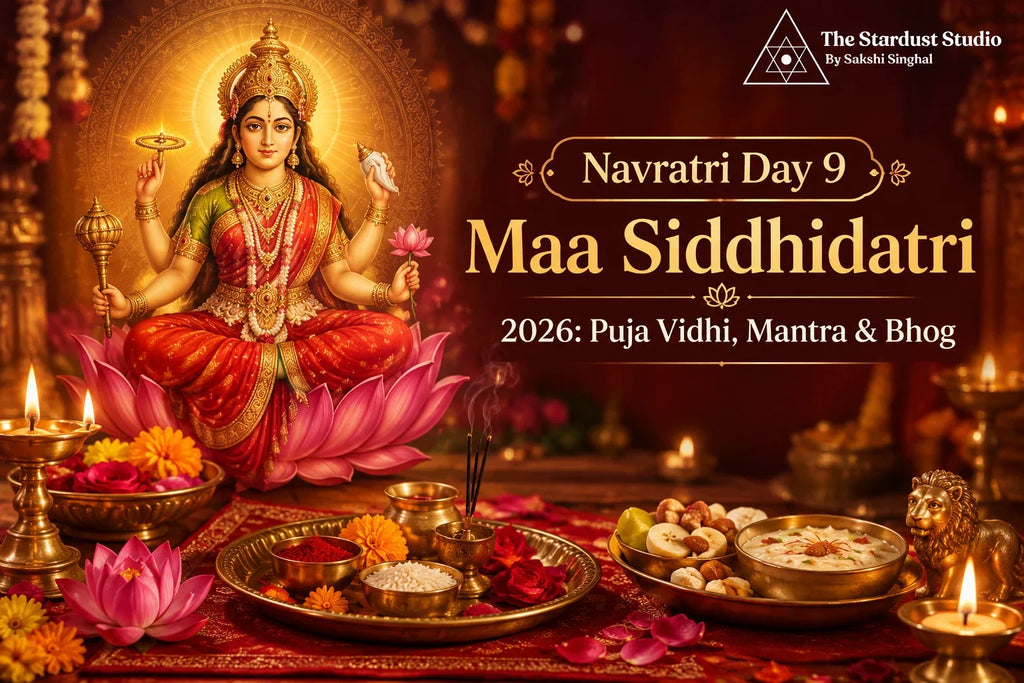
The ninth day of Shardiya Navratri is dedicated to Maa Siddhidatri, the ninth and final manifestation of Navdurga. After eight days of worshipping different expressions of Shakti, Day 9 brings the Navdurga journey toward completion with a form traditionally associated with spiritual accomplishment, wisdom, completeness and divine grace.
In 2026, Maa Siddhidatri Navratri Day 9 falls on Monday, October 19. The traditional weekday-based Navratri color for the day is Peacock Green, a rich shade popularly associated with individuality, freshness and grace.
Navami is also an important day for special Devi worship, Havan and Kanya Pujan in many households. Exact practices differ by family and region, particularly because Ashtami and Navami observances should be followed according to the prevailing Tithi and local Panchang.
For your Day 9 mandir, a Silver Lotus can complement Maa Siddhidatri's traditional lotus imagery, while a Silver Swastik may remain as an auspicious symbol in your sacred space. A Silver Tulsi Plant, Silver Maha Lakshmi Charan, and Silver Lakshmi Ganesh Idols can also remain respectfully arranged in your permanent home-mandir collection.
These devotional pieces can enhance the sacred environment, but Maa Siddhidatri, the Navratri Kalash, mantra, bhog and traditional offerings should remain the central focus of Navami worship.
Important: Navratri Puja, Havan, Kanya Pujan, fasting and Parana practices vary across families, regions and sampradayas. Follow your family tradition, Guru or priest's guidance where it differs from this general home-puja guide.
When Is Maa Siddhidatri Navratri Day 9 in 2026?
Maa Siddhidatri Puja 2026 Date: Monday, October 19, 2026
Maa Siddhidatri is worshipped as the ninth form of Navdurga.
The complete Navdurga journey is:
- Day 1 – Maa Shailputri
- Day 2 – Maa Brahmacharini
- Day 3 – Maa Chandraghanta
- Day 4 – Maa Kushmanda
- Day 5 – Maa Skandamata
- Day 6 – Maa Katyayani
- Day 7 – Maa Kalaratri
- Day 8 – Maa Mahagauri
- Day 9 – Maa Siddhidatri
Day 9 represents the culmination of this spiritual progression.
Who Is Maa Siddhidatri?
Maa Siddhidatri is the final manifestation worshipped among the nine forms of Goddess Durga.
Her name can be understood as:
Siddhi – spiritual accomplishment, perfection or attainment
Datri – giver or bestower
Thus, Siddhidatri can be understood as the giver of Siddhis or spiritual attainments within traditional devotional interpretation.
She is commonly depicted seated on a lotus and holding sacred objects in her four hands.
Her peaceful appearance represents the completion of the Navdurga journey through spiritual wisdom and Divine grace.
Maa Siddhidatri Significance
The significance of Maa Siddhidatri extends beyond the literal idea of receiving supernatural Siddhis.
For a modern devotee, her symbolism can also be understood through themes of completion, wisdom and spiritual maturity.
1. Completion
Maa Siddhidatri appears on the ninth and final day of Navdurga worship.
She represents the completion of a spiritual cycle that began with Maa Shailputri on Day 1.
2. Wisdom
After passing symbolically through discipline, courage, creation, compassion, confrontation and purification, the journey reaches wisdom and integration.
3. Spiritual Accomplishment
Her name connects her with Siddhi, traditionally referring to accomplishment or spiritual attainment.
4. Divine Grace
Her form reminds devotees that effort is important, but spiritual traditions also place importance on grace.
5. Inner Fulfilment
Day 9 can become an opportunity to reflect on what genuine fulfilment means beyond material achievement.
Why Is Maa Siddhidatri Worshipped on Navratri Day 9?
The sequence of Navdurga forms creates a symbolic spiritual journey.
Maa Shailputri gives us a foundation.
Maa Brahmacharini teaches discipline.
Maa Chandraghanta develops courage.
Maa Kushmanda represents creative energy.
Maa Skandamata introduces compassion.
Maa Katyayani represents decisive action.
Maa Kalaratri teaches us to confront darkness.
Maa Mahagauri represents purification and clarity.
Finally, Maa Siddhidatri represents completion and spiritual attainment.
Day 9 therefore asks devotees not simply what they achieved during Navratri, but what they learned from the journey.
Puja Essentials for Maa Siddhidatri Day 9
Your Navami altar should remain focused on Maa Siddhidatri and the Navratri Kalash.
Permanent silver devotional objects can complement the sacred space.
Silver Lotus
A Silver Lotus is particularly relevant to Day 9 because Maa Siddhidatri is traditionally depicted seated on a lotus.
The lotus symbolizes purity, divinity and spiritual growth across Hindu iconography.
Keep the Silver Lotus respectfully near the Goddess while continuing to offer fresh flowers according to your household tradition.
Silver Swastik
A Silver Swastik can remain in your mandir as a traditional Hindu symbol of auspiciousness and well-being.
It can complement the completion of Navratri without becoming a separate required offering.
Silver Tulsi Plant
A Silver Tulsi Plant can remain in its established home-mandir location.
Tulsi has particularly strong associations with Vishnu and Krishna devotional traditions. It is therefore better understood as part of your permanent sacred space rather than as a specific Maa Siddhidatri Puja item.
Silver Maha Lakshmi Charan
Silver Maha Lakshmi Charan symbolically represent the sacred footprints associated with Goddess Lakshmi and are commonly connected with welcoming auspiciousness and prosperity into the home.
They can remain respectfully arranged in your mandir during Navratri while Maa Siddhidatri remains the Day 9 focus.
Silver Lakshmi Ganesh Idols
Silver Lakshmi Ganesh Idols can remain in a permanent home mandir throughout Navratri.
Goddess Lakshmi and Lord Ganesha have their own devotional significance and do not become required Siddhidatri Puja objects simply because they are present on the altar.
A balanced mandir allows multiple devotional traditions to coexist without confusing their individual ritual roles.
Maa Siddhidatri Puja Vidhi
A simple Maa Siddhidatri Puja Vidhi can be followed at home on Navratri Day 9.
Step 1: Clean Your Home Mandir
Begin by cleaning the mandir and the area surrounding the Navratri Kalash.
Bathe or wash according to your devotional practice and wear clean clothes.
Step 2: Light a Diya
Light a diya and incense according to your household tradition.
If your family has maintained an Akhand Jyoti throughout Navratri, continue to follow appropriate fire-safety precautions.
Step 3: Worship the Navratri Kalash
Continue the worship of the Kalash established during Ghatasthapana on Day 1.
Navami represents the concluding stage of this nine-day practice.
Step 4: Offer Flowers to Maa Siddhidatri
Offer fresh flowers respectfully.
A permanent Silver Lotus can remain nearby as part of the altar, but it should not replace fresh offerings where those form part of your Puja Vidhi.
Step 5: Offer Kumkum and Akshat
Offer Kumkum, Akshat and other traditional puja materials according to your household practice.
Step 6: Offer Maa Siddhidatri Bhog
Prepare fresh Satvik bhog according to your family or regional tradition.
Step 7: Chant Maa Siddhidatri Mantra
Sit calmly before the Goddess and chant her mantra with attention and devotion.
Step 8: Perform Navami Havan Where Traditionally Followed
Many households perform Havan on Navami as part of the completion of Navratri.
If your family performs a formal Havan, follow the appropriate Vidhi and safety practices.
Step 9: Perform Kanya Pujan
Where traditionally observed on Navami, worship young girls as symbolic manifestations of Divine Feminine energy and offer food, Dakshina or gifts according to your household tradition.
Step 10: Perform Aarti
Conclude Maa Siddhidatri Puja with Durga Aarti and prayer.
Maa Siddhidatri Mantra
A simple and commonly recited Maa Siddhidatri Mantra is:
ॐ देवी सिद्धिदात्र्यै नमः॥
Om Devi Siddhidatryai Namah
You may chant it according to your personal practice.
Some devotees chant 11, 21 or 108 repetitions, but sincere attention and devotion are more important than becoming anxious about a particular count.
Maa Siddhidatri Prarthana
A traditional prayer associated with Maa Siddhidatri is:
सिद्धगन्धर्वयक्षाद्यैरसुरैरमरैरपि।
सेव्यमाना सदा भूयात् सिद्धिदा सिद्धिदायिनी॥
Devotees may recite this prayer during Day 9 worship according to their tradition.
Maa Siddhidatri Bhog
Sesame seeds or Til are commonly associated with Maa Siddhidatri Bhog in popular Navratri traditions.
Depending on your household custom, you may offer:
- Til
- Til-based sweets
- Fresh fruits
- Satvik sweets
- Other traditional Navami bhog
If your family has an established Navami offering, continue following that practice rather than changing it solely because a different bhog appears online.
After the offering and prayer, distribute prasad according to your household tradition.
Maa Siddhidatri Puja Color
The traditional weekday-based Maa Siddhidatri Puja Color 2026 is Peacock Green for Monday, October 19.
Peacock Green is popularly associated with:
- Individuality
- Freshness
- Grace
- Beauty
- Renewal
Devotees may wear Peacock Green clothing or incorporate subtle elements of the color into their Navami styling.
Following the day's Navratri color is a popular cultural tradition rather than a compulsory condition for worship.
Kanya Pujan on Navratri Day 9
Many households perform Kanya Pujan on Navami.
Young girls are respectfully worshipped as symbolic representations of Divine Feminine energy.
Depending on tradition, the ritual may include:
- Welcoming the girls respectfully.
- Washing their feet where traditionally practiced.
- Applying Tilak.
- Offering food.
- Giving Dakshina or gifts.
- Seeking their blessings.
Treat the children respectfully and maintain appropriate hygiene and comfort throughout the ceremony.
What Food Is Served During Kanya Pujan?
A common North Indian Kanjak meal includes:
- Poori
- Kala Chana
- Halwa
However, regional traditions differ considerably.
Follow the meal custom observed in your family.
Is Kanya Pujan Mandatory on Navami?
Not universally. Some families perform Kanya Pujan on Ashtami, some on Navami and others follow different sampradaya-specific practices.
The correct approach is to follow your established family tradition and local Tithi rather than assuming one internet schedule applies to everyone.
Maa Siddhidatri Vrat
Many devotees continue their Navratri fast through Navami.
Depending on household tradition, vrat foods may include:
- Fruits
- Milk
- Curd
- Makhana
- Nuts
- Sabudana
- Samak rice
- Potatoes
- Kuttu
- Singhara
- Sendha Namak where permitted
The method and timing for concluding the fast vary.
Some families perform Parana after Navami worship or Kanya Pujan, while others follow Dashami according to their tradition.
Prioritize health if you have medical or nutritional requirements.
When Should Navratri Vrat Be Broken?
Navratri Parana practices vary according to tradition and Panchang.
Do not assume that everyone should break the fast immediately after Maa Siddhidatri Puja.
Some traditions conclude after Navami observances, while others perform Parana on Dashami.
Follow your household practice and local Panchang.
Can Silver Swastik Be Kept During Maa Siddhidatri Puja?
Yes. A Silver Swastik can remain in your mandir throughout Navratri as an auspicious traditional Hindu symbol.
It does not require a separate ritual on Day 9 unless your family tradition specifies one.
Can Silver Lotus Be Used for Maa Siddhidatri Puja?
A Silver Lotus can complement Maa Siddhidatri's traditional lotus imagery particularly well.
Keep it respectfully near the Goddess as a permanent devotional symbol.
If your Puja Vidhi calls for fresh flowers, continue offering those separately.
Can Silver Maha Lakshmi Charan Be Kept During Navami?
Yes. Silver Maha Lakshmi Charan can remain in your permanent home mandir during Maa Siddhidatri worship.
Their symbolism is primarily associated with Goddess Lakshmi and welcoming auspiciousness, so they should not be presented as a required Siddhidatri Puja item.
Can Silver Lakshmi Ganesh Idols Remain in the Mandir During Navratri?
Yes. Silver Lakshmi Ganesh Idols can remain respectfully in your regular home-mandir arrangement throughout Navratri.
There is no need to remove existing deities while performing Navdurga worship.
Keep Maa Siddhidatri as the specific focus of Day 9 while respecting the other established forms in your mandir.
Can Silver Tulsi Plant Be Kept During Devi Puja?
Yes. A Silver Tulsi Plant can remain in your home temple during Navratri.
Tulsi symbolism is especially connected with Vishnu-Krishna devotional traditions and should be understood within that context rather than being described as a required Maa Siddhidatri offering.
Common Maa Siddhidatri Puja Mistakes
Overcrowding the Mandir
Navami does not require placing every spiritual object beside the Goddess.
Treating Siddhi as Guaranteed Supernatural Power
Maa Siddhidatri's spiritual symbolism is much broader than promises of extraordinary abilities.
Confusing Ashtami and Navami Traditions
Kanya Pujan and Havan practices vary. Follow your family's established tradition.
Treating Peacock Green as Mandatory
The Navratri color tradition is optional.
Breaking the Fast Without Following Your Tradition
Parana timing varies, so check your household practice and local Panchang.
Spiritual Lesson of Maa Siddhidatri
The ninth day completes a journey.
But completion is not simply reaching the end.
It is understanding what the journey taught you.
Navratri begins with a mountain through Maa Shailputri—symbolizing the need for a strong foundation.
It passes through discipline, courage, creativity, compassion, action, darkness and purification.
Finally, Maa Siddhidatri represents integration.
The spiritual lesson can therefore be summarized simply:
Real accomplishment is not only what you gain. It is who you become through the process.
What to Do After Navratri Day 9
After completing Maa Siddhidatri Puja, the next steps depend on the Navratri tradition followed in your household.
Some families complete major Navratri rituals on Navami itself, while others perform Parana and conclude the observance on Vijayadashami or Dashami.
You may:
- Perform the final Navami Aarti
- Complete Kanya Pujan where traditionally observed
- Perform Havan according to family tradition
- Distribute prasad
- Offer Dakshina or gifts
- Complete Navratri Vrat according to the appropriate Parana tradition
- Prepare for Vijayadashami
Do not dismantle the Ghatasthapana setup casually. The Kalash, sacred water, coconut, Jawara or other ritual elements should be concluded according to your household Puja Vidhi.
How to Conclude Navratri Kalash Puja
The Kalash established on the first day of Navratri has remained part of the worship throughout the nine-day observance.
After the final Puja, its conclusion should follow your family's traditional method.
Depending on the practice followed, this may involve:
- Performing the final prayer and Aarti.
- Offering gratitude to Maa Durga.
- Respectfully removing the coconut and other Kalash elements.
- Using or distributing sacred items according to family custom.
- Handling the Jawara or barley grown during Navratri according to tradition
- Cleaning the Puja area respectfully afterward.
If this is your first time performing Ghatasthapana, guidance from an experienced family member or priest is preferable to following conflicting online instructions.
What Happens After Maa Siddhidatri Puja?
Maa Siddhidatri completes the worship of the nine Navdurga forms, but the wider festive period moves toward Vijayadashami or Dussehra.
Vijayadashami represents the victory of Dharma over Adharma and is associated with several important Hindu traditions.
This creates a meaningful progression:
Navratri: Worship and inner transformation
Navami: Completion of Navdurga worship
Vijayadashami: Victory and constructive new beginnings
The spiritual work of Navratri therefore does not have to end when the nine days finish.
The values cultivated during the festival can be carried into everyday life.
How to Carry Maa Siddhidatri's Message Beyond Navratri
The end of Navratri does not need to mean the end of spiritual discipline.
Choose one practice from the nine days that you can realistically continue.
It might be:
- Five minutes of daily prayer
- Regular mantra Japa
- Maintaining a clean home mandir
- Practising gratitude
- Reading spiritual texts
- Becoming more disciplined
- Responding to challenges more calmly
- Helping someone regularly
A small practice continued consistently may have more personal meaning than an elaborate ritual performed only during festivals.
Why Explore The Stardust Studio for Navratri & Puja Essentials?
At The Stardust Studio, we believe devotional objects should carry meaning beyond a single festival.
For Maa Siddhidatri Day 9 and your permanent home-mandir collection, you can explore:
Silver Lotus – especially relevant to Maa Siddhidatri's traditional lotus imagery and a lasting symbol of purity and spiritual growth.
Silver Swastik – an auspicious Hindu symbol suitable for year-round home-mandir placement.
Silver Tulsi Plant – a permanent silver representation inspired by sacred Tulsi.
Silver Maha Lakshmi Charan – symbolic footprints associated with welcoming Goddess Lakshmi and auspiciousness into the home.
Silver Lakshmi Ganesh Idols – timeless devotional forms suitable for permanent worship and especially meaningful during Diwali and Lakshmi-Ganesh Puja.
These pieces can complement your sacred space during Navratri and continue to remain part of your spiritual practice throughout the year.
Final Thoughts
Maa Siddhidatri Navratri Day 9 falls on Monday, October 19, 2026, bringing the worship of the nine Navdurga forms toward completion. The traditional weekday-based color associated with the day is Peacock Green.
Maa Siddhidatri represents much more than the conclusion of a nine-day festival. Her symbolism brings together wisdom, spiritual accomplishment, Divine grace and completion.
The journey began with Maa Shailputri's stability and passed through discipline, courage, creativity, compassion, action, confrontation and purification before reaching Siddhidatri.
For Day 9, continue your Navratri Kalash worship, light a diya, offer flowers and appropriate Maa Siddhidatri Bhog, chant Om Devi Siddhidatryai Namah, and perform Kanya Pujan or Havan where these form part of your household tradition.
A Silver Lotus from The Stardust Studio can beautifully complement Maa Siddhidatri's traditional lotus imagery, while your Silver Swastik, Silver Tulsi Plant, Silver Maha Lakshmi Charan and Silver Lakshmi Ganesh Idols can remain respectfully arranged as part of your permanent devotional collection.
Frequently Asked Questions
1. When is Maa Siddhidatri Navratri Day 9 in 2026?
2. What is the Maa Siddhidatri Mantra?
3. What is Maa Siddhidatri Bhog?
4. What is Maa Siddhidatri Puja Color 2026?
5. What is the significance of Maa Siddhidatri?
6. Is Kanya Pujan performed on Maa Siddhidatri Day 9?


