


Radha Ashtami 2026: Date, Shubh Muhurat, Puja Vidhi, Vrat & Significance
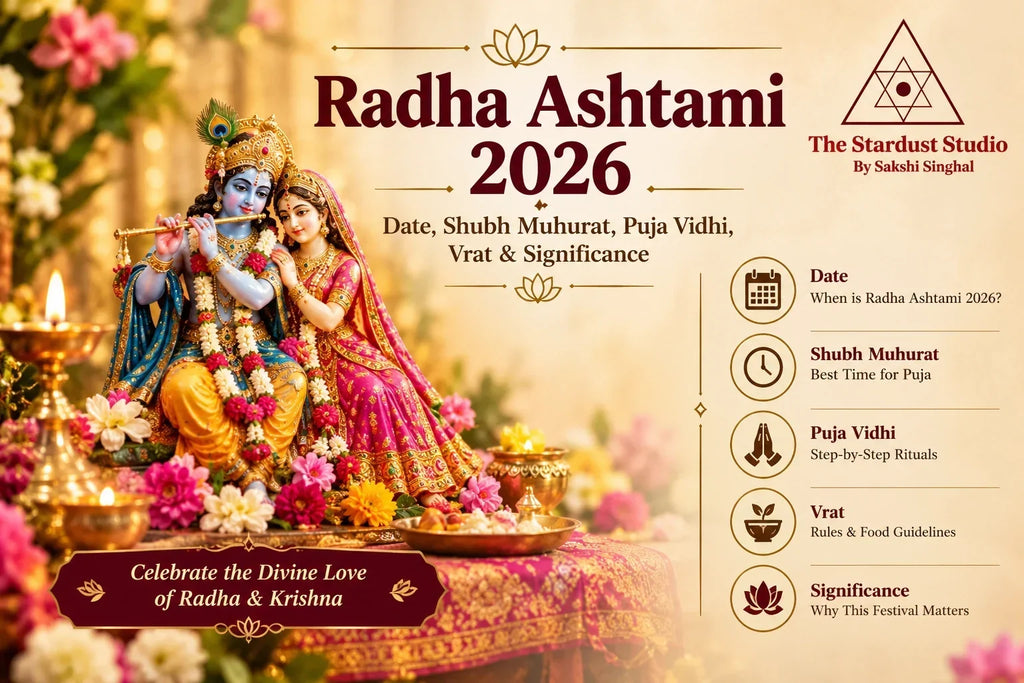
Radha Ashtami, also known as Radhashtami or Radha Jayanti, is a sacred festival dedicated to Shri Radha Rani, whose devotion and divine love for Lord Krishna hold a central place in Krishna Bhakti traditions.
Celebrated approximately fifteen days after Krishna Janmashtami, the festival falls on the Ashtami Tithi of Shukla Paksha in the Bhadrapada month.
In 2026, Radha Ashtami will be celebrated on Saturday, September 19.
The festival is observed with particular devotion in Barsana, Vrindavan, Mathura, and other parts of the Braj region, while Krishna devotees across India celebrate through fasting, Radha-Krishna Puja, bhajans, mantra chanting, and temple visits.
If you're planning to observe the festival at home, this complete guide covers the Radha Ashtami 2026 date, Shubh Muhurat, Ashtami Tithi, simple Puja Vidhi, vrat practices, mantra, offerings, and spiritual significance.
Important: Puja timings depend on location, and fasting practices vary among families and devotional traditions. Check your local Panchang and follow the guidance of your family tradition, Guru, or temple where applicable.
When Is Radha Ashtami 2026?
Radha Ashtami 2026 Date: Saturday, September 19, 2026
Radha Ashtami is traditionally observed during Bhadrapada Shukla Ashtami.
The key Tithi timings for 2026 are:
Ashtami Tithi Begins: 1:00 PM on September 18, 2026
Ashtami Tithi Ends: 3:26 PM on September 19, 2026
Shri Radha Rani is traditionally worshipped during Madhyahna Kala, or the midday period.
Because Madhyahna timings change according to location, devotees should check their city's Panchang before planning a time-specific puja.
Radha Ashtami 2026 Shubh Muhurat
The primary worship period for Radha Ashtami is traditionally Madhyahna Kala.
The exact Shubh Muhurat varies between cities.
For reference, Panchang calculations for different Indian locations show a Madhyahna worship window of roughly 2 hours and 26 minutes, with the exact start and end depending on local sunrise and geographical location.
Therefore, avoid using one nationwide Muhurat for every city.
For the most accurate Radha Ashtami 2026 Puja Muhurat, check the Panchang for your specific location on September 19.
What Is Radha Ashtami?
Radha Ashtami celebrates the appearance of Shri Radha Rani, revered as the beloved of Lord Krishna and one of the most important figures in Krishna Bhakti.
The festival is also known as:
- Radhashtami
- Radha Jayanti
- Shri Radha Ashtami
- Radharani Appearance Day
For devotees, Radha Rani represents the highest expression of selfless devotion and divine love toward Krishna.
Radha Ashtami therefore focuses not merely on celebration but on Bhakti—devotion expressed without selfish expectation.
Why Is Radha Ashtami Celebrated?
Radha Ashtami commemorates Shri Radha Rani and celebrates her unique position within Krishna devotional traditions.
The festival emphasizes spiritual themes such as:
Divine Love
Radha-Krishna together represent one of the most profound symbols of divine love in Indian devotional traditions.
Bhakti
Radha Rani's devotion to Krishna is regarded as an extraordinary expression of pure Bhakti.
Surrender
The festival encourages devotees to reflect on surrendering ego and cultivating devotion.
Compassion
Radha Rani is revered with deep affection by devotees, particularly in the Braj tradition.
Connection with Krishna
In many Vaishnava traditions, devotion to Radha is considered inseparable from devotion to Krishna.
Why Is Radha Ashtami Special in Barsana?
Barsana in Uttar Pradesh is traditionally associated with Shri Radha Rani and is one of the most important places for Radha Ashtami celebrations.
The festival is observed with great devotion at temples in the region, including special worship, Abhishek, Darshan, bhajans, and festive celebrations.
Vrindavan and other areas of Braj also hold major Radha Ashtami celebrations.
For devotees unable to visit these sacred places, the festival can still be observed meaningfully at home through simple prayer and Bhakti.
How to Prepare for Radha Ashtami Puja at Home
You don't need an elaborate setup.
Begin by cleaning your home temple or devotional space.
You may prepare:
- Radha-Krishna idol or image
- Clean chowki or altar
- Fresh cloth
- Flowers
- Flower garland
- Diya
- Cotton wick
- Ghee or oil
- Incense
- Kumkum
- Akshat
- Fruits
- Sweets or suitable prasad
- Tulsi leaves for Krishna where appropriate
- Kalash if used in your tradition
- Puja thali
Keep the arrangement beautiful but uncluttered.
Radha Ashtami 2026 Puja Vidhi: Simple Step-by-Step Guide
The exact Puja Vidhi varies between devotional traditions. The following provides a simple structure for home worship.
Step 1: Begin with Cleanliness
Bathe or wash before the puja according to your normal practice and wear clean clothes.
Clean the home temple and puja area.
Step 2: Establish Radha-Krishna
Place your Radha-Krishna idol or image respectfully on a clean, elevated altar.
Decorate the space with fresh flowers.
Step 3: Take Sankalpa
Sit calmly and make your intention to observe Radha Ashtami with devotion.
If you are observing a vrat, include your fasting intention in the Sankalpa according to your tradition.
Step 4: Light a Diya and Incense
Light a diya and incense if these form part of your regular devotional practice.
Step 5: Offer Flowers
Offer fresh flowers or a garland to Shri Radha Rani and Lord Krishna.
Step 6: Perform Radha Rani Puja
Traditionally, Radha Rani is especially worshipped during Madhyahna Kala on Radha Ashtami.
Depending on your family or temple tradition, the worship may include offerings, Abhishek, Shringar, mantra chanting, and Aarti.
For a simple home puja, flowers, diya, prasad, mantra, and sincere prayer are sufficient.
Step 7: Offer Bhog
Offer suitable Satvik food, fruits, or sweets according to your tradition.
When offering Tulsi, remember that Tulsi is especially associated with Lord Krishna/Vishnu worship; follow your devotional tradition regarding specific offerings to Radha Rani.
Step 8: Chant Radha-Krishna Mantras
Spend time chanting your chosen Radha or Krishna mantra.
Step 9: Perform Aarti
Conclude the main puja with Radha-Krishna Aarti and prayer.
Radha Ashtami Mantra
Devotional traditions use different mantras and names of Radha Rani.
For simple home devotion, you may chant:
Radhe Radhe
with concentration and Bhakti.
Krishna devotees may also chant the Maha Mantra:
Hare Krishna Hare Krishna
Krishna Krishna Hare Hare
Hare Rama Hare Rama
Rama Rama Hare Hare
If you have received a specific mantra from your Guru or spiritual tradition, follow that practice instead.
Radha Ashtami Vrat: How Is the Fast Observed?
Many devotees observe a fast on Radha Ashtami.
Traditional descriptions include a full-day fast, while those unable to undertake a strict fast may follow a less demanding form according to their health, capacity, and tradition.
Depending on personal practice, devotees may observe:
- Complete fast
- Fruit-based fast
- Milk and fruit
- Ekabhukta or one-meal observance
- Other Satvik fasting practices
The purpose of the vrat is devotion rather than physical hardship.
Children, older adults, pregnant people, and anyone with health concerns should prioritize appropriate nutrition and medical guidance rather than undertaking a strict fast.
What Can You Eat During Radha Ashtami Vrat?
Fasting foods vary according to household tradition.
Common vrat-friendly foods may include:
- Fruits
- Milk
- Curd
- Nuts
- Makhana
- Sabudana
- Potatoes
- Vrat-approved flours
- Sendha Namak where permitted
If your tradition follows a stricter fast, follow the rules you normally observe.
Radha Ashtami and Krishna Janmashtami: What Is the Connection?
Krishna Janmashtami celebrates the appearance of Lord Krishna, while Radha Ashtami celebrates Shri Radha Rani.
In 2026:
Krishna Janmashtami: Friday, September 4, 2026
Radha Ashtami: Saturday, September 19, 2026
This approximately fifteen-day interval reflects their respective lunar-calendar observances during Bhadrapada Krishna Ashtami and Bhadrapada Shukla Ashtami.
For Krishna devotees, celebrating both festivals creates a beautiful devotional progression from Krishna Janmashtami to Radha Ashtami.
Spiritual Significance of Radha Ashtami
Radha Ashtami carries a deeper message than festival celebration alone.
- Love Without Expectation : Radha's devotion is traditionally understood as love without selfish expectation.
- Surrender of Ego : Bhakti asks the devotee to move beyond pride and ego toward surrender.
- Devotion Over Material Desire : Radha Ashtami reminds devotees that spiritual fulfilment is not limited to material achievements.
- Gratitude : The festival offers an opportunity to express gratitude for divine love and spiritual guidance.
- Consistency in Bhakti : Devotion is not confined to festivals. Radha Ashtami can inspire a more regular practice of prayer, chanting, meditation, and compassionate living.
How to Celebrate Radha Ashtami Simply at Home
If you cannot perform a detailed puja, keep the celebration simple.
Clean your home mandir, decorate Radha-Krishna with flowers, light a diya, offer suitable prasad, chant Radhe Radhe or the Maha Mantra, and spend some quiet time in prayer.
You can also read about Radha-Krishna Bhakti or listen to devotional bhajans.
The depth of the celebration comes from devotion rather than decoration.
Meaningful Spiritual Essentials for Radha-Krishna Devotees
Devotees may incorporate traditional spiritual objects into their home temple or daily Bhakti routine, such as:
- Tulsi Mala
- Tulsi Kanthi Mala
- Silver Bansuri
- Radha-Krishna devotional décor
- Krishna-inspired spiritual gifts
- Puja essentials
Choose devotional products according to your own spiritual tradition rather than treating them as objects that automatically create spiritual results.
Why Explore The Stardust Studio for Radha-Krishna Spiritual Products?
At The Stardust Studio, our spiritual collection brings together devotional symbolism with thoughtful craftsmanship and elegant design.
For Krishna and Radha devotees, products such as Tulsi Mala, Tulsi Kanthi Mala, Silver Bansuri, and other Krishna-inspired spiritual essentials can become meaningful additions to a home mandir, daily Bhakti practice, or spiritual gift.
Radha Ashtami is an especially meaningful occasion to reconnect with the deeper values behind these objects—devotion, surrender, gratitude, and love.
Final Thoughts
Radha Ashtami 2026 will be celebrated on Saturday, September 19, approximately fifteen days after Krishna Janmashtami.
The festival is an opportunity to celebrate Shri Radha Rani while reflecting on the deeper meaning of Bhakti—love without selfish expectation, devotion without pride, and spiritual connection expressed through prayer and surrender.
Whether you observe a full vrat, perform an elaborate Madhyahna Puja, visit a temple, or simply light a diya and chant Radhe Radhe at home, the heart of Radha Ashtami remains sincere devotion.
For meaningful Radha-Krishna and Krishna-inspired spiritual essentials, explore The Stardust Studio and choose pieces that complement your home mandir, devotional practice, and spiritual gifting.
Frequently Asked Questions
1. When is Radha Ashtami 2026?
2. What is the Radha Ashtami 2026 Shubh Muhurat?
3. What are the Ashtami Tithi timings for Radha Ashtami 2026?
4. How is Radha Ashtami Vrat observed?
5. What is the significance of Radha Ashtami?


