


Why Is Ghee Diya Batti Used in Hindu Puja
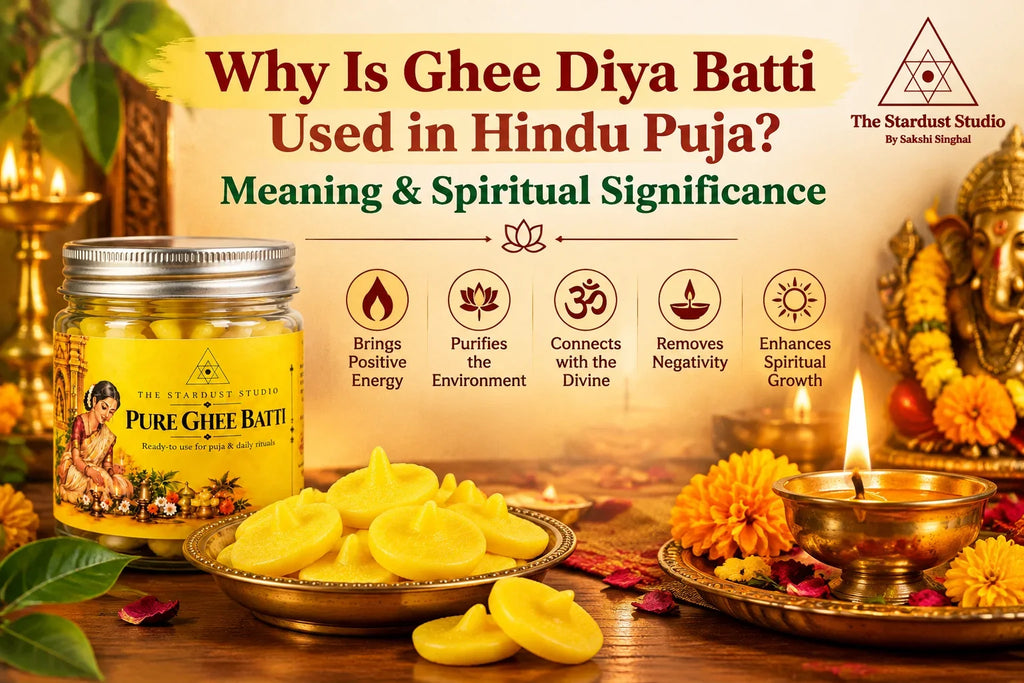
Lighting a diya is one of the most meaningful traditions in Hindu worship. Whether during daily morning prayers, evening Aarti, Diwali, Navratri, Lakshmi Puja or other religious ceremonies, the gentle flame of a diya represents devotion, purity and the symbolic removal of darkness.
Among the different materials used for lighting a sacred lamp, ghee holds a special place in Hindu rituals. Traditionally prepared from clarified butter, ghee has been used in religious offerings, Yajnas, Havans and devotional ceremonies for generations.
But why is ghee used in Hindu puja? What makes a ghee diya spiritually significant, and how is it different from an oil diya?
Today, traditional worship has also become more convenient with ready-to-use Ghee Diya Batti, which combines a wick with ghee for easier lamp preparation. Products such as Pure Ghee Diya Batti and Ghee Diya Wicks are particularly useful for devotees who want to maintain a consistent daily prayer routine without preparing cotton wicks and ghee separately.
This guide explains the religious significance of ghee, the symbolism of the diya flame, traditional practices, how to use Ghee Batti for Pooja, and what to consider when choosing Ghee Wicks for Pooja.
Note: Spiritual benefits discussed in this article reflect Hindu religious traditions and devotional beliefs. Ritual practices vary by region and family, and no lamp or ritual material guarantees health, wealth or other material outcomes.
What Is Ghee and Why Is It Considered Sacred?
Ghee is clarified butter traditionally prepared by heating butter to remove much of its water and milk solids.
It has long been used in Indian cooking, Ayurvedic traditions and Hindu religious ceremonies.
In devotional settings, ghee is often associated with:
- Purity and auspiciousness
- Sacred offerings
- Devotion and gratitude
- Traditional fire rituals
- Spiritual illumination
Its importance is particularly visible in Havan and Yajna traditions, where ghee is commonly offered into the sacred fire according to prescribed ritual methods.
When used in a diya, ghee serves as fuel for a flame that symbolizes light, knowledge and divine remembrance.
Why Is Ghee Used in Hindu Puja?
The significance of ghee comes from its established role in sacred offerings and fire-based rituals.
1. Symbol of Purity
Ghee is traditionally regarded as an auspicious substance in many Hindu devotional practices.
Using it in a diya can symbolize the devotee's intention to approach worship with sincerity and purity.
2. Represents Sacred Offering
In Hindu fire rituals, ghee is frequently offered as part of the prescribed ceremony.
A ghee diya similarly uses a traditional ritual substance to sustain the sacred flame, although lighting a diya and performing a formal Havan are distinct practices.
3. Symbolizes Knowledge Over Ignorance
The diya flame represents light overcoming darkness.
Spiritually, this is often interpreted as knowledge overcoming ignorance and awareness overcoming confusion.
4. Encourages Regular Devotion
Lighting a diya can become a meaningful part of daily prayer.
The simple act of preparing and lighting the lamp creates a regular moment for mantra chanting, gratitude and reflection.
5. Connects Modern Worship with Tradition
Ghee lamps are used in many household and temple practices.
Continuing the tradition can help preserve a familiar form of worship across generations.
Spiritual Significance of Lighting a Ghee Diya
The spiritual significance of a ghee diya is closely connected with the symbolism of Agni, or sacred fire.
In Hindu traditions, fire plays an important role in religious ceremonies and offerings.
A diya flame can represent:
Light: The movement from darkness toward understanding.
Devotion: Offering time and attention to prayer.
Knowledge: The importance of wisdom and spiritual awareness.
Gratitude: Remembering the Divine and expressing thankfulness.
Consistency: Maintaining a regular devotional practice.
The deeper meaning comes from the intention behind the ritual rather than the price or complexity of the lamp.
What Is Ghee Diya Batti?
A Ghee Diya Batti is a ready-to-use wick preparation designed for lighting a diya.
Traditional diya preparation generally involves placing a cotton wick in a lamp and adding ghee separately.
Ready-made ghee battis simplify this process by combining the wick with a suitable ghee-based preparation.
Depending on the product, the wick may be pre-soaked, coated or otherwise prepared for lighting.
These products are commonly used for:
- Daily morning puja
- Evening Aarti
- Lakshmi Puja
- Navratri
- Diwali
- Ganesh Puja
- Home-mandir worship
Always follow the instructions provided with the specific product.
Why Choose Pure Ghee Diya Batti for Daily Puja?
Pure Ghee Diya Batti is a convenient option for people who prefer traditional ghee-lamp worship but want simpler preparation.
Its practical advantages may include the following.
- Convenient Preparation : Ready-made battis can reduce the need to prepare a separate cotton wick and measure ghee before every prayer.
- Suitable for Daily Worship : A prepared wick can make it easier to maintain a regular morning or evening diya routine.
- Less Handling : Depending on the design, ready-made ghee wicks may reduce direct handling of loose ghee.
- Easy to Store : Individually prepared battis or appropriately packaged wicks can be kept with other puja essentials.
- Useful During Festivals : When multiple pujas are performed during Navratri or Diwali, ready-to-use wicks can make lamp preparation more convenient.
The term pure ghee should be supported by the product's actual ingredient information rather than assumed from its name alone.
Ghee Diya Wicks vs Traditional Cotton Wicks
Both types can be used in devotional lamp practices, depending on the product and household tradition.
Traditional Cotton Wick
A regular cotton wick is placed in a diya, and ghee is added separately.
This allows the devotee to control the amount of fuel and prepare the lamp according to family custom.
Ready-Made Ghee Diya Wicks
Ghee Diya Wicks are prepared with a ghee-based fuel component.
They are designed to simplify the lighting process.
Neither format makes prayer inherently more meaningful.
Choose according to convenience, the diya design and the practice followed in your household.
How to Use Ghee Batti for Pooja: Step-by-Step Guide
Using Ghee Batti for Pooja is generally straightforward, although the exact method depends on the product.
Step 1: Clean the Diya
Ensure the diya is clean, dry and free from excessive old wick residue.
Step 2: Choose a Safe Location
Place the diya on a stable, heat-resistant surface in your home mandir.
Keep it away from curtains, loose fabric, paper and dry flowers.
Step 3: Place the Ghee Batti
Position the ready-made wick in the diya according to its packaging instructions.
Step 4: Light the Wick
Use a matchstick or suitable lighter to ignite the exposed wick.
Some products may require a little time for the fuel to begin burning consistently.
Step 5: Perform Your Puja
Continue with your regular mantra, prayer, flowers, bhog and Aarti according to your household tradition.
Step 6: Allow the Diya to Cool
After the flame has been safely extinguished or has gone out, allow the lamp to cool completely before handling or cleaning it.
Important: Never leave a burning diya unattended. Ready-made ghee wicks still involve an open flame and require the same precautions as a traditional lamp.
Ghee Diya vs Oil Diya: What Is the Difference?
Both ghee and oil diyas have longstanding roles in Hindu devotional practices.
A ghee diya uses clarified butter or a suitable ghee-based wick preparation as fuel.
An oil diya may use sesame oil, mustard oil or another oil traditionally followed in the household.
Some religious traditions recommend particular lamp fuels for specific deities or occasions.
However, there is no universal rule that one type is spiritually superior for every puja.
The appropriate choice depends on the ceremony, family custom and ritual instructions.
Why Are Ghee Wicks for Pooja Becoming Popular?
Many people want to continue traditional worship while simplifying daily preparation.
Ghee Wicks for Pooja offer a practical way to reduce some of the steps involved in preparing a diya.
They may be particularly convenient for:
- Working professionals
- Small home mandirs
- Daily morning and evening prayer
- Festival puja preparations
- Travel-friendly puja kits, where safe and permitted
- Households seeking ready-to-use lamp essentials
Their convenience should be evaluated alongside ingredient quality, packaging, safe handling and compatibility with the diya.
When Can You Light a Ghee Diya?
Ghee diyas are used on many devotional occasions.
Daily Morning Puja
Some households light a diya while beginning their daily prayers.
Evening Aarti
A diya is commonly lit during evening worship.
Friday Lakshmi Puja
Ghee lamps may be incorporated into Lakshmi-focused devotional practices according to household custom.
Navratri
Many devotees light a diya during the nine days of Goddess Durga worship.
Diwali
Diyas are among the most recognizable elements of Diwali celebrations.
Ganesh Puja
A diya may form part of regular Lord Ganesha worship and Ganesh Chaturthi rituals.
The exact timing and method should follow your family tradition.
Can You Use Pure Ghee Diya Batti During Navratri?
Yes, provided the product is intended for diya use.
During Navratri, devotees commonly light a diya as part of their daily worship of Goddess Durga.
A Pure Ghee Diya Batti can simplify preparation for regular puja.
However, if your family maintains an Akhand Jyoti, do not assume that a single ready-made wick is suitable for continuous burning.
Use the lamp, fuel and supervision method appropriate for your tradition and the product's intended burn duration.
Can Ghee Diya Batti Be Used During Lakshmi Puja?
Yes. A ghee diya can be incorporated into Lakshmi Puja according to household practice.
Place the diya at a safe distance from the Lakshmi idol, flowers, decorations and other puja materials.
Ready-made battis can be particularly convenient during Diwali when families may prepare several lamps.
How Long Does a Ghee Diya Batti Burn?
The burning duration depends on several factors, including:
- Wick size
- Amount of ghee or fuel
- Diya shape
- Air movement
- Product formulation
- Wick construction
There is no single burn duration that applies to every Ghee Diya Batti.
Check the product's packaging or manufacturer instructions for any stated burn-time information.
Avoid assuming that a larger-looking wick necessarily burns for a particular number of hours.
How to Choose Quality Ghee Wicks for Pooja
Before buying ready-made ghee wicks, consider the following.
- Ingredient Information : Check whether the product clearly identifies the type of ghee or fuel used.
- Wick Material : Look for information about the wick material and construction.
- Packaging : The packaging should protect the battis from contamination and excessive heat.
- Diya Compatibility : Check whether the wicks are suitable for the type and size of diya you use.
- Storage Instructions : Follow the manufacturer's guidance, particularly in warm weather.
- Seller Transparency : Choose products with clear ingredient, quantity and usage information.
How to Store Pure Ghee Diya Batti
Proper storage helps maintain the product's condition.
Keep ready-made battis:
- In their original packaging
- Away from direct sunlight
- Away from excessive heat
- In a clean, dry location
- Away from children and pets
- Away from open flames
If the product has a stated shelf life or temperature requirement, follow it.
Do not store ghee battis directly beside an actively burning diya.
Common Mistakes When Using Ghee Batti for Pooja
Leaving the Diya Unattended
An open flame requires supervision regardless of the wick type.
Using an Unstable Lamp
Always use a suitable diya on a level, heat-resistant surface.
Keeping the Flame Too Close to Decorations
Flowers, cloth and paper can catch fire.
Assuming Every Ghee Batti Has the Same Ingredients
Check the actual product composition.
Using Decorative Containers as Diyas
Only use containers intended to withstand lamp heat.
Assuming a Ready-Made Batti Is Suitable for Akhand Jyoti
Continuous-flame worship requires appropriate equipment and supervision. A regular ready-made wick may not be designed for that purpose.
Can You Gift Ghee Diya Wicks for Pooja?
Yes. Ghee diya battis can be included in devotional gift sets or puja hampers.
They may be suitable for:
- Diwali
- Navratri
- Housewarming
- New home-mandir setup
- Religious occasions
- Festive gifting
For gifting, choose appropriately packaged products with clear usage and storage instructions.
Why Choose Pure Ghee Diya Batti from The Stardust Studio?
At The Stardust Studio, we believe daily spiritual practices should remain meaningful while fitting naturally into modern lifestyles.
Pure Ghee Diya Batti can offer a convenient way to prepare a traditional diya for morning prayers, evening Aarti and festive worship.
Whether you're looking for Ghee Diya Wicks, Ghee Batti for Pooja or Ghee Wicks for Pooja, focus on ingredient transparency, wick construction, packaging and safe usage.
The purpose of a ready-made batti is to simplify preparation while preserving the familiar devotional practice of lighting a sacred lamp.
Final Thoughts
Ghee has remained an important part of Hindu worship because of its longstanding association with sacred offerings, purity and devotion. From traditional Yajnas to the simple diya lit in a home mandir, ghee connects the physical act of offering with the spiritual symbolism of light.
For modern households, Ghee Diya Batti provides a convenient way to continue this tradition. Ready-to-use Ghee Diya Wicks and Pure Ghee Diya Batti can simplify daily preparation while preserving the familiar practice of lighting a sacred lamp.
Whether you're preparing for morning puja, evening Aarti, Navratri, Diwali or Lakshmi Puja, choose Ghee Batti for Pooja according to its ingredients, intended use and compatibility with your diya.
Explore Pure Ghee Diya Batti and other devotional essentials from The Stardust Studio to complement your daily worship and festive rituals.
Frequently Asked Questions
1. Why is ghee used in Hindu puja?
2. What is Ghee Diya Batti?
3. Can I use Ghee Diya Wicks for daily pooja?
4. Are Pure Ghee Diya Batti and cotton wicks the same?
5. Can Ghee Batti for Pooja be used during Navratri?
6. What are the benefits of Ghee Wicks for Pooja?


