









Nazar Dosh Potli: How to Use, Benefits & Placement
In Indian spiritual traditions, Nazar Dosh, commonly known as the evil eye or Buri Nazar, refers to the belief that jealousy, envy or negative intentions may influence a person's well-being, happiness or surroundings. For generations, families have followed different traditional practices intended to symbolically protect their homes from Nazar.
One such practice involves using a Nazar Dosh Potli, a small pouch containing ingredients traditionally associated with purification, protection and auspiciousness.
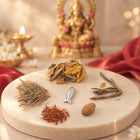
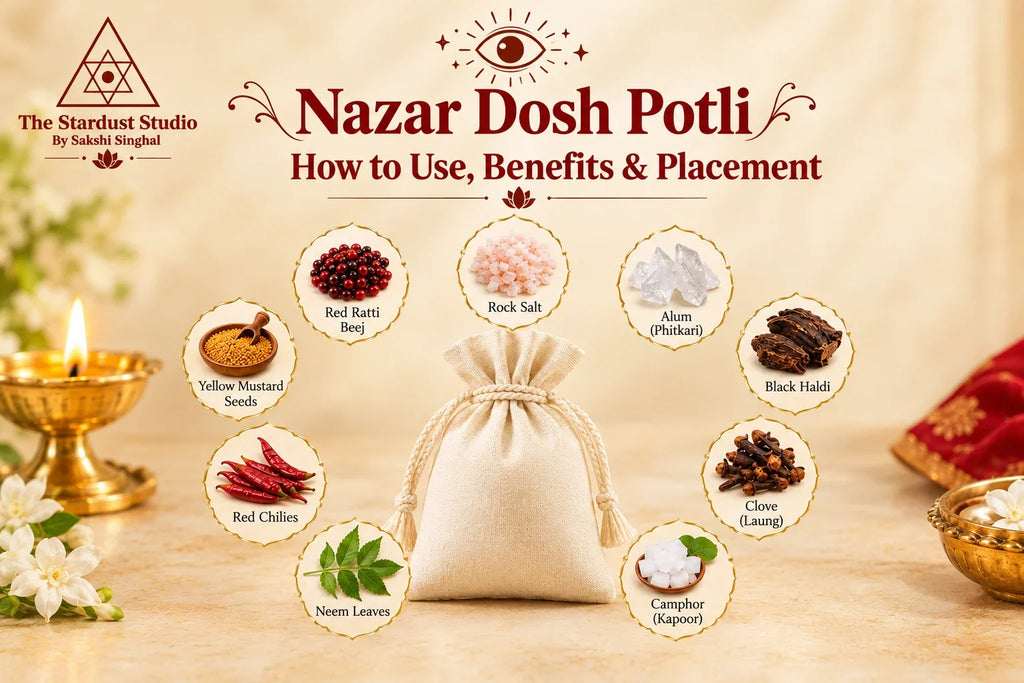
At The Stardust Studio, our Nazar Dosh Potli brings together nine traditional ingredients: Rock Salt, Alum (Phitkari), Black Haldi, Laung (Clove), Camphor (Kapoor), Neem Leaves, Red Chillies, Yellow Mustard Seeds and Red Ratti Beej.
Each ingredient carries cultural or spiritual associations within different Indian folk traditions.
A Nazar Potli is generally kept as a symbolic protective object in a suitable location at home. It may be placed in a dedicated spiritual area or another protected location according to the household's beliefs and the product instructions.
But how should you use a Nazar Dosh Potli? Where should it be placed, how long should you keep it, and what precautions should you follow?
This complete guide explains the meaning, ingredients, traditional benefits, step-by-step placement method, common mistakes and important considerations before you buy Nazar Dosh Potli online.
Important Safety Note: This Potli contains camphor and Red Ratti Beej. Camphor is toxic if swallowed, while Red Ratti seeds, commonly associated with Abrus precatorius, can be highly poisonous if chewed, broken or ingested. Keep the Potli securely sealed and completely inaccessible to children and pets. Never open, burn, heat, crush or ingest its contents.
What Is a Nazar Dosh Potli?
A Nazar Dosh Potli is a small pouch containing a combination of materials traditionally associated with protection, purification and the symbolic removal of negative influences.
The word Nazar refers to the evil eye in popular Indian cultural beliefs, while Potli means a small pouch or bundle.
Different regions and households use different ingredients and practices.
The purpose of a Nazar Potli is primarily spiritual and symbolic.
It should not be treated as a scientifically proven method of preventing illness, accidents, financial difficulties or other real-world problems.
What Is Nazar Dosh?
Nazar Dosh is a traditional belief found in different forms across India and many other cultures.
It is commonly associated with the idea that envy or negative attention can influence a person or household.
In folk traditions, people may use symbolic objects such as:
- Protective threads
- Nazar charms
- Traditional pouches
- Specific ritual ingredients
- Sacred symbols
- Devotional prayers
These practices express cultural beliefs about protection and auspiciousness.
However, ordinary difficulties, health symptoms or financial problems should not automatically be attributed to Nazar Dosh.
Nine Ingredients in Nazar Dosh Potli
The Nazar Dosh Potli from The Stardust Studio contains nine ingredients selected for their traditional cultural and spiritual associations.
1. Rock Salt – Traditional Purification Symbol
Rock Salt is commonly used in various household and folk practices.
In contemporary spiritual traditions, it is sometimes associated with cleansing and the symbolic removal of negativity.
Its role in the Potli is symbolic rather than evidence of a supernatural protective effect.
2. Alum (Phitkari) – Traditional Household Ingredient
Alum, also known as Phitkari, has a history of household and practical applications.
Some folk traditions also associate it with Nazar-related rituals.
However, alum should not be interpreted as a scientifically established remedy for supernatural influences.
3. Black Haldi – Auspiciousness and Protection Symbolism
Black Haldi is used in certain regional spiritual and folk traditions.
It is commonly associated with protective symbolism and auspiciousness.
Its inclusion reflects these traditional beliefs.
4. Laung (Clove) – Traditional Aromatic Ingredient
Clove is widely used in Indian households and devotional practices.
Its distinctive aroma and cultural significance make it a familiar ingredient in various traditional rituals.
5. Camphor (Kapoor) – Purification Symbolism
Camphor is associated with purification and devotion in Hindu rituals.
However, camphor is flammable and toxic if swallowed.
It should remain securely enclosed in the Potli and must not be heated or burned.
6. Neem Leaves – Traditional Botanical Ingredient
Neem has longstanding cultural significance in India.
Neem leaves are used in various household and traditional practices and are sometimes associated with purification symbolism.
7. Red Chillies – Folk Protection Traditions
Red Chillies are commonly seen in certain Indian Nazar-related folk practices.
Their inclusion in the Potli reflects this traditional association.
They should not be burned because heating or burning chillies can release highly irritating airborne substances.
8. Yellow Mustard Seeds – Traditional Ritual Symbolism
Yellow Mustard Seeds appear in various Indian household and ritual traditions.
In some folk practices, they are associated with protection-related intentions.
9. Ratti Beej (Red) – Traditional Symbolic Seed
Red Ratti Beej is associated with certain traditional decorative and folk practices.
However, seeds sold as Red Ratti commonly come from Abrus precatorius, a plant containing the highly toxic substance abrin.
Damaged, chewed or swallowed seeds can cause serious poisoning.
For this reason, Red Ratti Beej should remain completely enclosed, and the Potli should never be opened or handled by children.
Traditional Nazar Dosh Potli Benefits
The commonly discussed benefits of a Nazar Potli are based on cultural and spiritual beliefs.
1. Symbol of Home Protection
A Nazar Dosh Potli represents the intention to maintain a peaceful and protected household.
2. Traditional Nazar-Related Practice
The ingredients reflect different Indian folk traditions associated with the evil eye.
3. Symbolic Purification
Rock Salt, Camphor and Neem are commonly associated with purification in certain spiritual practices.
4. Auspiciousness
Some ingredients are used in traditional rituals connected with household well-being.
5. Spiritual Reassurance
For people who follow these traditions, a symbolic protective object may provide a sense of cultural connection and devotional reassurance.
These benefits are based on belief rather than scientifically established protective effects.
How to Use Nazar Dosh Potli for Home Protection: Step-by-Step Guide
The safest approach is to use the Potli as a sealed, stationary symbolic object rather than performing burning, heating or handling rituals.
Step 1: Check the Packaging
Before placement, confirm that the Potli is fully sealed and undamaged.
If seeds, powders or other ingredients are leaking, do not use it.
Step 2: Choose a Secure Location
Select a protected location that children and pets cannot access.
A locked cabinet or secured devotional storage area is preferable to an open shelf.
Step 3: Keep the Potli Sealed
Do not open the pouch to examine or rearrange the ingredients.
Step 4: Place It in a Secondary Protective Container
Keep the sealed Potli inside a rigid, closed and clearly labelled container to reduce accidental access or damage.
Step 5: Follow Your Personal Spiritual Tradition
You may offer a simple prayer or set a peaceful intention without touching or opening the Potli.
Step 6: Avoid Heat and Flames
Do not place the Potli near diyas, incense, electrical heaters, direct sunlight or other heat sources.
Step 7: Inspect the Outer Container Periodically
Check that the container remains closed and undamaged.
Do not handle exposed contents if the Potli has deteriorated.
Step 8: Replace or Dispose of It Safely
If the Potli becomes damaged, avoid opening it. Seek appropriate local hazardous-material or poison-safety guidance for disposal, especially because it contains potentially poisonous seeds.
Where Should You Keep Nazar Dosh Potli at Home?
In traditional belief systems, protective objects are sometimes associated with entrances, prayer spaces or household boundaries.
However, because this Potli contains hazardous ingredients, physical safety must take priority over symbolic placement.
Home Mandir Storage
A locked or secured storage compartment associated with your prayer area may be appropriate.
Avoid placing the Potli directly beside an open diya.
Main Entrance Area
Some folk traditions associate Nazar-related objects with the entrance.
However, do not hang this Potli where children, visitors or pets can reach it.
A secure, inaccessible location is essential.
Living Room
If you wish to keep the Potli in a living room, use a locked cabinet rather than an exposed decorative shelf.
Office or Shop
A secured storage compartment may be used for symbolic placement.
Do not keep the Potli near food, merchandise, cash-handling surfaces or customer-accessible areas.
Which Direction Is Best for Nazar Dosh Potli?
Different contemporary Vastu and folk traditions suggest different locations for protective objects.
There is no single universally prescribed compass direction for a Nazar Dosh Potli.
Rather than choosing a potentially unsafe location to follow a directional rule, prioritize:
- Secure storage
- Distance from children and pets
- Protection from heat
- An intact sealed pouch
- A closed secondary container
The Potli's symbolic purpose does not require dangerous exposure.
How to Identify a Quality Nazar Dosh Potli
Before purchasing, review the following.
- Ingredient Transparency : The seller should clearly disclose the contents.
- Secure Packaging : The pouch should be properly sealed.
- Safety Warnings : Warnings about poisonous seeds, camphor and accidental ingestion should be clearly communicated.
- Storage Instructions : The product should include appropriate handling and storage guidance.
- Intended Use : The seller should clarify that the Potli is not intended for burning, ingestion or direct application to the body.
Nazar Dosh Potli Online: What to Check Before Buying
If you're looking for a Nazar Dosh Potli online, compare more than the number of ingredients.
Important considerations include:
- Ingredient disclosure
- Packaging quality
- Safety instructions
- Intended placement
- Storage recommendations
- Seller transparency
- Product quantity
- Current price
Avoid products that encourage burning unknown mixtures or handling toxic seeds without precautions.
Why Buy Nazar Dosh Potli Online from The Stardust Studio?
At The Stardust Studio, our Nazar Dosh Potli brings together nine ingredients associated with different Indian folk and spiritual traditions.
The blend contains:
Rock Salt, Alum (Phitkari), Black Haldi, Laung, Camphor, Neem Leaves, Red Chillies, Yellow Mustard Seeds and Red Ratti Beej.
Whether you're researching traditional Nazar practices or planning to buy Nazar Dosh Potli online, it is important to understand both the symbolic significance and the safety requirements of the ingredients.
The Potli should remain sealed, protected and inaccessible to children and pets.
Final Thoughts
A Nazar Dosh Potli is a traditional spiritual object inspired by Indian folk beliefs about protection, auspiciousness and the evil eye.
The Nazar Potli from The Stardust Studio combines nine ingredients: Rock Salt, Alum, Black Haldi, Clove, Camphor, Neem Leaves, Red Chillies, Yellow Mustard Seeds and Red Ratti Beej.
Because the Potli contains flammable camphor and potentially highly poisonous Red Ratti seeds, it should remain securely sealed and stored in a protected location inaccessible to children and pets.
If you're planning to buy Nazar Dosh Potli online, choose a product with transparent ingredient information, secure packaging and clear safety instructions.
Explore the Nazar Dosh Potli from The Stardust Studio and understand its traditional symbolism and appropriate handling before use.
FAQs
1. What is a Nazar Dosh Potli?
2. How do you use Nazar Dosh Potli at home?
3. Where should Nazar Potli be placed?
4. What are the traditional benefits of Nazar Dosh Potli?
5. Where can I buy Nazar Dosh Potli online?


