















7 Powerful Lord Shiva Mantras for Peace & Spiritual Growth
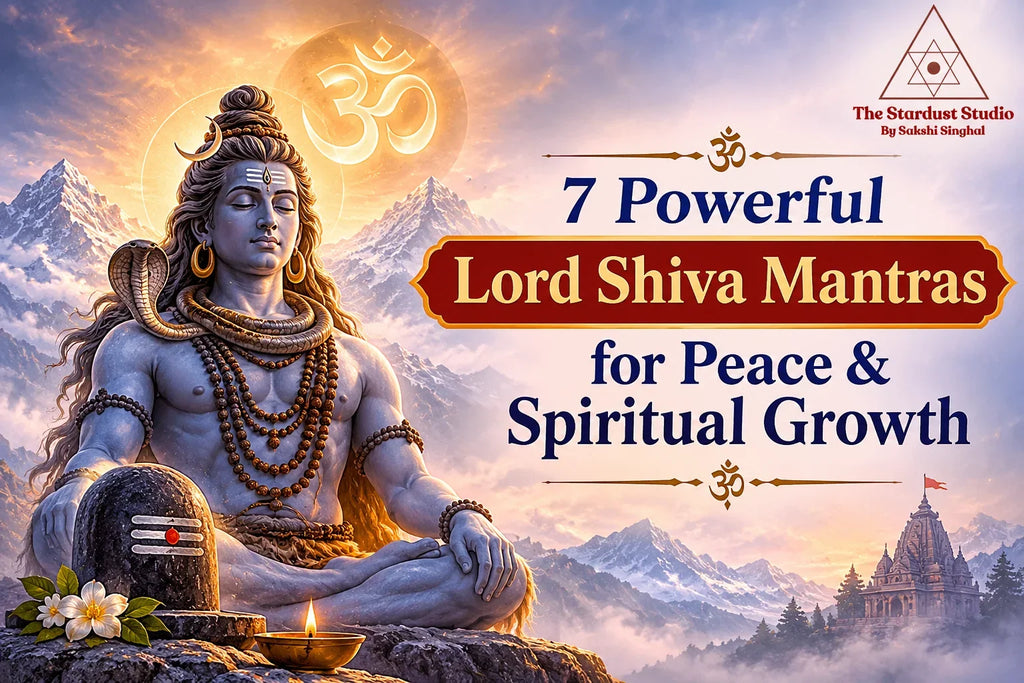
Lord Shiva, also known as Mahadev, Bholenath and Shankar, is one of the most revered deities in Hinduism. Worshipped as the deity of transformation, meditation and spiritual consciousness, Lord Shiva represents the balance between stillness and divine power.
For centuries, devotees have chanted Lord Shiva Mantras to express devotion, cultivate inner awareness and strengthen their spiritual connection with Mahadev.
Whether you are looking for a Lord Shiva Mantra for Peace, a Shiva Mantra for Positive Energy, or a Shiva Mantra for Spiritual Growth, incorporating sacred chanting into your daily routine can become a meaningful devotional practice.
Mantra chanting is often accompanied by traditional spiritual essentials such as a Parad Shivling, Sphatik Shivling, Rudraksha Japa Mala, Karungali Mala and 7 Mukhi Rudraksha.
A Parad Shivling and Sphatik Shivling are devotional representations of Lord Shiva, while Rudraksha Japa Mala is traditionally used for mantra repetitions. Karungali Mala is associated with protective symbolism in certain regional traditions, and 7 Mukhi Rudraksha holds significance in Rudraksha-related spiritual practices.
These sacred objects can complement Shiva worship, although they are not compulsory for every mantra or puja.
In this guide, we explore seven sacred Lord Shiva mantras, their meanings, traditional benefits, correct chanting methods and ways to incorporate them into your daily spiritual routine.
Important: The spiritual benefits described in this article reflect Hindu devotional beliefs and traditions. Mantra chanting may provide personal comfort and support mindful reflection, but it is not a guaranteed treatment for anxiety, illness or other medical conditions. Some mantras have initiation requirements in particular traditions; follow the guidance of your guru or sampradaya where applicable.
Why Are Lord Shiva Mantras Considered Sacred?
In Hindu traditions, mantras are sacred sounds, words or phrases used during prayer, meditation and spiritual practice.
Lord Shiva mantras are especially associated with:
- Devotion to Mahadev
- Spiritual awareness
- Meditation
- Inner stillness
- Self-discipline
- Transformation
- Surrender
- Reflection
Chanting a mantra can help create a consistent devotional routine.
The meaning and application of each mantra depend on its religious context and the tradition being followed.
7 Sacred Lord Shiva Mantras and Their Meanings
1. Om Namah Shivaya – The Five-Syllable Shiva Mantra
Sanskrit:
ॐ नमः शिवाय॥
Transliteration:
Om Namah Shivaya
Meaning:
"I bow to Lord Shiva."
Om Namah Shivaya is one of the most widely recited Shiva mantras.
It is associated with devotion, humility and reverence toward Mahadev.
The five syllables of Namah Shivaya are traditionally connected with the five elements in certain Shaiva interpretations.
Traditional Benefits
- Encourages devotion
- Symbolizes surrender
- Supports a consistent prayer routine
- Associated with inner stillness
- Complements meditation
How to Chant
Sit comfortably in a clean location and repeat the mantra according to your devotional practice.
Some devotees chant it 11, 21 or 108 times.
A Rudraksha Japa Mala may be used to count repetitions.
2. Maha Mrityunjaya Mantra – The Great Shiva Mantra
Sanskrit:
ॐ त्र्यम्बकं यजामहे सुगन्धिं पुष्टिवर्धनम्।
उर्वारुकमिव बन्धनान्मृत्योर्मुक्षीय मामृतात्॥
Transliteration:
Om Tryambakam Yajamahe Sugandhim Pushtivardhanam,
Urvarukamiva Bandhanan Mrityor Mukshiya Maamritat.
Meaning:
"We worship the three-eyed Lord, who is fragrant and nourishes life. May we be released from the bondage of mortality, just as a ripe fruit separates from its stem, without losing the essence of immortality."
The Maha Mrityunjaya Mantra is an important Vedic mantra associated with Lord Shiva.
It is traditionally recited during prayers for well-being, courage and spiritual liberation.
Traditional Benefits
- Associated with prayers for well-being
- Encourages faith and courage
- Symbolizes freedom from fear
- Supports spiritual reflection
- Represents the desire for liberation
How to Chant
Recite slowly and respectfully, paying attention to pronunciation.
Some devotees chant it 11 or 108 times according to their tradition.
It should not be presented as a guaranteed cure for illness or a substitute for medical treatment.
3. Om Shanti Shivaya Namah – A Shiva-Inspired Prayer for Peace
Sanskrit:
ॐ शान्ति शिवाय नमः॥
Transliteration:
Om Shanti Shivaya Namah
Meaning:
"A reverential invocation to Lord Shiva associated with peace."
This short Shiva-inspired prayer combines the idea of Shanti, meaning peace, with devotion to Shiva.
It may be used as a simple personal prayer for calmness and spiritual reflection.
Unlike Om Namah Shivaya, it is not presented here as a universally established classical Shaiva mantra.
Traditional and Personal Significance
- Expresses a wish for peace
- Encourages mindful prayer
- Complements quiet meditation
- Symbolizes devotion
- Can become part of a daily reflection routine
How to Chant
Sit quietly and repeat the prayer slowly.
Focus on its meaning rather than the number of repetitions.
4. Shiva Gayatri Mantra – For Spiritual Awareness
Sanskrit:
ॐ तत्पुरुषाय विद्महे महादेवाय धीमहि।
तन्नो रुद्रः प्रचोदयात्॥
Transliteration:
Om Tatpurushaya Vidmahe Mahadevaya Dhimahi,
Tanno Rudrah Prachodayat.
Meaning:
"We contemplate the Supreme Being and meditate upon Mahadeva. May Rudra inspire and guide our understanding."
The Shiva Gayatri Mantra is a devotional invocation associated with Lord Shiva's wisdom and spiritual consciousness.
Traditional Benefits
- Symbolizes spiritual awareness
- Encourages contemplation
- Associated with wisdom
- Supports devotional meditation
- Represents the pursuit of inner understanding
How to Chant
Recite according to your religious tradition.
Some lineages prescribe specific methods or initiation for Gayatri-related mantras.
5. Om Namo Bhagavate Rudraya – The Rudra Mantra
Sanskrit:
ॐ नमो भगवते रुद्राय॥
Transliteration:
Om Namo Bhagavate Rudraya
Meaning:
"Salutations to the revered Lord Rudra."
Rudra is an important divine name associated with Lord Shiva.
The mantra expresses reverence toward Rudra and is used in different Shaiva devotional contexts.
Traditional Benefits
- Symbolizes courage
- Expresses devotion to Rudra
- Encourages spiritual discipline
- Represents transformation
- Complements Shiva worship
How to Chant
Chant slowly and respectfully according to your personal or family practice.
A Rudraksha Japa Mala may be used for repetitions.
6. Om Shivaya Namah – A Short Shiva Invocation
Sanskrit:
ॐ शिवाय नमः॥
Transliteration:
Om Shivaya Namah
Meaning:
"Salutations to Lord Shiva."
This short invocation is suitable for devotees who prefer a simple Shiva-focused prayer.
It can be incorporated into daily worship or quiet devotional reflection.
Traditional Benefits
- Encourages devotion
- Complements daily puja
- Symbolizes humility
- Supports a consistent chanting routine
- Represents reverence toward Mahadev
How to Chant
Repeat the mantra at a comfortable pace.
You may chant it silently or aloud according to personal preference.
7. Om Hara Hara Mahadev – A Devotional Shiva Chant
Sanskrit:
ॐ हर हर महादेव॥
Transliteration:
Om Har Har Mahadev
Meaning:
A devotional invocation praising Lord Mahadev.
"Har Har Mahadev" is a widely recognized expression of devotion to Lord Shiva.
It is frequently heard during Shiva festivals, temple worship and devotional gatherings.
Traditional Benefits
- Expresses enthusiasm for Shiva Bhakti
- Encourages collective devotion
- Symbolizes spiritual strength
- Associated with courage and surrender
- Complements devotional chanting
How to Chant
Recite respectfully during personal worship or devotional gatherings.
It may also be included in Shiva Aarti or other suitable prayer routines.
Which Lord Shiva Mantra Is Best for Inner Peace?
For devotees searching for a Lord Shiva Mantra for Peace, Om Namah Shivaya is one of the most familiar and widely practised choices.
Its short structure makes it accessible for daily chanting.
The Shiva-inspired invocation Om Shanti Shivaya Namah may also be used as a personal prayer focused on peace.
However, there is no single mantra that is universally considered best for every devotee.
Choose according to your religious tradition, comfort and guidance.
Shiva Mantra for Positive Energy
If you're looking for a Shiva Mantra for Positive Energy, consider incorporating Om Namah Shivaya or Om Namo Bhagavate Rudraya into your daily devotional routine.
In spiritual interpretation, these mantras are associated with devotion, strength, transformation and positive intentions.
The phrase "positive energy" is used symbolically here rather than as a scientifically measurable supernatural effect.
Shiva Mantra for Spiritual Growth
A Shiva Mantra for Spiritual Growth is traditionally associated with reflection, discipline and the pursuit of spiritual awareness.
The Shiva Gayatri Mantra and Om Namah Shivaya are meaningful examples in different Shaiva traditions.
Spiritual growth is a personal process that may include prayer, meditation, study, ethical conduct and self-reflection.
Mantra chanting can complement these practices.
Shiva Mantras for Daily Chanting
The following mantras may be incorporated into regular Shiva devotion according to household tradition:
- Om Namah Shivaya
- Om Shivaya Namah
- Om Namo Bhagavate Rudraya
- Maha Mrityunjaya Mantra
- Other mantras prescribed by your guru or sampradaya
Beginners may prefer a short mantra that is easy to pronounce and remember.
Consistency and sincerity are more important than attempting a large number of repetitions.
How to Chant Lord Shiva Mantras Correctly: Step-by-Step Guide
Step 1: Choose a Clean and Quiet Space
Prepare a comfortable location for prayer or meditation.
Step 2: Sit Comfortably
Maintain a relaxed posture.
You may sit on a mat or chair according to your comfort.
Step 3: Select Your Mantra
Choose a Shiva mantra that aligns with your devotional practice.
Step 4: Use a Japa Mala If Desired
A Rudraksha Japa Mala is traditionally associated with Shiva worship.
It can help count mantra repetitions.
Step 5: Chant Slowly
Pronounce the mantra as accurately as possible.
Avoid rushing.
Step 6: Focus on Its Meaning
Reflect on devotion, humility and spiritual awareness.
Step 7: Complete Your Prayer
End with gratitude or a simple prayer according to your tradition.
How Many Times Should You Chant Shiva Mantras?
Common devotional repetition counts include:
- 11 times
- 21 times
- 27 times
- 54 times
- 108 times
These counts are used in different traditions.
There is no universal requirement that every devotee must chant 108 times.
Beginners can start with a manageable number of repetitions.
Best Time to Chant Lord Shiva Mantras
- Shiva mantras may be chanted at different times according to devotional tradition.
- Early Morning : Morning prayer is common in many households.
- Evening : Some devotees chant after completing their daily activities.
- Mondays : Monday is traditionally associated with Lord Shiva worship.
- Maha Shivratri : Maha Shivratri is an important occasion for Shiva mantra chanting and devotional observances.
- During Meditation : A short Shiva mantra may be incorporated into a meditation routine.
The most suitable time is one that aligns with your religious tradition and daily schedule.
Spiritual Products for Lord Shiva Mantra Chanting
Traditional spiritual objects may complement Shiva worship and Japa.
1. Parad Shivling – A Symbol of Lord Shiva
A Parad Shivling is a devotional representation of the Shivling associated with Parad, a term traditionally connected with mercury.
In some Hindu alchemical and devotional traditions, Parad Shivlings carry special religious significance.
Traditional Symbolism
- Shiva devotion
- Transformation
- Spiritual awareness
- Sacred worship
- Auspiciousness
How to Use
A Parad Shivling may be kept in a home mandir according to household tradition.
Important Safety Note: Parad may refer to mercury-containing material. Mercury and some mercury compounds can be hazardous. Do not heat, scrape, break, grind or immerse an unverified Parad Shivling in drinking water. Avoid direct contact with damaged surfaces, and do not consume any liquid that has touched the object. Verify the product's composition and safety information before handling.
2. Sphatik Shivling – A Crystal Representation of Shiva
A Sphatik Shivling is traditionally made from clear quartz crystal.
Sphatik is valued for its transparent appearance and use in devotional objects.
Traditional Symbolism
- Purity
- Clarity
- Devotion
- Spiritual reflection
- Shiva worship
How to Use
Keep the Sphatik Shivling on a stable, clean platform in your home mandir.
Follow your household tradition for worship and cleaning.
Avoid sudden temperature changes and harsh cleaning chemicals.
3. Rudraksha Japa Mala – For Shiva Mantra Chanting
A Rudraksha Japa Mala is traditionally associated with Lord Shiva and is commonly used for mantra Japa.
Traditional Symbolism
- Devotion
- Spiritual discipline
- Meditation
- Shiva Bhakti
- Prayer
How to Use
Hold the Mala respectfully and use the beads to count mantra repetitions.
Many Japa Malas contain 108 counting beads and an additional Guru bead, although designs vary.
Follow your sampradaya's method for handling the Guru bead.
4. Karungali Mala – A Traditional Devotional Mala
A Karungali Mala is made from wood commonly described as Karungali in South Indian traditions.
It is associated with spiritual protection and grounding symbolism in some regional devotional practices.
Traditional Symbolism
- Protection-related intentions
- Spiritual discipline
- Grounding
- Devotion
- Auspiciousness
How to Use
A Karungali Mala may be worn or used in a devotional routine according to personal or regional tradition.
It is not a universally prescribed substitute for Rudraksha in Shiva Japa.
5. 7 Mukhi Rudraksha – A Seven-Faced Sacred Bead
A 7 Mukhi Rudraksha is a Rudraksha bead characterized by seven natural faces or lines.
Different Rudraksha traditions associate it with different deities and symbolic benefits, including Goddess Mahalakshmi in some contemporary interpretations.
Traditional Symbolism
- Auspiciousness
- Spiritual discipline
- Prosperity-related intentions
- Devotion
- Personal spiritual reflection
How to Use
A 7 Mukhi Rudraksha may be worn or kept as a devotional bead according to the guidance of the tradition followed.
It is not medically proven to improve health or guarantee financial prosperity.
Common Mistakes During Shiva Mantra Chanting
Chanting Without Understanding the Mantra
Learning the meaning can make the practice more personally meaningful.
Rushing Through Repetitions
A comfortable pace can support attentive chanting.
Assuming Every Mantra Has the Same Rules
Some traditions prescribe specific procedures or initiation.
Expecting Guaranteed Supernatural Results
Mantra chanting is a devotional practice rather than a guaranteed method of changing external events.
Buying Spiritual Products Without Checking Materials
Verify the composition and intended use of Shivlings, Malas and Rudraksha beads.
Ignoring Safety with Parad Shivling
Mercury-containing objects require special care and should not be heated, damaged or used to prepare drinking water.
Why Explore The Stardust Studio for Shiva Puja Essentials?
At The Stardust Studio, our devotional collection includes meaningful spiritual products inspired by Lord Shiva and traditional Japa practices.
For your Shiva worship routine, explore:
Parad Shivling – a devotional representation associated with traditional Parad symbolism; verify material safety before use.
Sphatik Shivling – a clear quartz representation of the Shivling.
Rudraksha Japa Mala – traditionally used for Shiva mantra repetitions.
Karungali Mala – a wooden devotional Mala associated with regional spiritual traditions.
7 Mukhi Rudraksha – a seven-faced Rudraksha bead with traditional spiritual symbolism.
These products can complement your home mandir and personal chanting routine while devotion, sincerity and spiritual reflection remain central to Shiva worship.
Explore the collection at The Stardust Studio.
Final Thoughts
Lord Shiva Mantras hold deep significance in Hindu devotional traditions because of their associations with spiritual awareness, inner stillness, transformation and surrender.
Whether you chant Om Namah Shivaya, the Maha Mrityunjaya Mantra, the Shiva Gayatri Mantra or another Shiva invocation, the purpose of the practice is to cultivate devotion and a meaningful connection with Mahadev.
For those seeking a Lord Shiva Mantra for Peace, a Shiva Mantra for Positive Energy or a Shiva Mantra for Spiritual Growth, regular chanting can become a personal routine for prayer, reflection and spiritual discipline.
Traditional devotional objects such as Parad Shivling, Sphatik Shivling, Rudraksha Japa Mala, Karungali Mala and 7 Mukhi Rudraksha can complement Shiva worship according to personal beliefs and household traditions.
A Rudraksha Japa Mala can help count mantra repetitions, while a Sphatik Shivling provides a clear quartz representation of Lord Shiva. Karungali Mala and 7 Mukhi Rudraksha carry their own regional and spiritual symbolism, and Parad Shivling requires careful material verification and safe handling.
At The Stardust Studio, our spiritual collection brings together meaningful devotional products inspired by Hindu traditions and sacred practices.
FAQs
1. What are the most powerful Lord Shiva Mantras?
2. Which Lord Shiva Mantra is best for peace?
3. Which Shiva Mantra is used for positive energy?
4. Which Shiva Mantra supports spiritual growth?
5. How many times should Shiva mantras be chanted daily?


