


Navratri 2026: Dates, Ghatasthapana Muhurat, 9 Days Puja Vidhi & Significance
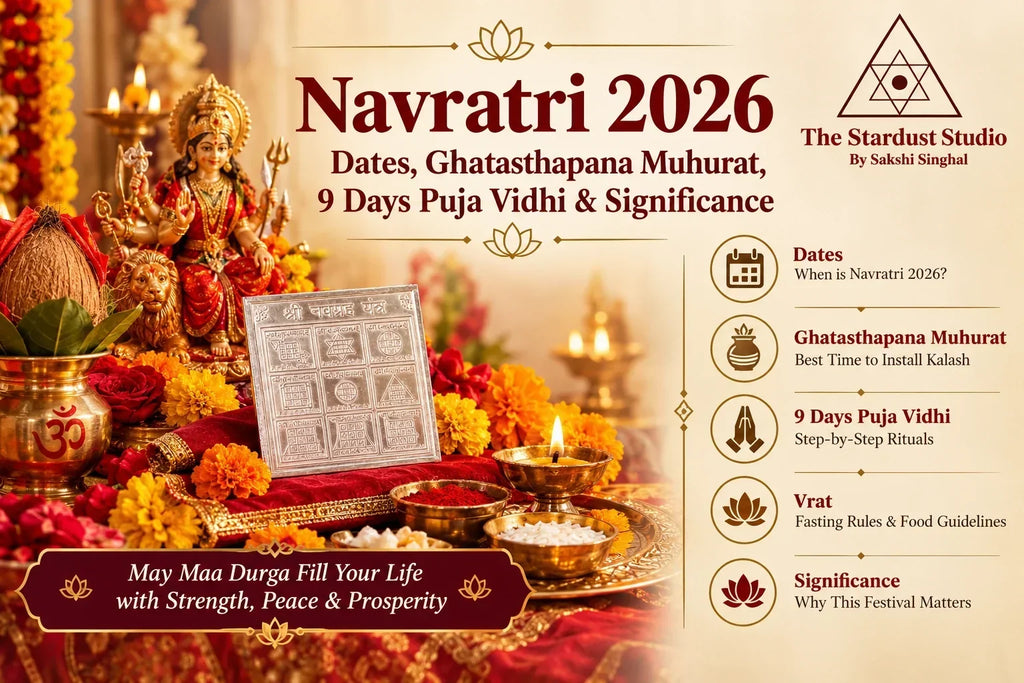
Shardiya Navratri is one of the most sacred celebrations dedicated to Maa Durga and her nine forms, collectively known as Navdurga. For nine devotional days, families worship the Divine Feminine through Ghatasthapana, fasting, mantra chanting, diya, flowers, bhog, Durga Saptashati recitation and other practices according to their traditions.
If you're wondering when is Navratri in 2026, Shardiya Navratri begins on Sunday, October 11, 2026, with Ghatasthapana and Shailputri Puja. Navratri Parana and Vijayadashami fall on Tuesday, October 20, 2026.
For Delhi, the main Ghatasthapana Muhurat is 6:19 AM to 10:12 AM on October 11, with an alternative Abhijit Muhurat from 11:44 AM to 12:31 PM. Since Muhurat varies by location, always check your city's Panchang before performing Kalash Sthapana.
As you prepare your home mandir, traditional silver spiritual pieces can also become part of an elegant festive setup. A Silver Supari may be incorporated into Kalash or puja arrangements where your tradition permits it, while a Silver Lotus can complement Lakshmi and Devi-inspired décor. Auspicious keepsakes such as a Silver Elephant or Silver Kamdhenu Cow with Calf can remain part of your spiritual collection beyond the nine days.
This complete guide covers the Navratri 2026 date and time, start and end dates, Ghatasthapana Muhurat, nine forms of Durga, simple daily Puja Vidhi, fasting, Kanya Pujan, Ashtami, Navami and Vijayadashami.
Important: Hindu festival timings and Ghatasthapana Muhurat depend on location. The timings mentioned here are for Delhi unless otherwise stated. Puja and fasting traditions also vary by family, region and sampradaya.
When Is Navratri in 2026?
The Navratri start date 2026 is:
Sunday, October 11, 2026
The main Shardiya Navratri observance continues through the Navdurga worship period, followed by Navratri Parana and Vijayadashami on:
Tuesday, October 20, 2026
In Delhi, Maha Ashtami and Maha Navami observances both have important timings on Monday, October 19, because Ashtami ends at 10:51 AM and Navami follows. Vijayadashami falls on October 20.
Navratri 2026 Date and Time
The key dates to remember are:
Navratri Begins: Sunday, October 11, 2026
Ghatasthapana: Sunday, October 11, 2026
Durga Ashtami: Monday, October 19, 2026
Maha Navami: Monday, October 19, 2026
Navratri Parana: Tuesday, October 20, 2026
Vijayadashami / Dussehra: Tuesday, October 20, 2026
For Delhi, Pratipada Tithi begins at 9:19 PM on October 10 and ends at 9:30 PM on October 11.
Navratri 2026 Ghatasthapana Muhurat
Ghatasthapana, also called Kalash Sthapana, marks the formal beginning of Navratri worship.
For Delhi, India, the 2026 timings are:
Ghatasthapana Date: Sunday, October 11, 2026
Main Ghatasthapana Muhurat: 6:19 AM to 10:12 AM
Duration: 3 hours 52 minutes
Alternative Abhijit Muhurat: 11:44 AM to 12:31 PM
Ghatasthapana should traditionally be performed while Pratipada Tithi prevails and within the appropriate daytime period.
Do not automatically apply Delhi's timing to another city; sunrise and Panchang calculations affect the local Muhurat.
What Is Ghatasthapana?
Ghatasthapana is one of the central rituals marking the beginning of Shardiya Navratri.
A sacred Kalash is established according to family tradition to invoke and honour Goddess Shakti during the nine-day observance.
The setup can include a Kalash, coconut, sacred thread, leaves and other traditional materials depending on the Vidhi being followed.
If your family uses Supari during Kalash Sthapana, a Silver Supari may be included where a reusable silver representation is accepted. If your ritual specifically calls for natural Supari, however, use the traditional ingredient rather than automatically replacing it.
Navratri 2026 Puja Samagri
Prepare your puja materials before Ghatasthapana so the ceremony remains calm and organized.
Common items may include:
- Maa Durga image or idol
- Kalash
- Coconut
- Leaves used according to your tradition
- Red cloth
- Mauli
- Kumkum
- Akshat
- Fresh flowers
- Diya
- Ghee or oil
- Incense
- Fruits
- Satvik sweets
- Puja thali
- Supari
- Sacred water
You may also arrange permanent silver devotional objects around the mandir if they are part of your household collection.
For example, a Silver Lotus can create a subtle Devi- and Lakshmi-inspired element, while a Silver Elephant can be kept separately as an auspicious traditional symbol.
Avoid overcrowding the altar. The primary focus should remain on Maa Durga and the Kalash.
How to Perform Ghatasthapana at Home
The exact procedure varies, so your household tradition should take priority.
Step 1: Clean the Puja Space
Clean your mandir and the surrounding area thoroughly.
Bathe or wash according to your regular practice and wear clean clothes.
Step 2: Prepare the Kalash
Prepare the Kalash with the ingredients prescribed by your family's Puja Vidhi.
If using a Silver Supari as part of your traditional setup, clean it appropriately before placement.
Step 3: Place the Coconut
Arrange the coconut and leaves according to your household Ghatasthapana practice.
Step 4: Take Sankalpa
Sit calmly before Maa Durga and make your intention to observe Navratri with devotion.
Step 5: Light a Diya
Light a diya and incense according to your tradition.
Many families maintain an Akhand Jyoti during Navratri, but this requires careful fire safety and should only be undertaken when it can be supervised appropriately.
Nine Days of Navratri 2026: Navdurga Puja Guide
Each day of Navratri is traditionally associated with a form of Goddess Durga.
Day 1 – Maa Shailputri
Date: October 11, 2026
Navratri begins with Ghatasthapana and worship of Maa Shailputri.
She represents the first form of Navdurga and is traditionally associated with strength, purity and the beginning of the spiritual journey.
Keep the first day's puja focused on establishing the Kalash and beginning the nine-day devotional routine.
Day 2 – Maa Brahmacharini
Date: October 12, 2026
Maa Brahmacharini is traditionally associated with tapasya, devotion, discipline and perseverance.
The day can inspire reflection on consistency in spiritual practice rather than seeking instant results.
Day 3 – Maa Chandraghanta
Continue Navdurga worship with Maa Chandraghanta according to your household calendar and Puja Vidhi.
She is traditionally associated with courage and the removal of fear.
Offer flowers, diya and suitable bhog according to your tradition.
Day 4 – Maa Kushmanda
Maa Kushmanda is traditionally associated with creative energy and cosmic creation.
The day can be observed through simple Durga Puja, mantra chanting and Satvik offerings.
Day 5 – Maa Skandamata
Maa Skandamata is depicted with Lord Skanda and traditionally represents motherhood, care and devotion.
This is also a meaningful point during Navratri to reflect on family, nurturing and gratitude.
Day 6 – Maa Katyayani
Maa Katyayani represents a powerful form of the Goddess and is traditionally associated with courage and strength.
In 2026, the sixth Navratri day falls on Friday, October 16, when Saraswati Avahan is also observed in relevant traditions.
Day 7 – Maa Kalaratri
October 17, 2026 is associated with Kalaratri Puja in the Shardiya Navratri sequence.
Maa Kalaratri is a fierce form of Durga traditionally connected with courage and the destruction of negativity.
Day 8 – Navratri Observance Continues
October 18, 2026 continues the Navratri devotional sequence. Due to the way lunar Tithis fall in 2026, the numbered festival days and Tithi-based Ashtami/Navami observances do not map into a simple one-date-per-Tithi pattern.
This is why a Panchang should be used rather than assuming that the eighth Gregorian day automatically equals Maha Ashtami.
Day 9 – Maa Mahagauri & Durga Ashtami
Date: Monday, October 19, 2026
Maha Ashtami is observed on October 19 in Delhi.
Maa Mahagauri is traditionally associated with purity, peace and spiritual refinement.
Ashtami Tithi begins at 8:27 AM on October 18 and ends at 10:51 AM on October 19 in New Delhi.
Maha Navami follows on the same date, with Navami Tithi beginning at 10:51 AM on October 19.
Why Do Ashtami and Navami Fall So Close Together in 2026?
Hindu lunar Tithis do not align perfectly with Gregorian midnight-to-midnight dates.
In Delhi, Ashtami ends at 10:51 AM on October 19, and Navami begins immediately afterward. This means major Ashtami and Navami observances occur close together.
For families performing Kanya Pujan, use the timing prescribed by your own tradition and local Panchang rather than choosing a date based solely on the number of days since Navratri began.
Kanya Pujan During Navratri
Kanya Pujan is an important tradition in many households, commonly observed on Ashtami or Navami.
Young girls are respectfully welcomed and worshipped as symbolic forms of the Divine Feminine.
Depending on family tradition, the ritual may include:
- Washing their feet respectfully
- Tilak
- Offering food
- Halwa
- Puri
- Chana
- Dakshina
- Gifts
Treat the children with genuine respect and comfort rather than approaching the practice mechanically.
Navratri Vrat: What Can You Eat?
Fasting practices vary considerably.
Common Navratri vrat foods can include:
- Fruits
- Milk
- Curd
- Makhana
- Nuts
- Sabudana
- Potatoes
- Kuttu
- Singhara
- Samak rice
- Sendha Namak where permitted
Some devotees eat one meal per day, while others follow fruit or milk-based fasting.
The purpose of fasting is spiritual discipline, not physical harm. Anyone with health conditions or special nutritional requirements should adapt appropriately.
Simple Daily Navratri Puja Vidhi
Your daily worship does not have to be elaborate.
Begin by cleaning the mandir and lighting a diya. Offer fresh flowers and suitable bhog to Maa Durga. Spend time in prayer, mantra chanting or Durga Saptashati recitation according to your practice.
You may chant a simple Devi mantra such as:
ॐ दुं दुर्गायै नमः
Om Dum Durgaye Namah
Conclude with Aarti and gratitude.
Using Silver Spiritual Products During Navratri
Navratri is also a meaningful time to organize and refresh your home mandir.
Permanent spiritual products can complement the altar without replacing the primary Durga Puja rituals.
Silver Lotus
A Silver Lotus can be used as elegant devotional décor. The lotus carries strong associations with purity and divinity across Hindu iconography and is particularly prominent in depictions of Goddess Lakshmi.
Silver Elephant
A Silver Elephant can be kept as an auspicious traditional symbol associated with strength, wisdom, stability and prosperity.
Keep it on a clean, elevated surface rather than directly on the floor.
Silver Fish
A Silver Fish can be incorporated into an auspicious spiritual collection where it aligns with your family's beliefs. Fish symbolism is sometimes associated with movement, abundance and prosperity in contemporary Vastu practices.
These objects should complement the devotional environment rather than becoming substitutes for traditional Navratri worship.
Silver Kamdhenu Cow with Calf for Auspicious Gifting
A Silver Kamdhenu Cow with Calf can make a meaningful festive gift during Navratri.
Kamdhenu has deep significance in Hindu tradition and is traditionally associated with abundance and nourishment.
A silver representation can be gifted for:
- Navratri
- Housewarming
- New beginnings
- Festive occasions
- Spiritual gifting
Keep spiritual claims symbolic rather than treating the object as a guarantee of material results.
Silver Ganesh Lakshmi Potli for Festive Gifting
As Navratri moves toward the broader festive season, a Silver Ganesh Lakshmi Potli can make a thoughtful auspicious gift.
Lord Ganesha is traditionally associated with wisdom and auspicious beginnings, while Goddess Lakshmi is associated with prosperity and abundance.
This combination makes Ganesh-Lakshmi-inspired products especially suitable for festive gifting, new homes and business occasions.
A spiritual gift is most meaningful when its symbolism is explained rather than simply presented as a wealth-generating object.
Silver Supari for Navratri Kalash Puja
A Silver Supari can be particularly relevant during Navratri because Ghatasthapana is central to the first day.
If your family's Kalash Puja traditionally includes Supari and permits a silver representation, a reusable Silver Supari can become part of your puja collection.
However, some rituals specifically call for natural Supari. Follow the actual Vidhi rather than substituting ingredients automatically.
Silver Laung in a Puja Collection
A Silver Laung is a permanent representation of clove that can be kept among silver puja essentials where such symbolic objects form part of your family practice.
As with Silver Supari, distinguish between a reusable symbolic silver object and an actual clove when a ritual specifically requires the natural ingredient.
A silver representation can remain in your puja collection long after Navratri concludes.
Auspicious Navratri Gift Ideas
Navratri is also a meaningful occasion for spiritual and festive gifting.
Depending on the recipient, consider pieces such as:
- Silver Lotus
- Silver Elephant
- Silver Fish
- Silver Kamdhenu Cow with Calf
- Silver Ganesh Lakshmi Potli
- Silver Supari
- Silver Laung
- Silver Laung & Navgraha
For a home temple, prioritize objects that fit the recipient's actual devotional tradition. For general gifting, focus on craftsmanship, material information and symbolism rather than exaggerated spiritual promises.
Navratri End Date 2026 and Vijayadashami
If you're searching for the Navratri end date 2026, the festival culminates with Navratri Parana and Vijayadashami on Tuesday, October 20, 2026.
For New Delhi:
Dashami Tithi Begins: 12:50 PM on October 20
Dashami Tithi Ends: 2:11 PM on October 21
Vijay Muhurat: 1:59 PM to 2:45 PM on October 20
Aparahna Puja: 1:14 PM to 3:30 PM
Vijayadashami celebrates the triumph of Dharma and is associated with both Goddess Durga's victory over Mahishasura and Lord Rama's victory over Ravana in different Hindu traditions.
Spiritual Significance of Navratri
Navratri literally refers to "nine nights."
At a deeper level, the festival can be understood as a progression through different expressions of Shakti.
The nine days invite devotees to reflect on qualities such as:
- Courage
- Discipline
- Wisdom
- Compassion
- Strength
- Purity
- Devotion
The celebration ultimately culminates in Vijayadashami—the symbolism of victory over forces that obstruct Dharma and spiritual growth.
Why Explore The Stardust Studio During Navratri?
At The Stardust Studio, we believe spiritual products should complement devotional traditions through thoughtful craftsmanship and meaningful symbolism.
For Navratri and festive gifting, you can explore pieces such as the Silver Elephant, Silver Fish, Silver Lotus, Silver Kamdhenu Cow with Calf, Silver Ganesh Lakshmi Potli, Silver Supari and Silver Laung.
Some can become part of a permanent home-mandir collection, while others work beautifully as auspicious gifts for family, friends, new homes and festive occasions.
When selecting silver spiritual products, review the individual product specifications for purity, size, construction and care information.
Final Thoughts
Shardiya Navratri 2026 begins on Sunday, October 11, with Ghatasthapana and worship of Maa Shailputri. The nine-day celebration honours different forms of Goddess Durga and culminates with Navratri Parana and Vijayadashami on Tuesday, October 20, 2026.
Beyond fasting and festive decoration, Navratri is a period for devotion, discipline, prayer and reflection on the different manifestations of Shakti. Whether you perform an elaborate Navdurga Puja or follow a simple daily practice of diya, flowers, mantra and Aarti, sincerity remains at the heart of the celebration.
As you prepare your home mandir for Navratri, meaningful devotional pieces such as a Silver Lotus, Silver Elephant, Silver Fish, Silver Kamdhenu Cow with Calf, Silver Ganesh Lakshmi Potli, Silver Supari and Silver Laung can complement your festive setup or become thoughtful spiritual gifts. They should support—not replace—the traditional rituals followed in your household.
For Navratri 2026 and the upcoming festive season, explore the spiritual and silver collection at The Stardust Studio for thoughtfully crafted pieces designed for home temples, auspicious gifting and meaningful celebrations.
Frequently Asked Questions
1. When is Navratri in 2026?
2. What is the Navratri 2026 Ghatasthapana Muhurat?
3. What is the Navratri start date 2026?
4. What is the Navratri end date 2026?
5. When are Durga Ashtami and Maha Navami in 2026?


