


Pitru Paksha 2026: Dates, Shraddha Tithi Calendar, Vidhi & Significance
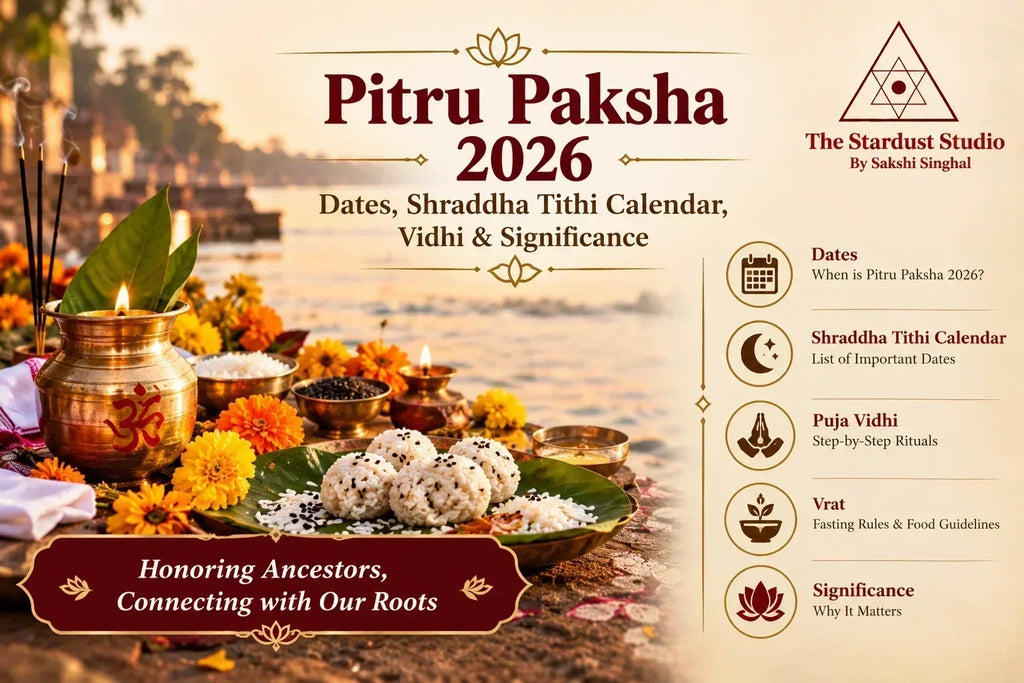
Pitru Paksha is a sacred period in the Hindu calendar dedicated to remembering and honouring one's ancestors. During these days, families traditionally perform Shraddha, Tarpan, Pinda Daan, charity and other ancestral rites according to their family and regional traditions.
Rather than being a festive period, Pitru Paksha is generally observed with simplicity, remembrance, gratitude and respect for departed family members.
If you're wondering when is Pitru Paksha in 2026, the observance begins with Purnima Shraddha on Saturday, September 26, 2026. Pratipada Shraddha follows on September 27, and the period concludes with Sarva Pitru Amavasya on Saturday, October 10, 2026.
The correct Shraddha day is particularly important because rites are traditionally performed according to the lunar Tithi on which the ancestor passed away rather than simply according to the Gregorian date of death.
This complete guide covers the Pitru Paksha 2026 date, start date, Shraddha Tithi calendar, basic Shraddha Vidhi, Tarpan, Pinda Daan, important timings and spiritual significance.
Important: Shraddha practices differ significantly between families, regions and sampradayas. The correct Tithi and ritual timings can also depend on location. For formal Shraddha or Pinda Daan, follow your family tradition and guidance from a knowledgeable priest.
Also Read : Anant Chaturdashi 2026: Date, Shubh Muhurat, Puja Vidhi, Vrat & Significance
Pitru Paksha 2026 Start Date and Time
If you're searching for the Pitru Paksha 2026 start date and time, it is important to distinguish between Purnima Shraddha and the beginning of Krishna Paksha Shraddha.
Purnima Shraddha is observed on September 26, 2026.
Pratipada Shraddha is observed on September 27, 2026.
For Pratipada, the Tithi begins at approximately 10:18 PM on September 26 and ends at approximately 8:58 PM on September 27, according to current Panchang calculations.
However, Shraddha is not generally performed simply at the moment a Tithi begins. Traditional Shraddha timing gives importance to Kutup Muhurat, Rohina Muhurat and Aparahna Kala, which vary according to location.
Therefore, always check your city's Panchang for the actual ritual window.
Pitru Paksha 2026 Shraddha Tithi Calendar
Here is the complete 2026 calendar for planning ancestral rites:
| Date | Day | Tithi |
|---|---|---|
| September 26 | Saturday | Purnima Shraddha |
| September 27 | Sunday | Pratipada Shraddha |
| September 28 | Monday | Dwitiya Shraddha |
| September 29 | Tuesday | Tritiya Shraddha & Maha Bharani |
| September 30 | Wednesday | Chaturthi Shraddha & Panchami Shraddha |
| October 01 | Thrusday | Shashthi Shraddha |
| October 02 | Friday | Saptami Shraddha |
| October 03 | Saturday | Ashtami Shraddha |
| October 04 | Sunday | Navami Shraddha |
| October 05 | Monday | Dashami Shraddha |
| October 06 | Tuesday | Ekadashi Shraddha |
| October 07 | Wednesday | Dwadashi Shraddha & Magha Shraddha |
| October 08 | Thrusday | Trayodashi Shraddha |
| October 09 | Friday | Chaturdashi Shraddha |
| October 10 | Saturday | Sarva Pitru Amavasya |
Notice that some Gregorian dates contain more than one named Shraddha observance because lunar Tithis do not align exactly with midnight-to-midnight calendar days.
What Is Pitru Paksha?
The term can be understood as:
Pitru — ancestors or forefathers
Paksha — a lunar fortnight
Pitru Paksha is therefore a period dedicated to one's departed ancestors.
During this time, families traditionally remember deceased relatives and perform Shraddha according to the appropriate Tithi.
Common practices include:
- Tarpan
- Pinda Daan
- Shraddha
- Food offerings
- Feeding Brahmins according to tradition
- Charity
- Feeding animals or birds in some household traditions
- Remembering ancestors with gratitude
The exact ritual varies considerably between communities.
Why Is Pitru Paksha Considered Important?
Pitru Paksha emphasizes remembrance and gratitude toward those who came before us.
Traditional Hindu thought places importance on obligations toward ancestors, often discussed in connection with Pitru Rina, or one's debt toward the ancestral lineage.
The period therefore creates a structured opportunity to remember deceased parents, grandparents and earlier generations.
Its deeper themes include:
- Gratitude : Our lives are shaped partly by the generations that preceded us.
- Remembrance : Shraddha preserves the memory of deceased family members within the household tradition.
- Family Continuity : The rituals connect present generations with their lineage.
- Charity : Acts of giving and feeding others traditionally form an important part of many Shraddha observances.
How Do You Choose the Correct Shraddha Date?
This is one of the most important aspects of Pitru Paksha.
Traditionally, Shraddha is performed on the same lunar Tithi on which the person passed away.
For example, if an ancestor died on Dwitiya Tithi, Dwitiya Shraddha is generally observed for that person during Pitru Paksha.
This applies to the Tithi rather than simply matching the Gregorian calendar date.
If you do not know the death Tithi, Sarva Pitru Amavasya is traditionally important for performing general ancestral Shraddha.
What Is Sarva Pitru Amavasya?
Sarva Pitru Amavasya 2026 falls on Saturday, October 10.
It is the final and one of the most significant days of Pitru Paksha.
It is also known by names such as:
- Mahalaya Amavasya
- Sarvapitri Amavasya
- Pitru Amavasya
- Pitra Moksha Amavasya
For 2026, Amavasya Tithi begins at approximately 9:36 PM on October 9 and ends at approximately 9:20 PM on October 10.
The exact ritual Muhurat depends on location.
Sarva Pitru Amavasya is particularly significant for families who do not know an ancestor's exact death Tithi or who perform collective ancestral remembrance according to their tradition.
What Is Maha Bharani Shraddha?
In 2026, Maha Bharani falls on Tuesday, September 29.
Unlike most Shraddha days, which are determined primarily by Tithi, Bharani Shraddha is associated with Bharani Nakshatra prevailing during the appropriate Aparahna period.
Bharani has a traditional association with Yama, the deity connected with death and Dharma, which gives Maha Bharani special significance during Pitru Paksha.
What Is Magha Shraddha?
Magha Shraddha falls on Wednesday, October 7, 2026.
Like Maha Bharani, this observance is associated with a Nakshatra rather than simply being another Tithi-based name.
Magha Nakshatra has particularly strong traditional associations with ancestors and lineage, making the day significant in Pitru-related observances.
Best Time to Perform Shraddha
Shraddha rituals are traditionally associated with the latter part of the day rather than early morning.
Three terms frequently appear in Panchang timings:
Kutup Muhurat : Kutup Kala is traditionally considered an important period for beginning Shraddha rites.
Rohina Muhurat : Rohina follows Kutup and is also used for Shraddha rituals.
Aparahna Kala : Aparahna—the afternoon period—is traditionally considered important for Pitru Paksha Shraddha.
These timings change according to location and date.
For this reason, avoid copying the Shraddha Muhurat of Mumbai, Delhi, Ujjain or another city and assuming it applies everywhere.
Pitru Paksha Shraddha Vidhi
A complete Shraddha can involve detailed Vedic and family-specific procedures, so it is best performed according to one's tradition and priestly guidance.
A general structure may include the following.
Step 1: Prepare Yourself and the Space
Bathe and wear clean, simple clothing according to your tradition.
Keep the ritual area clean and peaceful.
Step 2: Take Sankalpa
Begin by remembering the ancestor for whom the Shraddha is being performed.
The Sankalpa may include the ancestor's name, lineage and other traditional details.
Step 3: Perform Tarpan
Water is traditionally offered to the ancestors according to prescribed ritual methods.
Black sesame seeds are commonly associated with Pitru Tarpan in many traditions.
Step 4: Perform Pinda Daan
Where prescribed, Pindas are prepared and offered according to the relevant Shraddha Vidhi.
The ingredients and exact procedure can differ by tradition.
Step 5: Offer Food
Food offerings form an important part of many Shraddha practices.
Follow the dietary and ritual rules observed by your family.
Step 6: Charity and Feeding
Many traditions include feeding Brahmins or giving food, clothing or Dakshina as appropriate.
Some households also feed cows, crows, dogs or other living beings according to customary practice.
Step 7: Conclude with Prayer
Remember your ancestors respectfully and conclude the ritual according to your family tradition.
What Is Pinda Daan?
Pinda Daan is another important ancestral rite.
Pindas are ritual offerings prepared and offered to ancestors according to prescribed traditions.
Places such as Gaya hold particular significance for ancestral rites, and many families travel there to perform Pinda Daan and Shraddha.
However, ancestral remembrance is also performed at home and in other sacred locations according to family practice.
What Food Is Traditionally Prepared During Pitru Paksha?
Food traditions vary substantially across India.
Many households prepare simple Satvik food for Shraddha and avoid ingredients that are not permitted within their particular tradition.
Rather than following one universal menu from the internet, use the foods traditionally prepared in your family for Shraddha.
This is particularly important because ancestral rites are closely tied to lineage-specific customs.
What Should Be Avoided During Pitru Paksha?
Different households observe different restrictions.
Common traditions may include avoiding major celebratory ceremonies or highly festive activities during the ancestral fortnight.
Some families postpone:
- Weddings
- Griha Pravesh
- Major auspicious ceremonies
- Large celebratory purchases
- Other Shubh Karya
However, the extent of these restrictions varies.
Pitru Paksha should primarily be approached as a period of remembrance and simplicity rather than fear.
Can You Perform Shraddha at Home?
Yes, many families perform ancestral rites at home.
However, the complexity of Shraddha varies considerably.
Simple remembrance and charity can be performed personally, while formal Shraddha, Tarpan or Pinda Daan may follow detailed ritual procedures.
If your family traditionally performs these rites with a priest, continue that practice.
What If You Don't Know the Ancestor's Death Tithi?
This is a common concern.
If the exact Tithi is unknown, Sarva Pitru Amavasya traditionally provides an important opportunity for general ancestral Shraddha.
In 2026, this falls on:
Saturday, October 10, 2026
A priest familiar with your family tradition can also guide you on the appropriate observance.
Pitru Paksha Is About Gratitude, Not Fear
Pitru Paksha is sometimes surrounded by alarming claims online about what will happen if a particular ritual is missed or performed imperfectly.
A more constructive way to understand the period is through its central themes:
- Remembering family
- Respecting ancestors
- Expressing gratitude
- Giving to others
- Preserving lineage traditions
If you're unsure about a complex ritual, seek appropriate guidance rather than becoming anxious about performing it incorrectly.
Final Thoughts
Pitru Paksha 2026 begins with Purnima Shraddha on September 26, followed by Pratipada Shraddha on September 27, and concludes with Sarva Pitru Amavasya on October 10, 2026.
More than a set of ritual dates, Pitru Paksha is a period dedicated to remembrance, gratitude and connection with one's ancestral lineage.
If your family performs Shraddha, identify the correct lunar death Tithi and follow the Vidhi traditionally observed in your household. When the Tithi is unknown, Sarva Pitru Amavasya provides an important traditional occasion for collective ancestral remembrance.
Above all, approach Pitru Paksha with sincerity rather than fear. Remember those who came before you, honour the traditions meaningful to your family, give where appropriate, and use these sacred days as an opportunity for gratitude and reflection.
Frequently Asked Questions
1. When is Pitru Paksha in 2026?
2. What is the Pitru Paksha 2026 start date and time?
3. What is the Pitru Paksha 2026 date for Sarva Pitru Amavasya?
4. Which date should I perform Shraddha for an ancestor?
5. What is the best time for Shraddha during Pitru Paksha?


