


Navratri Day 5 Maa Skandamata 2026: Puja Vidhi, Mantra, Bhog, Color & Significance
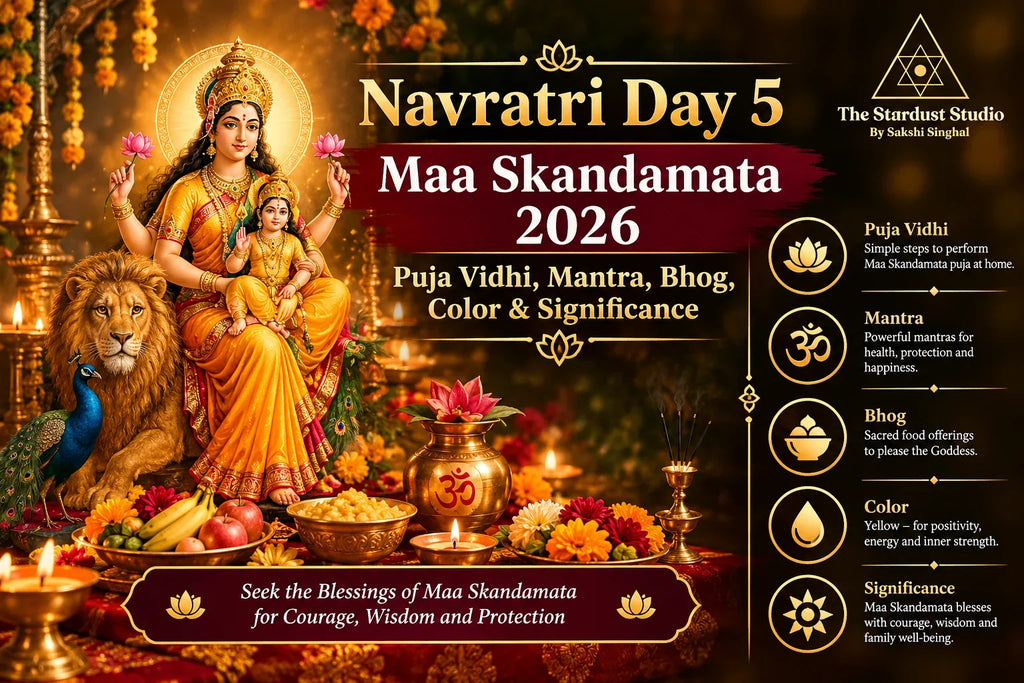
The fifth day of Shardiya Navratri is dedicated to Maa Skandamata, the fifth manifestation of Navdurga. Depicted holding her son Skanda, or Kartikeya, Maa Skandamata represents motherhood, compassion, courage, protection and the nurturing power of the Divine Feminine.
In 2026, Maa Skandamata Puja will be observed on Thursday, October 15. The traditional weekday-based Navratri color for the day is Yellow, a bright color popularly associated with optimism, warmth and positive energy.
As you prepare your Day 5 altar, permanent devotional pieces can complement the traditional diya, flowers, bhog and Navratri Kalash. A Silver Lotus is particularly meaningful because Maa Skandamata is traditionally depicted seated on a lotus and is also known as Padmasana Devi in devotional descriptions.
A Silver Swastik can remain as an auspicious Hindu symbol in the home mandir, while a Silver Kamdhenu Cow with Calf can complement a spiritual collection through its traditional symbolism of nourishment and abundance. A Silver Tulsi Plant may also remain respectfully in the home temple as a lasting representation of sacred Tulsi, though it is not a required element of Maa Skandamata Puja.
This complete guide covers Maa Skandamata Puja Vidhi, Maa Skandamata Mantra, Maa Skandamata Bhog, Maa Skandamata Puja Color, significance, vrat practices and simple ways to worship Maa Skandamata at home.
Important: Navratri rituals, bhog and fasting practices vary between families, regions and sampradayas. Follow your established household tradition, Guru or priest's guidance wherever it differs from this general guide.
When Is Maa Skandamata Puja in 2026?
Maa Skandamata Puja 2026 Date: Thursday, October 15, 2026
She is worshipped on Day 5 of Shardiya Navratri.
The Navdurga journey up to Day 5 is:
Day 1: Maa Shailputri
Day 2: Maa Brahmacharini
Day 3: Maa Chandraghanta
Day 4: Maa Kushmanda
Day 5: Maa Skandamata
Devotees continue worship of the Kalash established during Ghatasthapana and perform dedicated Skandamata Puja with flowers, diya, mantra, bhog and Aarti.
Who Is Maa Skandamata?
Maa Skandamata is the mother of Skanda, another name associated with Lord Kartikeya.
Her name can therefore be understood as:
Skanda – Lord Kartikeya
Mata – Mother
She represents the nurturing and protective aspect of Goddess Durga.
Maa Skandamata is traditionally depicted holding child Skanda in her lap while seated on a lotus.
Her form beautifully combines two ideas that are sometimes incorrectly treated as opposites:
gentleness and strength.
As a mother she nurtures, while as a form of Durga she represents Divine Shakti.
Maa Skandamata Significance
The significance of Maa Skandamata is closely connected with motherhood, compassion and protection.
1. Divine Motherhood
Maa Skandamata represents the nurturing aspect of the Divine Feminine.
Her image reminds devotees of the strength found in care, patience and responsibility.
2. Protection
Her connection with Skanda, traditionally associated with courage and warfare, gives her maternal form a protective dimension.
3. Compassion
Day 5 encourages devotees to reflect on compassion toward family and others.
4. Strength Through Nurturing
Maa Skandamata demonstrates that nurturing someone does not imply weakness.
Care itself can require enormous patience and courage.
5. Spiritual Growth
Her lotus symbolism also connects Day 5 with purity and spiritual development.
Why Is Maa Skandamata Worshipped on Navratri Day 5?
The Navdurga sequence creates a symbolic spiritual progression.
Maa Shailputri establishes stability.
Maa Brahmacharini teaches discipline.
Maa Chandraghanta develops courage.
Maa Kushmanda introduces creative energy.
Maa Skandamata brings compassion and nurturing into that strength.
The lesson is important: personal power becomes more meaningful when it is combined with compassion.
Maa Skandamata and the Lotus
The lotus has a particularly strong visual connection with Maa Skandamata.
She is traditionally depicted seated on a lotus, which contributes to her association with the name Padmasana Devi.
The lotus itself carries symbolism connected with:
- Purity
- Spiritual growth
- Divinity
- Rising above difficult circumstances
A Silver Lotus can therefore be a particularly appropriate permanent devotional object for a Maa Skandamata-inspired altar.
It should complement—not replace—fresh flowers or other offerings used in your Puja Vidhi.
Puja Essentials for Maa Skandamata Day 5
Your Day 5 altar should remain clean and focused on Maa Skandamata and the Navratri Kalash.
Permanent silver pieces can remain subtly arranged around the mandir.
Silver Lotus
A Silver Lotus is particularly relevant because of Maa Skandamata's traditional lotus-seat imagery.
Keep it respectfully on a clean, elevated surface.
Silver Swastik
A Silver Swastik can remain in the home mandir as a traditional auspicious symbol.
In Hindu tradition, the Swastik predates its 20th-century misuse in Europe by many centuries and continues to carry sacred associations with auspiciousness and well-being in Indian religious contexts.
Silver Kamdhenu Cow with Calf
A Silver Kamdhenu Cow with Calf can complement the nurturing symbolism of Day 5.
Kamdhenu is traditionally associated with nourishment and abundance, while the cow-and-calf imagery naturally reinforces themes of care and motherhood.
It is not a mandatory Maa Skandamata Puja item but can remain in a permanent spiritual collection.
Silver Tulsi Plant
A Silver Tulsi Plant can remain respectfully in your home temple as a lasting symbolic representation of sacred Tulsi.
Tulsi has particularly strong associations with Vishnu and Krishna devotional traditions, so it should not be presented as a specific requirement for Skandamata Puja.
Maa Skandamata Puja Vidhi
A simple Maa Skandamata Puja Vidhi can be performed at home without creating an excessively elaborate setup.
Step 1: Clean the Mandir
Begin by cleaning your home temple and the area surrounding the Navratri Kalash.
Bathe or wash according to your normal devotional practice and wear clean clothes.
Step 2: Light a Diya
Light a diya and incense according to your family tradition.
If you maintain an Akhand Jyoti during Navratri, ensure that the flame is safely supervised.
Step 3: Worship the Kalash
Continue the daily worship of the Kalash established during Ghatasthapana.
Step 4: Offer Flowers
Offer fresh flowers to Maa Skandamata.
A permanent Silver Lotus can remain nearby as part of the altar arrangement.
Step 5: Offer Kumkum and Akshat
Offer Kumkum, Akshat and other puja materials according to your household tradition.
Step 6: Offer Maa Skandamata Bhog
Prepare a fresh Satvik offering appropriate for Day 5.
Step 7: Chant Maa Skandamata Mantra
Sit calmly and chant the Goddess's mantra with devotion.
Step 8: Perform Aarti
Complete the Puja with Durga Aarti or the Aarti followed in your household.
Maa Skandamata Mantra
A commonly recited Maa Skandamata Mantra is:
ॐ देवी स्कन्दमातायै नमः॥
Om Devi Skandamatayai Namah
You may chant it according to your personal practice.
Some devotees choose 11, 21 or 108 repetitions, but concentration and sincerity are more important than treating a particular count as compulsory.
Maa Skandamata Prarthana
A traditional prayer associated with Maa Skandamata is:
सिंहासनगता नित्यं पद्माश्रितकरद्वया।
शुभदास्तु सदा देवी स्कन्दमाता यशस्विनी॥
It can be recited during Day 5 worship according to your devotional tradition.
Maa Skandamata Bhog
Banana is commonly associated with Maa Skandamata Bhog in popular Navratri traditions.
Depending on household custom, you may offer:
- Bananas
- Fresh fruits
- Satvik sweets
- Other permitted homemade bhog
The offering should be fresh and prepared respectfully.
If your family traditionally offers something different on Panchami or Navratri Day 5, continue following that practice.
Why Is Banana Offered to Maa Skandamata?
Banana is popularly recommended as a simple Day 5 offering in contemporary Navratri practice.
Its simplicity also fits well with a home puja because it requires no elaborate preparation.
However, there is no need to become rigid about one internet bhog list.
Regional and family traditions vary, and an established household offering can be followed instead.
Maa Skandamata Puja Color
The traditional weekday-based Maa Skandamata Puja Color for Thursday, October 15, 2026 is Yellow.
Yellow is popularly associated with:
- Warmth
- Optimism
- Happiness
- Positivity
- Brightness
Devotees may choose yellow clothing, flowers or subtle decorative elements for Day 5.
Following the day's color is a popular Navratri custom rather than a compulsory requirement for worship.
Maa Skandamata Vrat
Many devotees continue their Navratri fast on Day 5.
Depending on household tradition, vrat foods may include:
- Fruits
- Milk
- Curd
- Makhana
- Nuts
- Sabudana
- Samak rice
- Potatoes
- Kuttu
- Singhara
- Sendha Namak where permitted
Some devotees eat once daily while others follow a fruit- or milk-based fast.
Fasting should support devotion rather than harm health. Adapt the vrat if you have medical or nutritional requirements.
Simple Maa Skandamata Puja for Busy Devotees
If you have limited time, keep Day 5 worship simple.
Clean your mandir, light a diya, offer fresh flowers and a banana or other suitable Satvik bhog, then chant:
Om Devi Skandamatayai Namah
Spend a few moments reflecting on compassion, patience and responsibility.
A simple puja performed attentively can be deeply meaningful.
How to Arrange a Maa Skandamata Day 5 Altar
A clean setup can include:
- Maa Durga or Skandamata image
- Navratri Kalash
- Diya
- Fresh flowers
- Day 5 bhog
- Silver Lotus
If your mandir already contains a Silver Swastik, Silver Kamdhenu Cow with Calf or Silver Tulsi Plant, allow these objects to remain in their regular positions rather than moving every item directly beside the Goddess.
This keeps the altar balanced and visually focused.
Can You Keep a Silver Kamdhenu Cow with Calf During Skandamata Puja?
Yes, if it already forms part of your home-mandir collection.
The Silver Kamdhenu Cow with Calf has its own traditional symbolism connected with nourishment and abundance, while the mother-and-calf imagery can complement Day 5's broader theme of nurturing.
However, it is not a prescribed requirement of Maa Skandamata Puja.
Can You Keep a Silver Tulsi Plant in the Navratri Mandir?
Yes. A Silver Tulsi Plant can remain in your home temple during Navratri.
Its symbolism primarily comes from Tulsi's sacred position in Hindu tradition and its especially strong connection with Vishnu and Krishna devotion.
There is no need to remove it during Devi worship, but it should not be presented as a required Maa Skandamata offering.
Silver Swastik in a Navratri Mandir
A Silver Swastik can remain in the mandir as a traditional auspicious symbol.
It may be positioned respectfully within the altar or temple structure without becoming the primary object of Day 5 worship.
The central focus remains Maa Skandamata.
What Can We Learn from Maa Skandamata?
Day 5 offers a simple but powerful lesson:
Strength should know how to nurture.
By this stage of the Navdurga journey, the devotee has encountered stability, discipline, courage and creative energy.
Maa Skandamata adds compassion.
This progression suggests that spiritual strength is incomplete if it does not eventually become capable of supporting and uplifting others.
Why Explore The Stardust Studio for Navratri Puja Essentials?
At The Stardust Studio, our spiritual collection brings together meaningful traditional symbolism with thoughtfully crafted products for modern home mandirs.
For Maa Skandamata Day 5 and your permanent devotional collection, you can explore:
Silver Lotus – especially meaningful because Maa Skandamata is traditionally depicted seated on a lotus.
Silver Swastik – a lasting auspicious Hindu symbol for a home-mandir collection.
Silver Kamdhenu Cow with Calf – a devotional piece associated with nourishment and abundance, with mother-and-calf imagery that complements Day 5's nurturing theme.
Silver Tulsi Plant – a lasting representation of sacred Tulsi suitable for a home temple or spiritual gift.
These products can complement your devotional environment while Maa Skandamata and the Navratri Kalash remain the focus of Day 5 worship.
Final Thoughts
Maa Skandamata 2026 will be worshipped on Thursday, October 15, the fifth day of Shardiya Navratri, with Yellow as the traditional color of the day.
Her form offers one of Navratri's most beautiful lessons: strength and compassion can exist together. Maa Skandamata's image with child Skanda represents nurturing, protection and the responsibility that comes with caring for others.
For Day 5, keep your worship simple and sincere. Maintain the Navratri Kalash, light a diya, offer fresh flowers and appropriate Maa Skandamata Bhog, and chant Om Devi Skandamatayai Namah with concentration.
A Silver Lotus from The Stardust Studio can particularly complement Maa Skandamata's traditional lotus symbolism, while a Silver Swastik, Silver Kamdhenu Cow with Calf and Silver Tulsi Plant can remain part of your permanent devotional collection.
Let Day 5 become a reminder that spiritual strength is not only the power to overcome difficulties—it is also the ability to nurture, protect and uplift.
Frequently Asked Questions
1. When is Maa Skandamata Puja in 2026?
2. What is the Maa Skandamata Mantra?
3. What is Maa Skandamata Bhog?
4. What is Maa Skandamata Puja Color in 2026?
5. What is the significance of Maa Skandamata?


