


Navratri Day 6 Maa Katyayani 2026: Puja Vidhi, Mantra, Bhog, Color & Significance
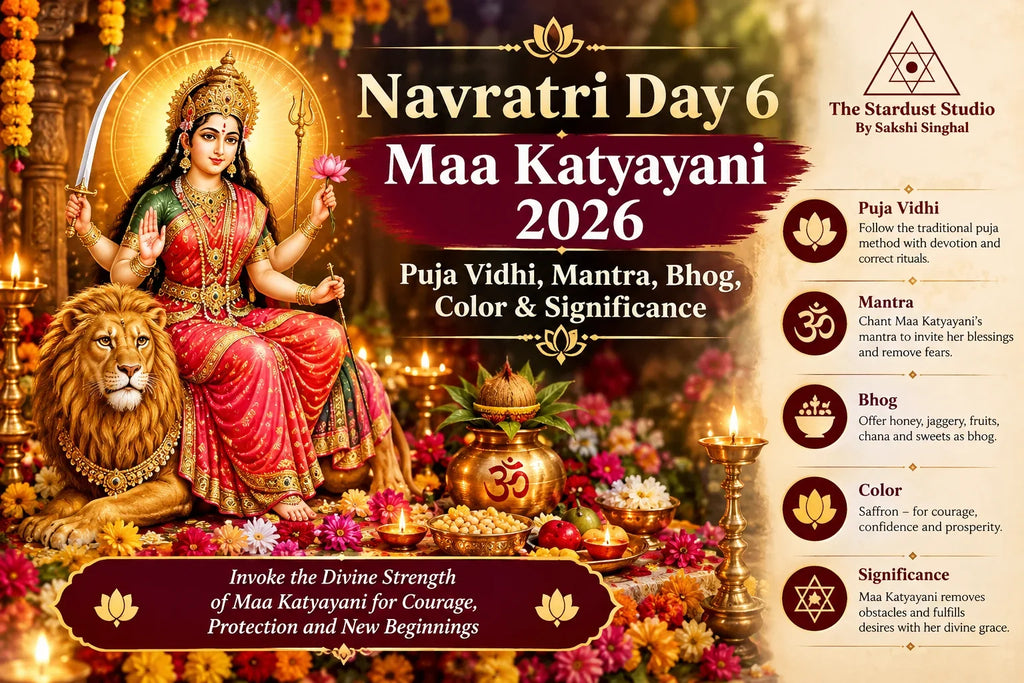
The sixth day of Shardiya Navratri is dedicated to Maa Katyayani, the sixth manifestation of Navdurga. Her powerful form is traditionally associated with courage, determination, protection and the strength to stand against Adharma.
In 2026, Maa Katyayani Navratri Day 6 falls on Friday, October 16. The traditional weekday-based Navratri color for the day is Green, popularly associated with growth, harmony and new beginnings.
As you prepare your Day 6 mandir, permanent devotional pieces can complement the traditional Navratri Kalash, diya, flowers and bhog. A Silver Swastik can remain in the mandir as an auspicious Hindu symbol, while a Silver Kamdhenu Cow with Calf can complement a spiritual collection through its traditional associations with nourishment and abundance.
A Silver Vishnu Lakshmi Lotus can also remain respectfully in the home mandir. Its Vishnu-Lakshmi symbolism is distinct from Maa Katyayani worship, so it should complement the overall sacred space rather than be presented as a required Day 6 offering.
This complete guide covers Maa Katyayani Puja Vidhi, Maa Katyayani Mantra, Maa Katyayani Bhog, Maa Katyayani Puja Color 2026, spiritual significance, vrat practices and a simple way to worship Maa Katyayani at home.
Important: Navratri Puja methods, offerings and fasting traditions differ between families, regions and sampradayas. Follow your established household tradition, Guru or priest's guidance wherever it differs from this general guide.
When Is Maa Katyayani Navratri Day 6 in 2026?
Maa Katyayani Puja 2026 Date: Friday, October 16, 2026
Maa Katyayani is worshipped on Day 6 of Shardiya Navratri.
The Navdurga journey up to this point is:
Day 1: Maa Shailputri
Day 2: Maa Brahmacharini
Day 3: Maa Chandraghanta
Day 4: Maa Kushmanda
Day 5: Maa Skandamata
Day 6: Maa Katyayani
Devotees continue the worship of the Kalash established during Ghatasthapana and offer dedicated prayers, flowers, bhog and Aarti to Maa Katyayani.
Who Is Maa Katyayani?
Maa Katyayani is traditionally regarded as a powerful warrior form of Goddess Durga.
Her name is associated with Sage Katyayana, and traditional narratives connect her manifestation with the destruction of the demon Mahishasura.
She therefore represents Divine Shakti expressed through courage and decisive action.
Maa Katyayani is traditionally depicted riding a lion and carrying weapons, while also displaying gestures associated with blessings and protection.
Her symbolism includes:
- Courage
- Strength
- Protection
- Determination
- Righteous action
- Victory over negative forces
Maa Katyayani Significance
Understanding Maa Katyayani's significance helps reveal the deeper message behind Navratri Day 6.
- Courage : Maa Katyayani represents the strength to confront difficult situations rather than continually avoiding them.
- Determination : Her warrior form symbolizes focused and decisive action.
- Protection : As a manifestation of Durga, Maa Katyayani carries strong protective symbolism within devotional tradition.
- Dharma : Her traditional stories emphasize the confrontation of Adharma and restoration of righteous order.
- Inner Strength : Her symbolism can also be understood personally—as the courage required to overcome fear, unhealthy habits and self-doubt.
Why Is Maa Katyayani Worshipped on Navratri Day 6?
The Navdurga sequence can be understood as a gradual development of spiritual strength.
Maa Shailputri establishes stability.
Maa Brahmacharini teaches discipline.
Maa Chandraghanta develops courage.
Maa Kushmanda represents creative energy.
Maa Skandamata introduces nurturing and compassion.
Maa Katyayani transforms these qualities into decisive action.
Day 6 therefore asks an important question:
Once you know what is right, do you have the courage to act on it?
Puja Essentials for Maa Katyayani Day 6
Your main Day 6 altar should remain centred on Maa Katyayani and the Navratri Kalash.
Permanent silver devotional products can remain around the mandir without becoming substitutes for traditional offerings.
Silver Swastik
A Silver Swastik can remain in your home mandir as a traditional Hindu symbol of auspiciousness and well-being.
It can complement the overall sacred environment without becoming a required part of Maa Katyayani Puja.
Silver Kamdhenu Cow with Calf
A Silver Kamdhenu Cow with Calf carries separate traditional symbolism connected with nourishment and abundance.
It can remain in your permanent devotional collection during Navratri but is not a prescribed offering specifically for Maa Katyayani.
Silver Vishnu Lakshmi Lotus
A Silver Vishnu Lakshmi Lotus brings together Vishnu-Lakshmi and lotus symbolism.
The lotus itself is an important sacred symbol associated with purity and divinity across Hindu iconography.
Because this particular product has Vishnu-Lakshmi symbolism, keep it respectfully in its established location rather than presenting it as a specific Maa Katyayani object.
Maa Katyayani Puja Vidhi
A simple Maa Katyayani Puja Vidhi can be performed at home.
Step 1: Clean Your Mandir
Begin by cleaning the home temple and the area surrounding the Navratri Kalash.
Bathe or wash according to your regular devotional practice and wear clean clothes.
Step 2: Light a Diya
Light a diya and incense according to your family tradition.
If your household maintains an Akhand Jyoti, ensure that the flame is safely supervised.
Step 3: Worship the Navratri Kalash
Continue the daily worship of the Kalash established during Ghatasthapana.
Step 4: Offer Flowers
Offer fresh flowers to Maa Katyayani.
Keep the Goddess as the visual and devotional focus of the altar.
Step 5: Offer Kumkum and Akshat
Offer Kumkum, Akshat and other customary puja materials according to your household tradition.
Step 6: Offer Maa Katyayani Bhog
Prepare a fresh Satvik offering according to your family practice.
Step 7: Chant Maa Katyayani Mantra
Sit quietly and chant the Goddess's mantra with concentration.
Step 8: Perform Aarti
Conclude the main Day 6 worship with Durga Aarti or the Aarti followed in your household.
Maa Katyayani Mantra
A simple and commonly recited Maa Katyayani Mantra is:
ॐ देवी कात्यायन्यै नमः॥
Om Devi Katyayanyai Namah
You may chant it according to your devotional practice.
Some devotees choose 11, 21 or 108 repetitions. Treat these as devotional conventions rather than becoming anxious about completing a particular number.
Maa Katyayani Prarthana
A traditional prayer associated with Maa Katyayani is:
चन्द्रहासोज्ज्वलकरा शार्दूलवरवाहना।
कात्यायनी शुभं दद्याद्देवी दानवघातिनी॥
It may be recited during Navratri Day 6 according to your spiritual tradition.
Katyayani Mantra for Marriage: Is It the Same?
Maa Katyayani is also widely associated with marriage-related devotional practices.
A well-known mantra associated with this tradition is:
कात्यायनि महामाये महायोगिन्यधीश्वरि।
नन्दगोपसुतं देवि पतिं मे कुरु ते नमः॥
This prayer appears in the Bhagavata Purana in connection with the Gopis' Katyayani Vrata and their desire for Krishna as their husband.
It is distinct from the simple Navdurga invocation:
Om Devi Katyayanyai Namah.
Devotees following a specific Katyayani Vrata should follow the relevant tradition rather than mixing different practices indiscriminately.
Maa Katyayani Bhog
Honey is commonly associated with Maa Katyayani Bhog in popular Navratri traditions.
Depending on household practice, devotees may offer:
- Honey
- Fresh fruits
- Satvik sweets
- Other permitted homemade bhog
If offering honey, keep it in a clean bowl or appropriate puja vessel rather than pouring it directly over an idol unless your specific ritual calls for such an offering and the idol material permits it.
Family traditions may use different Day 6 bhog, and those established practices can continue.
Maa Katyayani Puja Color
The traditional weekday-based Maa Katyayani Puja Color is Green for Friday, October 16.
Green is popularly associated with:
- Growth
- Harmony
- Renewal
- Balance
- New beginnings
Devotees may wear green clothing or incorporate subtle green elements into their festive décor.
The Navratri color tradition is a popular cultural practice and not a compulsory requirement for Maa Katyayani worship.
Maa Katyayani and Marriage Traditions
Maa Katyayani has a particularly interesting association with marriage-related devotion.
The Bhagavata Purana describes young Gopis observing Katyayani Vrata and praying to the Goddess with the desire to have Krishna as their husband.
This narrative contributes to the continuing popularity of Maa Katyayani worship among some devotees seeking a suitable marriage.
However, religious worship should not be presented as a guarantee that someone will marry within a particular period or find a particular partner.
The practice is devotional rather than predictive.
Can Unmarried People Worship Maa Katyayani?
Yes. Maa Katyayani worship is not restricted to people seeking marriage.
Her broader symbolism includes:
- Courage
- Strength
- Determination
- Protection
- Righteous action
Anyone who follows Navratri or feels devotion toward Maa Durga can worship her.
Maa Katyayani Vrat
Many devotees continue their Navratri vrat on Day 6.
Depending on household tradition, permitted foods may include:
- Fruits
- Milk
- Curd
- Makhana
- Nuts
- Sabudana
- Potatoes
- Samak rice
- Kuttu
- Singhara
- Sendha Namak where permitted
Some devotees eat one meal, while others follow fruit- or milk-based fasting.
The purpose is spiritual discipline rather than physical hardship. People with health or nutritional concerns should adapt fasting appropriately.
Simple Maa Katyayani Puja for Busy Devotees
Day 6 worship does not have to be elaborate.
Clean your mandir, light a diya, offer fresh flowers and suitable bhog, and chant:
Om Devi Katyayanyai Namah
Spend a few moments reflecting on one situation in your life where you need courage to take constructive action.
This connects Maa Katyayani's symbolism with everyday life.
How to Arrange Your Maa Katyayani Day 6 Altar
A simple setup can include:
- Maa Durga or Katyayani image
- Navratri Kalash
- Diya
- Fresh flowers
- Day 6 bhog
If your mandir already includes a Silver Swastik, Silver Kamdhenu Cow with Calf or Silver Vishnu Lakshmi Lotus, keep these pieces respectfully in their established locations.
There is no need to move every spiritual product beside Maa Katyayani.
A clean, balanced altar helps keep the Navdurga form of the day as the central focus.
Can You Keep Silver Swastik During Maa Katyayani Puja?
Yes. A Silver Swastik can remain in the home mandir throughout Navratri as an auspicious traditional Hindu symbol.
It does not require a separate ritual every day and should not replace any specific Day 6 offering.
Can You Keep Silver Kamdhenu Cow with Calf During Navratri?
Yes. A Silver Kamdhenu Cow with Calf can remain in your permanent devotional collection.
Its symbolism of nourishment and abundance is separate from Maa Katyayani's warrior symbolism, but both can coexist respectfully within a home mandir.
Avoid overcrowding the central altar.
Can Silver Vishnu Lakshmi Lotus Be Kept During Devi Puja?
Yes. A Silver Vishnu Lakshmi Lotus can remain in the mandir during Navratri.
There is no need to remove existing Vishnu-Lakshmi devotional objects when worshipping Maa Durga.
Simply maintain the primary focus of Day 6 on Maa Katyayani.
What Can Maa Katyayani Teach Us?
Maa Katyayani represents a stage in spiritual development where inner qualities must translate into action.
It is possible to know what needs to change but continually postpone doing it.
Day 6 challenges that pattern.
Courage can mean:
- Setting a necessary boundary
- Making a delayed decision
- Speaking truthfully
- Beginning difficult work
- Leaving an unhealthy pattern
- Protecting someone vulnerable
- Standing by one's values
This gives Maa Katyayani's symbolism relevance far beyond ritual worship.
Common Maa Katyayani Puja Mistakes
Treating Marriage Worship as a Guarantee
Katyayani worship is devotional and does not guarantee marriage or a specific partner.
Overcrowding the Mandir
Keep Maa Katyayani and the Kalash as the Day 6 focus.
Becoming Obsessed with the Day's Color
Green is a popular Navratri color tradition, not a compulsory condition for worship.
Ignoring Family Traditions
Established household Puja Vidhi should take priority over generic online instructions.
Making the Ritual Too Complicated
Simple worship with sincere devotion is sufficient for many home practitioners.
Why Explore The Stardust Studio for Navratri Puja Essentials?
At The Stardust Studio, our spiritual collection brings together meaningful traditional symbolism with thoughtfully crafted devotional products.
For Navratri Day 6 and your permanent home-mandir collection, you can explore:
Silver Swastik – an auspicious Hindu symbol that can remain part of your mandir throughout Navratri and beyond.
Silver Kamdhenu Cow with Calf – a devotional piece associated with nourishment and abundance.
Silver Vishnu Lakshmi Lotus – a sacred decorative piece combining Vishnu-Lakshmi and lotus symbolism for a permanent spiritual collection.
These products can complement your mandir while the primary focus of Day 6 remains Maa Katyayani and the continuing Navratri Kalash worship.
Final Thoughts
Maa Katyayani Navratri Day 6 falls on Friday, October 16, 2026, with Green as the traditional Navratri color of the day.
Her warrior form introduces one of Navratri's strongest lessons: spiritual development eventually requires courage to act.
For Day 6, continue your Navratri Kalash worship, light a diya, offer flowers and appropriate Maa Katyayani Bhog, and chant Om Devi Katyayanyai Namah with concentration.
Permanent devotional pieces such as a Silver Swastik, Silver Kamdhenu Cow with Calf and Silver Vishnu Lakshmi Lotus from The Stardust Studio can remain respectfully arranged in your home mandir while Maa Katyayani stays at the centre of Day 6 worship.
Let her symbolism inspire not only prayer, but the determination to take constructive action wherever courage is needed.
Frequently Asked Questions
1. When is Maa Katyayani Navratri Day 6 in 2026?
2. What is the Maa Katyayani Mantra?
3. What is Maa Katyayani Bhog?
4. What is Maa Katyayani Puja Color 2026?
5. Why do unmarried devotees worship Maa Katyayani?


