


Where Should You Keep a Silver Diya at Home According to Vastu?
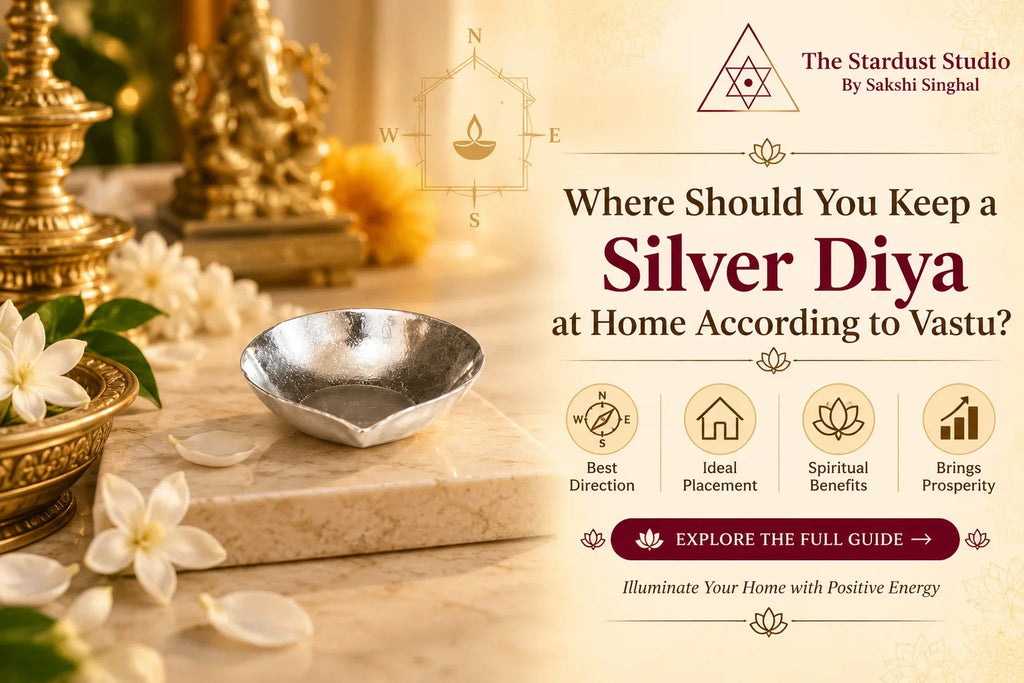
Lighting a diya is one of the most familiar practices in Hindu worship. From everyday morning and evening prayer to Diwali, Navratri, Lakshmi Puja and other sacred occasions, the flame represents light, devotion and the symbolic removal of darkness.
While diyas are made from several materials, a Silver Diya can become a lasting addition to a home mandir because silver has traditionally been used for puja utensils, sacred objects and auspicious gifting.
But where should you keep a Silver Diya at home?
Should it be placed in the North-East? Which direction should the flame face? Can you keep it permanently in the mandir? And what should you consider when comparing the Pure Silver Diya price?
This guide explains traditional Vastu placement, how to use a Silver Diya for pooja, Silver Aarti Diya practices, care instructions and important fire-safety rules.
Important: Vastu and diya traditions vary across families, regions and sampradayas. Vastu recommendations represent traditional beliefs rather than scientifically established effects. When lighting any diya, fire safety should take priority over directional preferences.
What Is a Silver Diya?
A Silver Diya is a traditional oil or ghee lamp crafted from silver or a stated silver composition.
Depending on the design, it may contain:
- One wick point
- Multiple wick points
- A handle for Aarti
- Decorative engraving
- A pedestal or base
- Traditional motifs
Some designs are intended to remain stationary on an altar, while others function as a Silver Aarti Diya that can be held safely during Aarti.
Before using any decorative silver diya with an actual flame, confirm that the product is intended for functional lamp use.
Why Is a Diya Lit During Puja?
The diya has deep symbolic importance in Hindu worship.
Light commonly represents:
- Knowledge over ignorance
- Awareness over confusion
- Hope over darkness
- Divine presence
- Spiritual clarity
- Auspicious beginnings
Lighting a diya therefore creates both a physical and symbolic focal point for worship.
Why Choose a Silver Diya for Pooja?
A Silver Diya for pooja combines the symbolism of the ritual lamp with silver's longstanding role in Indian devotional culture.
Silver is widely used for:
- Puja thalis
- Bowls
- Idols
- Sacred miniatures
- Coins
- Temple accessories
A well-made Silver Diya can also be reused for many years with appropriate care.
This makes it suitable for both everyday worship and major festivals.
Where Should You Keep a Silver Diya at Home?
The most natural place is your home mandir or dedicated prayer area.
Keep the diya on:
- A stable altar
- Puja platform
- Heat-resistant plate
- Secure mandir shelf
It should remain away from anything that can catch fire.
A diya should never be positioned simply to satisfy a Vastu rule if that location creates a fire hazard.
Silver Diya Vastu Direction: Which Direction Is Best?
The North-East or Ishan Kon is traditionally considered particularly suitable for prayer and spiritual activity in many Vastu practices.
If your home mandir is already located in the North-East, the Silver Diya can naturally form part of that setup.
The East is also commonly associated with prayer and sunrise symbolism.
However, you do not need to relocate an established home mandir simply because a generic online rule recommends one direction.
A clean, peaceful and safe worship area is more practical than forcing the diya into an unsuitable location.
Which Direction Should the Diya Flame Face?
This question often creates confusion because different traditions give different recommendations.
In many household traditions, an East-facing flame is considered auspicious for regular worship, while other practices may use North-facing placement for particular devotional intentions.
However, there is no need to combine every directional rule found online.
Follow your established family tradition.
Most importantly, orient the wick so that the flame remains:
- Stable
- Away from walls
- Away from curtains
- Away from flowers
- Away from clothing
- Away from children and pets
Safety comes first.
Can You Keep a Silver Diya Permanently in the Mandir?
Yes. A Silver Diya can remain permanently in your home mandir.
You do not need to remove it after every Puja.
Keep it clean and appropriately positioned even when it is not lit.
Before each use, check that:
- The wick area is clean
- The diya is stable
- There is no excessive old oil residue
- The surrounding space is clear
Regular maintenance helps keep both the diya and mandir clean.
How to Use a Silver Diya for Pooja
Using a Silver Diya for pooja can be simple.
Step 1: Clean the Diya
Ensure that the diya is clean and dry.
Remove old wick residue carefully.
Step 2: Place It Securely
Keep it on a flat, stable and heat-resistant surface.
Step 3: Add the Wick
Use an appropriate cotton wick according to your household practice.
Step 4: Add Ghee or Oil
Use the lamp fuel traditionally followed in your family and appropriate for the diya.
Avoid overfilling.
Step 5: Light the Diya Safely
Light the wick while keeping your face, hair and loose clothing away from the flame.
Step 6: Perform Your Puja
Continue with flowers, mantra, bhog and other elements of your regular worship.
Step 7: Allow It to Cool
After the flame has gone out, allow the diya to cool before cleaning or moving it.
What Is a Silver Aarti Diya?
A Silver Aarti Diya is designed for use during Aarti.
Depending on its design, it may have:
- One flame
- Multiple wick points
- A handle
- Decorative detailing
During Aarti, the lit lamp is moved according to the devotional tradition being followed.
Because the diya is being physically moved while lit, safe handling becomes especially important.
How to Use a Silver Aarti Diya Safely
Before beginning Aarti:
- Check that the handle is secure.
- Avoid overfilling the lamp.
- Keep loose sleeves away from flames.
- Keep long hair secured.
- Maintain distance from curtains and decorations.
- Ensure children do not reach toward the lamp.
- Keep the movements controlled.
A beautiful ritual should never require compromising basic fire safety.
Silver Diya for Daily Puja
A small Silver Diya can work particularly well for everyday worship.
You may light it during:
- Morning Puja
- Evening Puja
- Mantra Japa
- Meditation
- Regular Aarti
The ritual does not need to be elaborate.
A clean mandir, safely lit diya and a few moments of sincere prayer can create a meaningful daily practice.
Silver Diya for Lakshmi Puja
Diyas are especially prominent in Lakshmi worship and Diwali traditions.
A Silver Diya can be placed safely within your Lakshmi Puja arrangement alongside the other materials used in your household.
Keep enough space between the flame and:
- Flowers
- Silver décor
- Cloth
- Lakshmi Charan
- Paper decorations
Do not overcrowd the altar simply to display more festive products.
Silver Diya During Navratri
A Silver Diya can also be used throughout Navratri.
Some households maintain an Akhand Jyoti, while others light a diya only during daily Puja and Aarti.
An Akhand Jyoti requires considerably greater fire-safety attention because the flame remains lit for an extended period.
Never maintain an unattended flame simply because of ritual pressure.
Can You Place Silver Diya Near Goddess Lakshmi?
Yes. A Silver Diya can form part of a Lakshmi-inspired home mandir or Friday Puja arrangement.
Place it at a safe distance from the idol and other devotional objects.
The flame should illuminate the altar without creating heat or soot damage to the deity, backdrop or decorations.
Where Should You Avoid Keeping a Silver Diya?
Avoid placing a lit diya:
- Directly on the floor in a walking area
- Under a low shelf
- Near curtains
- Near paper
- Near dry flowers
- Near flammable decorations
- In an unstable location
- Where children or pets can reach it
- Near strong drafts
Also avoid placing it somewhere merely because the compass direction is considered favourable when the location itself is unsafe.
Silver Diya and Vastu Benefits
Traditional Vastu practices associate a clean and appropriately maintained Puja area with an auspicious spiritual atmosphere.
Lighting a diya can symbolically represent:
- Clarity
- Positivity
- Knowledge
- Devotion
- Spiritual awareness
However, a Silver Diya should not be marketed as something that automatically removes Vastu Dosha, generates wealth or guarantees positive outcomes.
Its primary significance remains devotional.
Pure Silver Diya Price: What Determines the Cost?
The Pure Silver Diya price can vary significantly.
Important factors include:
Silver Purity
The actual stated silver fineness affects material value.
Do not assume a specific purity solely because a listing uses the term "pure silver."
Weight
A heavier diya generally contains more silver and therefore has greater material value.
Size
Large lamps require more material.
Design
Detailed engraving and ornamental work can increase craftsmanship costs.
Number of Wick Points
A larger multi-wick Aarti lamp may differ substantially from a small single-wick diya.
Construction
Handcrafted, cast and other construction methods can affect both weight and price.
Current Silver Rate
Silver is a traded precious metal, so prices change over time.
For this reason, check the current product listing rather than relying on an old blog article for an exact Pure Silver Diya price.
What to Check Before Buying a Silver Diya
Before purchasing, check:
- Stated silver purity
- Weight
- Dimensions
- Wick capacity
- Base stability
- Whether it is functional or decorative
- Handle design for an Aarti Diya
- Craftsmanship
- Care instructions
If you're buying online, dimensions are especially important because close-up product photographs can make a small diya appear much larger.
How to Identify a Quality Silver Diya
Look for good craftsmanship rather than judging the product only by shine.
A quality diya should ideally have:
- Stable base
- Smooth finishing
- Clearly formed wick area
- Balanced construction
- Secure handle where applicable
- Clean detailing
For silver authenticity, material specifications and appropriate professional verification are more reliable than destructive home tests.
How to Clean a Silver Diya After Pooja
Oil, ghee and soot can accumulate during repeated use.
After the diya has completely cooled:
- Remove the used wick.
- Remove excess oil or ghee appropriately.
- Wipe the diya gently.
- Clean according to the product's silver-care instructions.
- Dry thoroughly.
- Return it to the mandir.
Avoid scratching detailed surfaces with aggressive cleaning tools.
Can You Gift a Silver Diya?
Yes. A Silver Diya for pooja can make a meaningful traditional gift for:
- Diwali
- Dhanteras
- Housewarming
- Wedding
- Anniversary
- Navratri
- New home
- Religious ceremonies
It is especially suitable for someone establishing a new home mandir.
When gifting, check the diya's dimensions and actual silver specifications so the recipient understands what they are receiving.
Silver Diya for Housewarming
A Silver Diya can be particularly meaningful for Griha Pravesh because light symbolizes auspicious beginnings.
It can become a permanent home-mandir item rather than a one-time decorative gift.
A simple accompanying wish could focus on light, peace and auspicious beginnings rather than promising wealth or supernatural results.
Common Silver Diya Vastu Mistakes
Following Direction but Ignoring Safety
The safest location always takes priority.
Placing the Diya Too Close to the Idol
Repeated heat and soot can affect some idol materials and decorative finishes.
Overfilling the Lamp
Too much oil or ghee can increase spill risk.
Leaving the Flame Unattended
Never leave an open diya unattended.
Assuming Silver Never Tarnishes
Natural tarnishing can occur even with genuine silver.
Buying Without Checking Size
Always review dimensions when ordering a Silver Diya online.
Silver Diya vs Brass Diya: Which Should You Choose?
Both silver and brass diyas are used in Indian devotional settings.
A Silver Diya may be chosen for its elegant appearance, precious-metal value and compatibility with a silver puja collection.
A Brass Diya is widely used, durable and available in many traditional designs.
Neither material makes prayer inherently more meaningful.
Choose according to:
- Family tradition
- Budget
- Intended use
- Maintenance preference
- Mandir design
Why Choose a Silver Diya from The Stardust Studio?
At The Stardust Studio, we believe puja essentials should combine meaningful traditional symbolism with thoughtful craftsmanship and practical design.
A Silver Diya can become a lasting part of your home mandir, daily prayer and festive worship.
Whether you're looking for a Silver Diya for pooja, comparing Pure Silver Diya price, or choosing a Silver Aarti Diya, pay attention to the product's stated purity, weight, dimensions, construction and intended use.
Choose a diya that fits naturally into your worship practice rather than selecting solely on size or decorative complexity.
Final Thoughts
A Silver Diya brings together one of Hindu worship's most enduring symbols—the sacred flame—with silver's longstanding place in Indian devotional traditions.
According to common Vastu practices, the North-East is considered particularly suitable for a home mandir and spiritual activity, while East is also frequently associated with prayer. But the best placement is ultimately one that is clean, respectful and safe.
If you use a Silver Diya for pooja, place it on a stable surface, maintain adequate distance from the deity and flammable decorations, use an appropriate wick and lamp fuel, and never leave the flame unattended.
When comparing the Pure Silver Diya price, consider actual silver purity, weight, dimensions and craftsmanship rather than price alone. If you specifically need a lamp for ceremonial Aarti, look for a functional Silver Aarti Diya designed for safe handling.
Explore the silver puja at The Stardust Studio for thoughtfully crafted devotional essentials that can become a lasting part of your daily worship, festive rituals and home mandir.
FAQs
1. Where should you keep a Silver Diya at home according to Vastu?
2. Which direction should a Silver Diya face?
3. Can a Silver Diya be kept permanently in the mandir?
4. What determines the Pure Silver Diya price?
5. Is Silver Diya good for daily pooja?


