


Navratri Day 7 Maa Kalaratri 2026: Puja Vidhi, Mantra & Bhog
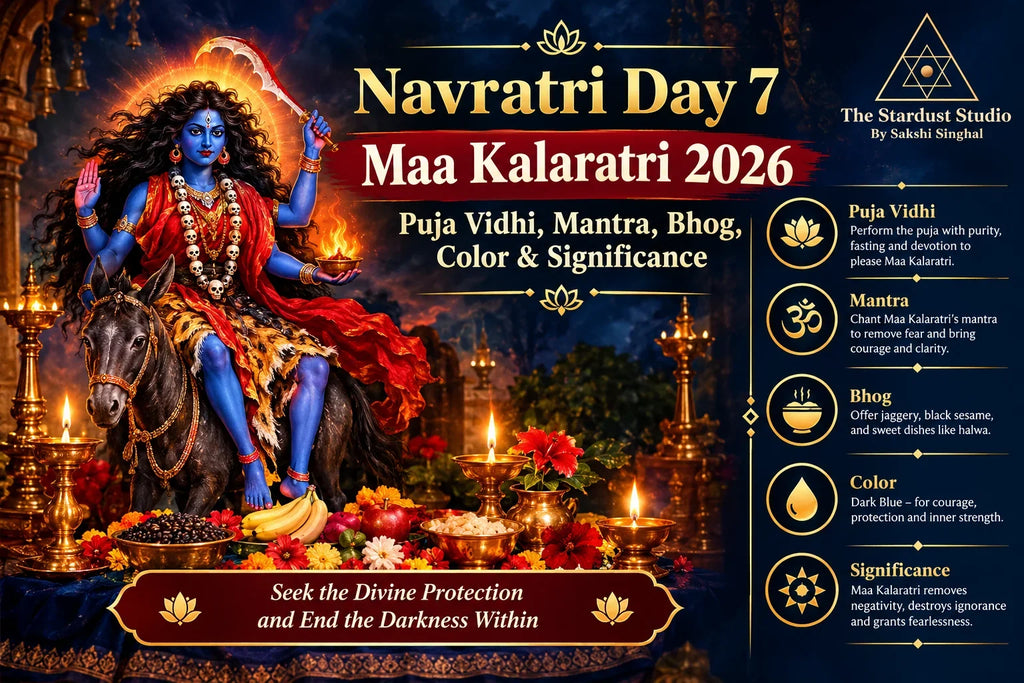
The seventh day of Shardiya Navratri is dedicated to Maa Kalaratri, the seventh manifestation of Navdurga. Her fierce appearance makes her one of the most striking forms of Goddess Durga, yet her deeper symbolism is traditionally connected with protection, fearlessness and the destruction of darkness and negative forces.
In 2026, Maa Kalaratri Navratri Day 7 falls on Saturday, October 17. The traditional weekday-based Navratri color for the day is Grey, a color that can symbolically complement Kalaratri's themes of strength and composure.
As you prepare your Day 7 home mandir, keep Maa Kalaratri, the Navratri Kalash, diya, flowers and bhog as the central elements. Permanent devotional pieces such as a Silver Swastik can remain as part of your auspicious mandir arrangement. A Silver Tulsi Plant can continue to occupy its established devotional space, while a Silver Kamdhenu Cow with Calf may remain as a traditional symbol associated with nourishment and abundance.
These products can complement your permanent spiritual collection, but none is a mandatory requirement for Maa Kalaratri worship.
This complete guide explains Maa Kalaratri Puja Vidhi, Maa Kalaratri Mantra, Maa Kalaratri Bhog, Maa Kalaratri Navratri Day 7 significance, color, vrat practices and a simple home Puja method.
Important: Navratri rituals and offerings vary between families, regions and sampradayas. Follow your established household tradition, Guru or priest's guidance wherever it differs from this general guide.
When Is Maa Kalaratri Navratri Day 7 in 2026?
Maa Kalaratri Puja 2026 Date: Saturday, October 17, 2026
Maa Kalaratri is worshipped as the seventh form of Navdurga.
The spiritual journey through Navratri has now progressed through:
Day 1: Maa Shailputri
Day 2: Maa Brahmacharini
Day 3: Maa Chandraghanta
Day 4: Maa Kushmanda
Day 5: Maa Skandamata
Day 6: Maa Katyayani
Day 7: Maa Kalaratri
Devotees continue worship of the Kalash established during Ghatasthapana and perform dedicated Day 7 prayers to Maa Kalaratri.
Who Is Maa Kalaratri?
Maa Kalaratri is one of the fiercest-looking manifestations of Goddess Durga.
Her name can be understood through:
Kala – time, darkness or death in different contexts
Ratri – night
Her dark and powerful appearance represents the destruction of darkness, ignorance and negative forces in devotional symbolism.
Despite her fierce form, Maa Kalaratri is also traditionally known as Shubhankari, a name associated with auspiciousness and benevolence.
This creates one of the most fascinating contrasts within Navdurga symbolism:
A form that appears frightening can represent protection and auspiciousness.
Maa Kalaratri Significance
The significance of Maa Kalaratri goes deeper than her fierce appearance.
1. Fearlessness
Maa Kalaratri symbolizes the courage required to face fear rather than continually escape from it.
2. Protection
She carries powerful protective symbolism in Durga devotional traditions.
3. Destruction of Darkness
Darkness can symbolically represent ignorance, fear and confusion.
Kalaratri's form represents confronting and overcoming that darkness.
4. Transformation
Growth sometimes requires facing uncomfortable realities.
Day 7 can therefore symbolize transformation through courage.
5. Inner Strength
Maa Kalaratri reminds devotees that spiritual strength is not always gentle in appearance. Sometimes it is the strength required to confront what must change.
Why Is Maa Kalaratri Worshipped on Navratri Day 7?
The Navdurga sequence has now reached a deeper stage.
Maa Shailputri created stability.
Maa Brahmacharini developed discipline.
Maa Chandraghanta introduced courage.
Maa Kushmanda represented creative energy.
Maa Skandamata added compassion.
Maa Katyayani represented decisive action.
Now Maa Kalaratri represents confronting darkness itself.
Symbolically, Day 7 reminds devotees that meaningful transformation often requires facing fears, difficult truths and limiting patterns.
Puja Essentials for Maa Kalaratri Day 7
A simple altar is enough for Day 7 worship.
Keep the Goddess and Navratri Kalash as the primary focus.
Permanent silver spiritual products can remain in their regular positions.
Silver Swastik
A Silver Swastik can remain in your mandir as a traditional Hindu symbol of auspiciousness and well-being.
It complements the sacred environment without becoming a required Maa Kalaratri offering.
Silver Tulsi Plant
A Silver Tulsi Plant can remain respectfully in your home temple during Navratri.
Tulsi has particularly strong devotional associations with Lord Vishnu and Krishna traditions. It is therefore better understood as a permanent home-mandir object rather than something specifically required for Maa Kalaratri Puja.
Silver Kamdhenu Cow with Calf
A Silver Kamdhenu Cow with Calf can remain in your permanent spiritual collection.
Kamdhenu is traditionally associated with nourishment and abundance, while the mother-and-calf imagery represents nurturing and care.
Its symbolism is distinct from Maa Kalaratri's fierce protective form, but both can coexist respectfully in the same home mandir.
Maa Kalaratri Puja Vidhi
A simple Maa Kalaratri Puja Vidhi can be performed at home.
Step 1: Clean Your Puja Space
Clean your home mandir and the area surrounding the Navratri Kalash.
Bathe or wash according to your regular devotional practice and wear clean clothes.
Step 2: Light a Diya
Light a diya and incense according to your family tradition.
If you maintain an Akhand Jyoti, ensure that it is safely supervised.
Step 3: Worship the Navratri Kalash
Continue the daily worship of the Kalash established during Ghatasthapana.
Step 4: Offer Flowers
Offer fresh flowers to Maa Kalaratri according to your household tradition.
Step 5: Offer Kumkum and Akshat
Offer Kumkum, Akshat and other customary puja materials.
Step 6: Offer Maa Kalaratri Bhog
Prepare a fresh Satvik offering according to your family or regional tradition.
Step 7: Chant Maa Kalaratri Mantra
Sit quietly and chant the Goddess's mantra with attention and devotion.
Step 8: Perform Aarti
Complete your worship with Durga Aarti or the Aarti followed in your household.
Maa Kalaratri Mantra
A simple and commonly recited Maa Kalaratri Mantra is:
ॐ देवी कालरात्र्यै नमः॥
Om Devi Kalaratryai Namah
You may chant it according to your personal practice.
Some devotees choose 11, 21 or 108 repetitions, but a specific number should not become a source of anxiety. Focus on sincere and attentive prayer.
Maa Kalaratri Prarthana
A traditional prayer associated with Maa Kalaratri is:
एकवेणी जपाकर्णपूरा नग्ना खरास्थिता।
लम्बोष्ठी कर्णिकाकर्णी तैलाभ्यक्तशरीरिणी॥
Devotees may recite traditional prayers according to the practice followed in their household or spiritual tradition.
Maa Kalaratri Bhog
Jaggery or Gur is popularly associated with Maa Kalaratri Bhog in Navratri traditions.
Depending on household practice, you may offer:
- Jaggery
- Jaggery-based Satvik sweets
- Fresh fruits
- Other permitted Navratri bhog
Offer fresh food respectfully and follow your family's established tradition where it differs.
After the offering and prayer, bhog can be distributed as prasad according to your practice.
Why Is Jaggery Offered to Maa Kalaratri?
Jaggery is widely mentioned as the traditional Day 7 offering in popular Navratri practice.
However, regional customs vary.
There is no need to abandon your family's established Satvik offering simply because a different bhog appears on an online list.
The central principle is sincere devotional offering.
Maa Kalaratri Puja Color
The traditional weekday-based Navratri color for Saturday, October 17, 2026 is Grey.
Grey can be symbolically associated with:
- Balance
- Composure
- Strength
- Neutrality
- Stability during uncertainty
Devotees may wear Grey clothing or incorporate subtle Grey elements into their Day 7 festive styling.
Following the day's color is a popular Navratri custom rather than a compulsory religious requirement.
Maa Kalaratri Vrat
Many devotees continue their Navratri vrat on Day 7.
Depending on household tradition, permitted foods may include:
- Fruits
- Milk
- Curd
- Makhana
- Nuts
- Sabudana
- Potatoes
- Samak rice
- Kuttu
- Singhara
- Sendha Namak where permitted
Some people observe one meal, while others follow fruit- or milk-based fasting.
Fasting should support spiritual discipline rather than create health risks. Adapt it appropriately to your nutritional and medical needs.
Simple Maa Kalaratri Puja for Busy Devotees
You don't need an elaborate ritual to observe Day 7.
Clean your mandir, light a diya, offer fresh flowers and suitable bhog, then chant:
Om Devi Kalaratryai Namah
Spend a few quiet moments reflecting on one fear or limiting pattern you want to approach with greater courage.
This can make Day 7 personally meaningful without overcomplicating the Puja.
How to Arrange Your Maa Kalaratri Day 7 Altar
A simple arrangement can include:
- Maa Durga or Kalaratri image
- Navratri Kalash
- Diya
- Fresh flowers
- Day 7 bhog
If your home mandir already contains a Silver Swastik, Silver Tulsi Plant and Silver Kamdhenu Cow with Calf, keep them respectfully in their established locations.
There is no need to move every permanent spiritual object beside Maa Kalaratri.
A clean and uncluttered altar helps keep the Navdurga form of the day as the central focus.
Can Silver Swastik Be Kept During Maa Kalaratri Puja?
Yes. A Silver Swastik can remain in your mandir throughout Navratri as a traditional Hindu auspicious symbol.
It does not require a separate Day 7 ritual and should not replace any specific Maa Kalaratri offering.
Can Silver Tulsi Plant Be Kept During Navratri?
Yes. A Silver Tulsi Plant can remain respectfully in your home mandir during Devi worship.
Its symbolism is primarily associated with sacred Tulsi and has especially strong connections with Vishnu-Krishna traditions.
It is not a required Maa Kalaratri Puja item.
Can Silver Kamdhenu Cow with Calf Be Kept During Navratri?
Yes. A Silver Kamdhenu Cow with Calf can remain part of your permanent home-mandir collection.
Its traditional symbolism of nourishment and abundance can coexist with Maa Kalaratri's protective symbolism without becoming a specific Day 7 offering.
Common Maa Kalaratri Puja Mistakes
Becoming Frightened by the Goddess's Appearance
Her fierce form represents protective strength and the destruction of darkness.
Treating Day 7 as a Fear-Based Ritual
Maa Kalaratri worship is devotional and should not become a source of anxiety.
Overcrowding the Altar
Keep the Goddess and Kalash as the central focus.
Obsessing Over the Day's Color
Grey is a popular Navratri color tradition, not a compulsory requirement.
Following Every Online Remedy
Avoid mixing unrelated ritual instructions from multiple traditions.
What Can Maa Kalaratri Teach Us?
Day 7 offers one of Navratri's most powerful lessons:
Not everything difficult is negative, and not everything comfortable is good for us.
Growth can require confronting fear.
Protection can require boundaries.
Transformation can require letting something end.
Maa Kalaratri represents the courage required for that process.
Her fierce form reminds devotees that spiritual strength sometimes means facing darkness rather than pretending it does not exist.
Why Explore The Stardust Studio for Navratri Puja Essentials?
At The Stardust Studio, our spiritual collection brings together traditional symbolism with thoughtfully crafted products for home mandirs and festive worship.
For Navratri and your permanent devotional collection, you can explore:
Silver Swastik – a lasting traditional symbol of auspiciousness for your home mandir.
Silver Tulsi Plant – a permanent silver representation inspired by sacred Tulsi.
Silver Kamdhenu Cow with Calf – a devotional piece traditionally associated with nourishment and abundance.
These pieces can complement your sacred space while the focus of Maa Kalaratri Navratri Day 7 remains the Goddess, the Navratri Kalash, prayer and devotion.
Final Thoughts
Maa Kalaratri Navratri Day 7 will be observed on Saturday, October 17, 2026, with Grey as the traditional color of the day.
Her fierce form carries a deeply reassuring message: darkness does not have to be avoided forever—it can be confronted with courage.
For Day 7, continue your Navratri Kalash worship, light a diya, offer flowers and appropriate Maa Kalaratri Bhog, and chant Om Devi Kalaratryai Namah with devotion.
Permanent spiritual pieces such as a Silver Swastik, Silver Tulsi Plant and Silver Kamdhenu Cow with Calf from The Stardust Studio can remain respectfully arranged in your home mandir while Maa Kalaratri remains the central focus of Day 7 worship.
Let the seventh day of Navratri become a reminder that genuine strength is not the absence of fear—it is the willingness to move through fear with awareness, faith and courage.
Frequently Asked Questions
1. When is Maa Kalaratri Navratri Day 7 in 2026?
2. What is the Maa Kalaratri Mantra?
3. What is Maa Kalaratri Bhog?
4. What is the Navratri Day 7 color in 2026?
5. What is the significance of Maa Kalaratri?


